-
FACT SHEET ON CHINA-MYANMAR-BANGLADESH ECONOMIC CORRIDOR
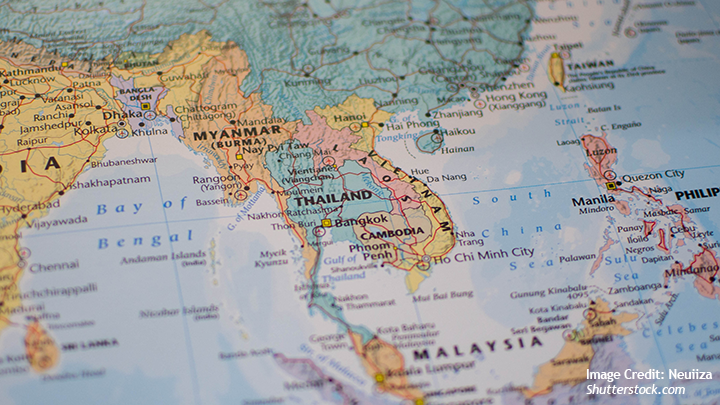
Want to know more about China’s ever-increasing strategic influence in the Bay of Bengal? Here is a Fact Sheet, part of the Stockholm Center for South Asian and Indo-Pacific Affairs (SCSA-IPA) research project, The Silk Noose: China’s Power Architecture in South Asia and the Indian Ocean Region. This fact sheet analyses that China has undertaken several projects to increase its role in the Bay of Bengal region and circumvent the Malacca Strait. This has been done through the Belt and Road Initiative (BRI), including investments in port infrastructure and multiple new economic corridors. One of these corridors was the Bangladesh, China, India and Myanmar Economic Corridor (BCIM), which, following Indian disengagement, has evolved into the China-Myanmar-Bangladesh Economic Corridor (CMBC). Download and read this fact sheet here.
-
Bang for the Buck? Reassessing NATO’s 5 Percent Benchmark Through Comparative Defense Accounting
This issue brief by Pierre Erik Gunnarsson argues that headline expenditure figures are an incomplete measure of national defense effort among NATO members. Drawing on official data, it examines how institutional differences shape international comparison. It focuses particularly on defense research and development, where the United States sustains an innovation ecosystem characterized by high technological ambition, tolerance of program failure, and correspondingly higher costs. The Zumwalt-class destroyer program illustrates both the opportunities and pitfalls of this approach. Gunnarsson shows that meaningful comparison requires attention to the broader public-finance context. He concludes that assessments of allied burden sharing should distinguish between headline defense expenditure, defense-related public expenditure, and the military capability generated per unit of spending—referred to here as “bang for the buck.” Read and download this issue brief here.
-
The Missing Strategy in Europe’s Reindustrialization: Lessons from Japan, Korea, and Taiwan
Zsuzsa Anna Ferenczy writes in this edited special paper that Europe’s focus on reindustrialization and economic security has climbed its agenda, but the bloc’s capacity to manage internal fragmentation remains a challenge. She further argues that internal differences remain and limit coherence in action. Nonetheless, member states converge on the need to diversify, de-risk, and invest in resilience. To achieve this, Ferenczy argues that cooperation with partners will be vital. Through this edited volume, she asks: what lessons can Europe learn from its Indo-Pacific partners, namely Japan, Korea, and Taiwan, from their response to geopolitical disruptions and efforts to protect their industry and competitiveness? How can Europe absorb these lessons and ensure that its own response to a new reality is adequate and helps bring prosperity and security to the continent? The individual chapters explore these key questions as seen from Japan, Korea, and Taiwan. Read this interesting special paper here.
-
Silk Cage Webinar Report: Ports, Power, and Political Access: China’s Strategic Grip over Sri Lanka
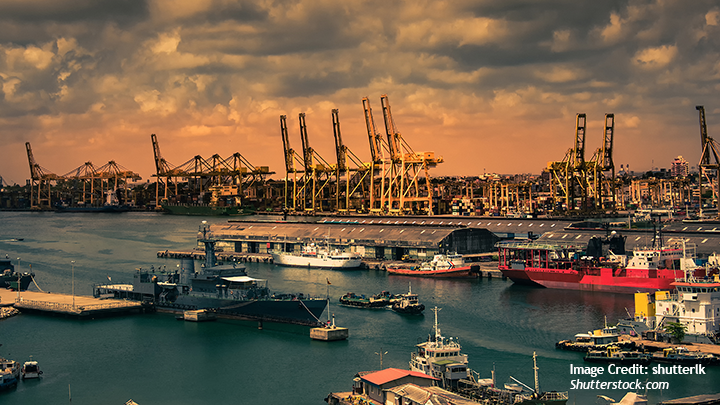
The Stockholm Center for South Asian and Indo-Pacific Affairs held a webinar on August 31, 2026, during which China’s influence through the Belt and Road Initiative and Sri Lanka’s role in the Indian Ocean were discussed. Our four speakers were Tabita Rosendal, Nilanthi Samaranayake, Ivan Lidarev, and Smruti S. Pattanaik. Dr. Jagannath Panda served as moderator. The webinar discussed: whether China’s engagement with Sri Lanka can be characterized as being focused on development or long-term political and maritime strategy; to what degree Chinese coastal projects form an integrated port-and-logistics architecture; how China influences Sri Lanka’s political environment; in what way Sri Lankan political parties and elites have interacted with China’s presence; and how Sri Lanka can preserve its interests while balancing external partners. Read the webinar report here.
-
Engineering Asia’s Water Tower: Transboundary Governance Challenges of China’s Tibetan Plateau Mega-Projects
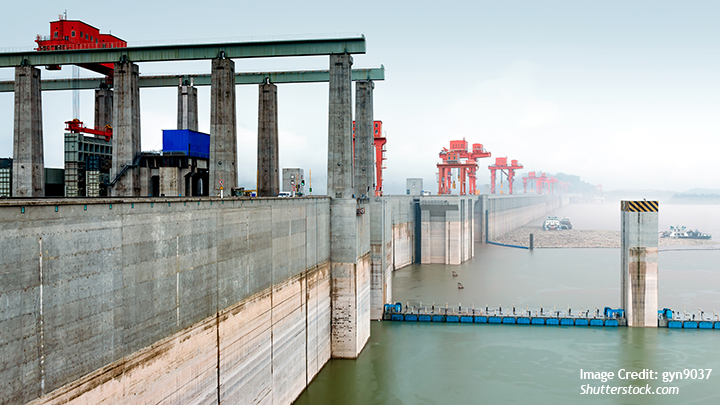
China is advancing an interconnected suite of hydraulic mega-projects on the Tibetan Plateau driven by severe domestic water and energy security imperatives. This Focus Asia paper by Genevieve Donnellon-May, Mark Wang and Ian Rutherfurd examine three projects central to this strategy that affect transboundary rivers: the Mêdog (墨脱) Hydropower Station, now under construction on the Yarlung Tsangpo; the Red Flag River (红旗河) inter-basin transfer proposal, not officially approved but, if built, would become the world’s largest inter-basin water transfer project, redirecting water from transboundary rivers in Tibet to arid northwest China; and the upper Lancang–Mekong (澜沧江-湄公河) hydropower cascade, China’s 12-dam operational system on the upper Mekong, which provides the most instructive precedent for what large-scale Chinese dam operations mean for downstream governance. This paper argues that the governance gap is not inevitable—it reflects the absence of institutional architecture that all parties have a shared interest in building—and advances targeted recommendations for European governments, multilateral institutions, and downstream states. Read this paper by Donnellon-May, Wang and Rutherfurd here.
-
Wisdom of dissent: What Washington’s ‘Orders Book’ teaches the ROK military
In this Korea Times column, retired Lt. Gen. Chun In-bum argues that South Korea should learn from the U.S. military’s institutionalized practice of recording professional dissent through the Secretary of War Orders Book. He highlights the “non-concur” mechanism, which allows senior commanders to formally document operational risks without challenging civilian authority. Chun argues that such structured dissent strengthens rather than weakens military decision-making by ensuring that political leaders understand readiness costs, force limitations, and strategic trade-offs. This is particularly important for South Korea because it faces a nuclear-armed North Korea, growing regional uncertainty, and possible overstretch of U.S. forces across multiple theaters. Read this piece here.