
First Korea-Nordic Forum Highlights Shared Challenges and Calls for Stronger Cooperation to Build Resilient Societies
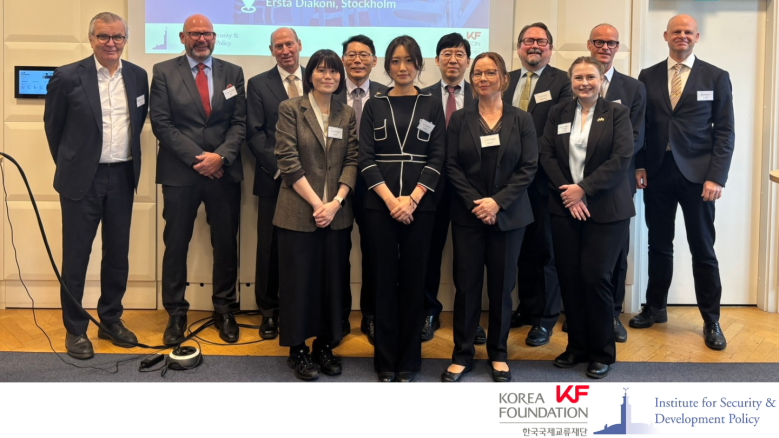
On November 11, 2026, the Stockholm Korea Center of the Institute for Security and Development Policy (ISDP) organized its first Korea-Nordic Forum in Stockholm.
Under the title “Building Resilience Together”, the 2026 Korea-Nordic Forum, generously funded by the Korea Foundation, aimed to identify areas of collaboration between the Nordic countries and South Korea as middle powers. The objective of the forum was to strengthen resilience in the face of social, economic, and defence-related developments.
Against the backdrop of increasingly close cooperation between the Republic of Korea (South Korea) and the Nordic states, Denmark, Sweden, Norway, Finland, and Iceland, which is showing signs of evolving into a more structured middle-power alliance, the forum brought together experts to explore ways of building more resilient societies capable of addressing social and economic challenges, as well as defence-related uncertainties and security threats. Throughout the day, three panels focused on common challenges: “Social Resilience: Welfare Policies & Demographic Shocks”, “Economic Resilience: Mitigating U.S. and Chinese Influence”, and “Defense Resilience: Defense Industry & Best Practices”.
A Holistic Perspective on Building Resilience
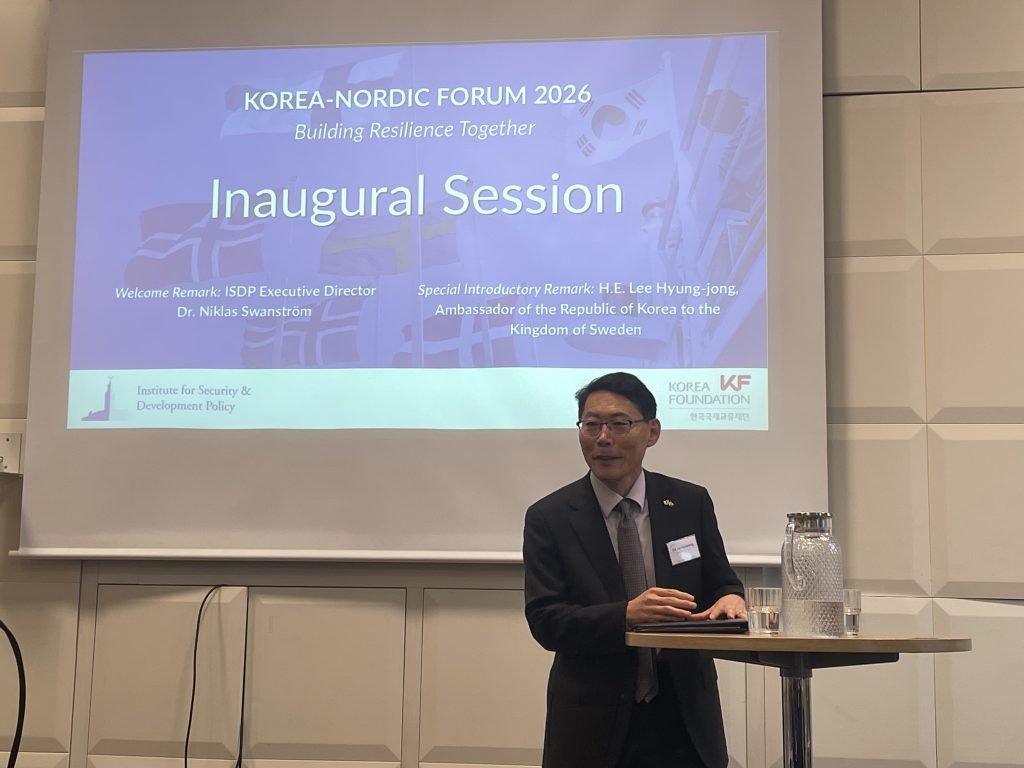
During their welcome remarks, Dr. Niklas Swanström, Executive Director of ISDP, and H.E. Lee Hyung-jong, Ambassador of the Republic of Korea to the Kingdom of Sweden, emphasized that a holistic perspective on building resilience is essential in an increasingly complex geopolitical landscape. Growing interdependence, climate change, and ongoing armed conflicts highlight the need for new partnerships and closer international cooperation to address shared challenges and strengthen resilience.
Intergenerational Fairness as Priority for Truly Resilient Societies
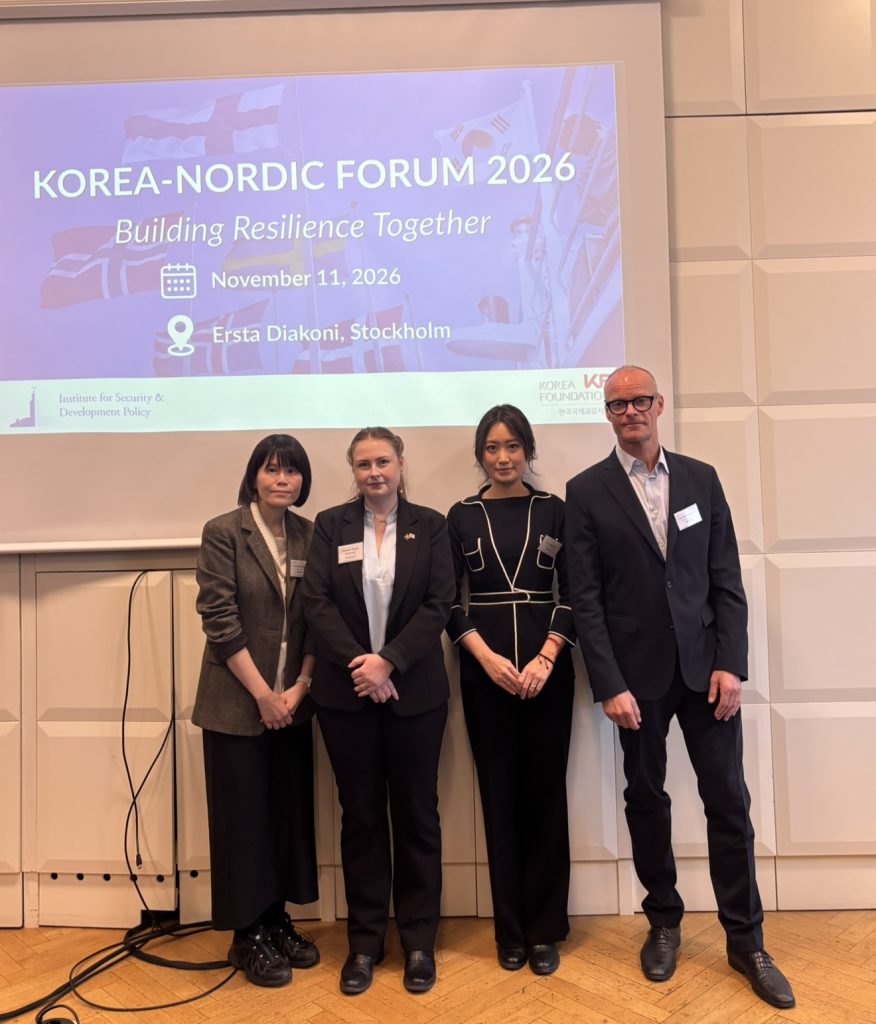
The first panel of the forum, consisting of Prof. Weon So-Yoon, Chung-Ang University, Prof. Arnstein Aassve, University Bocconi, and Dr. Ryu Sunwoo, University of Bristol, focused on one societal challenge that both South Korea as well as the Nordic countries are experiencing right now: Low birth rates and aging populations are putting the welfare systems in both the Nordics and South Korea under unprecedented pressure – a demographic shock.
The speakers, under the moderation of Ms. Josephine Ørgaard Rasmussen, highlighted that the low fertility rate, and an aging society will be the megatrends in the next decades in East Asia – but the trend is visible in the Nordic countries too.
Societies in both regions are facing significant demographic and social challenges. In South Korea, population ageing is progressing at an unprecedented pace, with the country transitioning from an ageing to a super-aged society in just seven years. At the same time, old-age poverty is becoming an increasingly pressing issue, partly due to the relative immaturity of the National Pension System.
With regard to family policies, both regions have valuable experiences to share and can learn from one another. Sweden’s policies in the 1980s, which emphasised gender equality, a strong sense of community and social solidarity, as well as access to secure, high-quality employment for women, contributed to the country’s recovery from a period of low fertility.
Nevertheless, low fertility rates have once again become a pressing challenge in Sweden and across the Nordic region. A new idea of the welfare state would be needed: The old generational contract and system needs to be revised and resilience in terms of transformation need to be taken into consideration.
Against this backdrop, the panel highlighted the following key takeaways for policymakers:
- Prioritize intergenerational fairness so the burden isn’t placed on one age group.
- Design welfare for individuals, not just traditional family structures.
- Institutionalize knowledge sharing between the Nordics and South Korea to navigate the many unknowns ahead.
The Urgent Need to Diversify Trade Among Like-Minded Partners
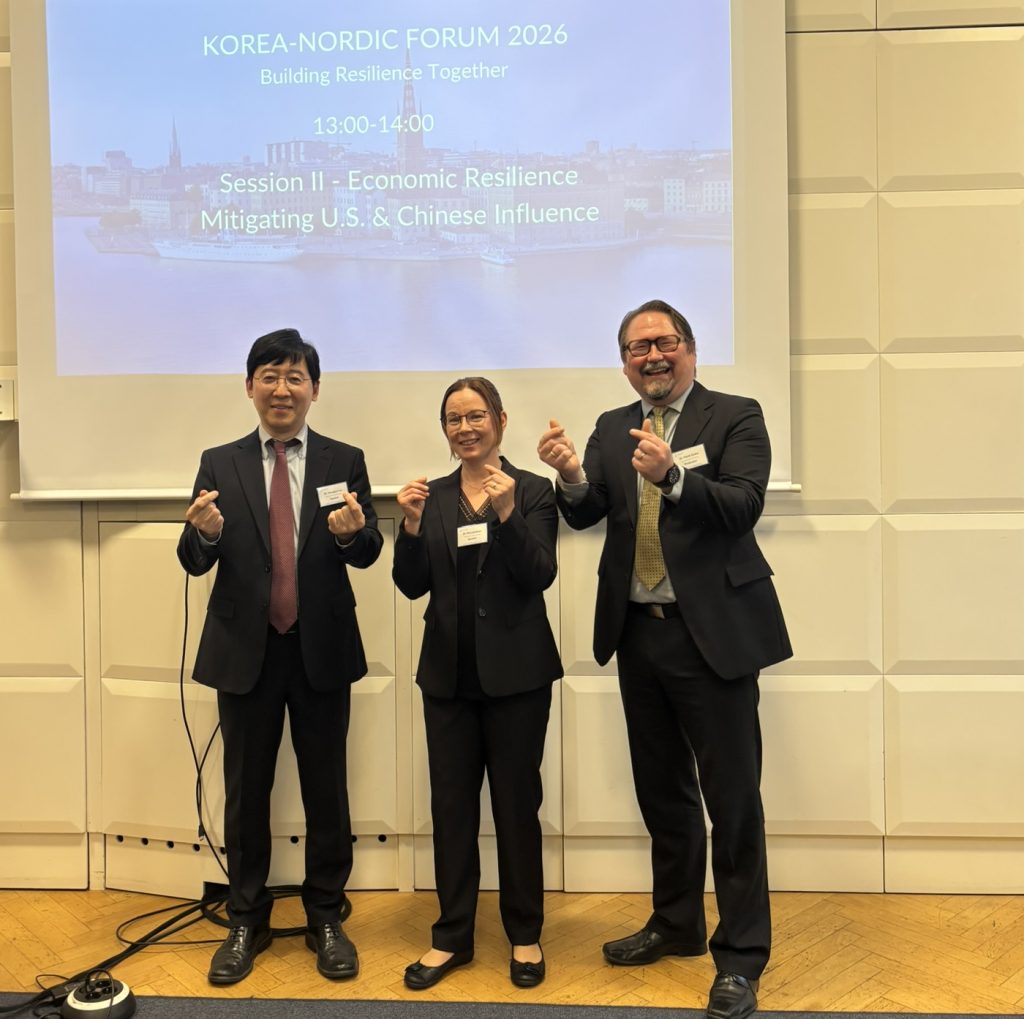
Rising economic coercion from major powers like the U.S. and China – with South Korea often caught in the crossfire – highlights an urgent need to diversify trade among like-minded partners. Speakers of the second panel of the forum, Prof. Lee Seungjoo, Chung-Ang University, and Mia Landauer, Head of the Stockholm Center for Arctic Policy and Governance (ARCPOL) at ISDP, offered insights into how deepening economic resilience between South Korea and the Nordic countries offers immense potential in especially the green transition. Prof. Patrik Ström, Stockholm School of Economics, moderated the panel which highlighted the potential for collaboration on critical minerals, green tech, and Arctic initiatives, the Nordics and South Korea can secure stronger supply chains and build lasting economic resilience together.
During the discussions, the speakers emphasized that in the case of South Korea, a country depending on trade with China and the US, there is a need for a tech sovereignty and strategic indispensability. Concerning middle power diplomacy, South Korea is very well positioned and should seek collaboration with EU countries – this collaboration should be based on common challenges and experiences.
A key takeaway from the panel was that economic policies must go hand in hand with social welfare and environmental protection. This requires the development of concrete measures and actionable policy recommendations.
Lasting Security Requires That Korea-Nordic Defense Cooperation Goes Beyond Traditional Trade
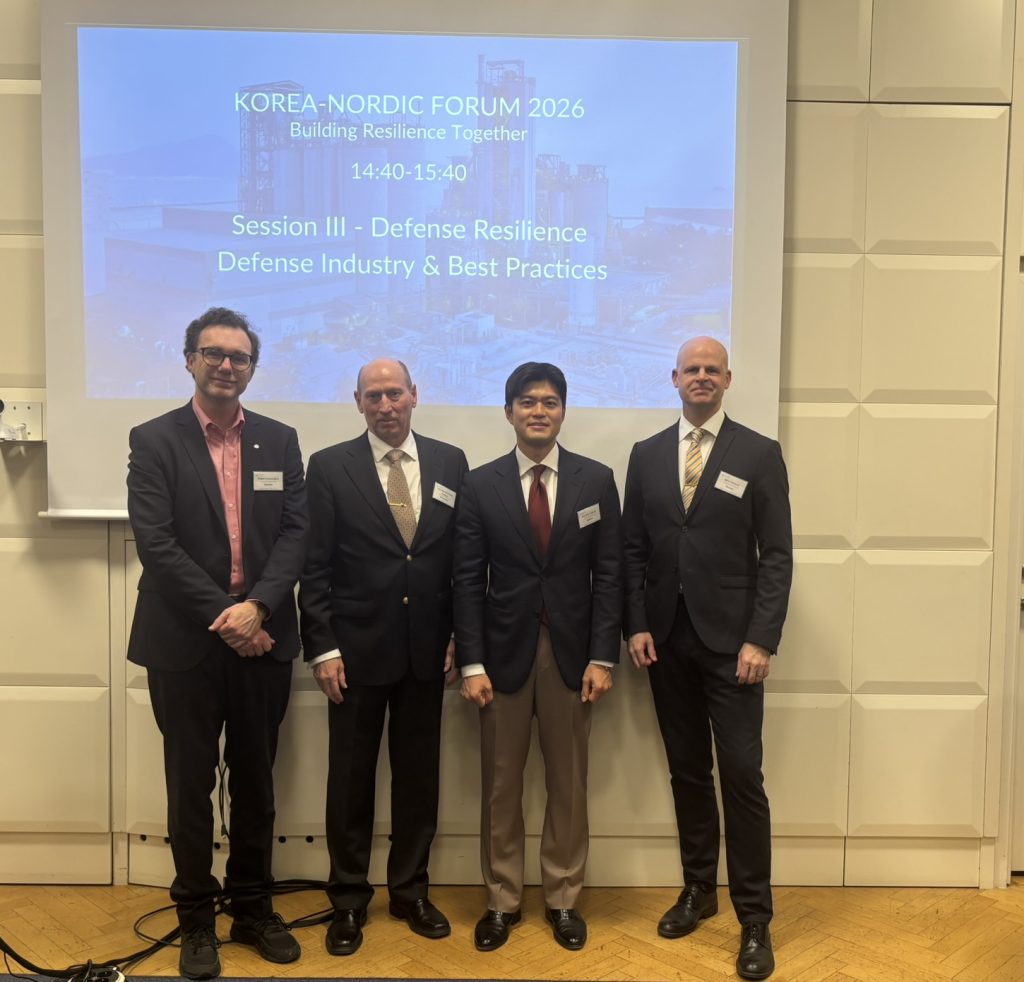
The third and last panel of the forum focused on Defense Resilience and consisted of Rep. Kim Yong-tae, member of the Republic of Korea National Assembly, People Power Party, Mr. Robert Limmergård, Swedish Security and Defence Industry Association, Mr. Björn Palmertz, Lund University, and Maj. Gen. (ret) Mats Engman, ISDP (moderator).
Hybrid warfare poses growing security challenges for both South Korea, in the context of ongoing tensions with North Korea, and the Nordic countries, against the backdrop of the ongoing Russian invasion in Ukraine and heightened security concerns in Europe.
Speakers emphasized that the discussion about resilience and defense needs to start with supply chains. The Nordic countries and South Korea can benefit greatly from leveraging their respective strengths and expertise: Swedish companies bring extensive experience in diversifying supply chains, while South Korea contributes advanced technological systems and capabilities.
Developments in Europe and the Indo-Pacific are interconnected, illustrating the shared interests of and South Korea in strengthening cooperation and addressing common security challenges.
To build lasting security, Korea-Nordic defense cooperation must go beyond traditional trade:
- Build trusted supply chains: strengthen industrial partnerships and reduce critical dependencies to ensure reliable deliveries, even in times of crisis.
- Accelerate technological cooperation: combine South Korea’s manufacturing capabilities with Nordic expertise in areas such as sensors, AI, drones and electronic warfare.
- Strengthen resilience against hybrid threats: improve information-sharing, coordination and preparedness to address increasingly interconnected cyber, physical and information threats.
- Build partnerships before a crisis: establish strategic dialogue, trust and joint innovation early, focusing on concrete operational needs and shared capabilities.
Overall, the first Korea-Nordic Forum highlighted the significant potential for collaboration between South Korea and the Nordic countries in building truly resilient societies. Both regions face similar challenges, while their complementary approaches offer valuable opportunities for mutual learning and the exchange of best practices. In an increasingly uncertain geopolitical environment, closer South-Korean-Nordic cooperation will be essential to navigating strategic dependencies, strengthening supply chain resilience, reinforcing defence preparedness, and safeguarding the resilience of welfare states.
The conference report will be published in early 2027.