Who Leads the Ummah? The Mecca Pact Says Everyone–and No One
Saroj Kumar Aryal and Adithyan Nair
Abstract
The Mecca Joint Defence Agreement between Saudi Arabia, Pakistan, and Turkey represents a significant development in the evolving security architecture of South and West Asia. Although often portrayed as a potential “Middle Eastern NATO,” this issue brief argues that the defense pact’s immediate significance lies primarily in political coordination, deterrence, intelligence sharing, and defense cooperation rather than the creation of an integrated military alliance. The pact faces structural constraints arising from divergent threat perceptions, competing regional ambitions, overlapping alliances, and differing strategic priorities among its members. Nevertheless, its formation carries wider implications for Iran, the United States, Israel, and India. Potential expansion of the pact could generate a regional balancing effect, encouraging India, Israel, and the UAE to deepen their existing strategic cooperation while increasing U.S. involvement. The brief argues that such developments could ultimately produce an interconnected security architecture linking South and West Asia and significantly reshape the region’s strategic order.
Mecca Pact: What Is It Really?
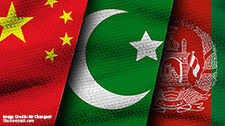
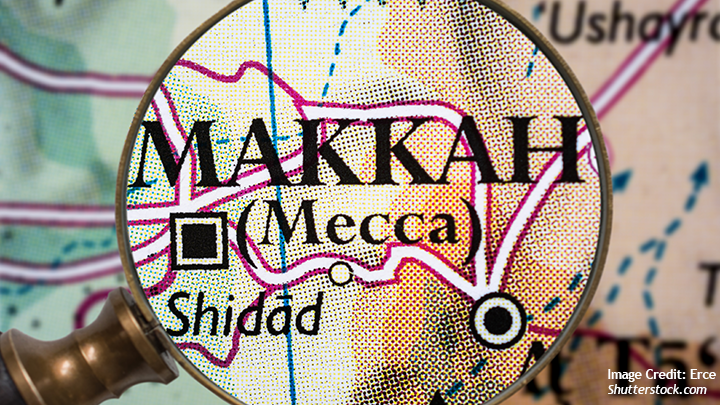
The Mecca Joint Defence Agreement is a trilateral defense partnership between Saudi Arabia, Pakistan and Turkey, signed on August 7, 2026. In what appears to be an addition of the Turkish state to the already existing Saudi-Pakistan defense pact, the Mecca Pact aims “to strengthen collective deterrence against any act of aggression, and stipulates that any armed attack against any one of the three states shall be regarded as an attack against them all,” according to the Saudi Press Agency. The press release also stated that the agreement “provides for the enhancement of all aspects of defense cooperation among the three states.”
Apart from its Article 5-like nature, there is no clear information on the pact’s specifics, even after its signing. It remains unclear whether the pact is a standalone agreement or simply a revised version of the Saudi-Pakistan defense pact of 2025, which has also not been published. So, it clearly signals that the agreement itself aims to serve the purpose of the narrative rather than any substance.
While the specifics of the pact have not been provided, quite a bit can be understood from a closer observation of the official press communications surrounding the Mecca deal. Turkey presents this primarily as a Turkey-Saudi narrative, with Pakistan not even included in the title and only being referenced after the reader has engaged with the content. This aligns with Ankara’s focus on highlighting its strategic bilateral ties with Riyadh rather than promoting a trilateral alliance. Saudi Arabia, in contrast, demands a complete trilateral framing from the title onward, supported by the “Summit” branding, emphasizing its position as the organizer and mediator of a three-way agreement rather than merely a bilateral partner. Pakistan, on the other hand, reflects Saudi’s “Summit” and “Makkah” branding and adds additional honorifics, emphasizing apparent equality and respect, probably to assure local audiences that Pakistan is a complete and valued partner rather than a minor addition.
Contrary to the announced principle that an “attack on one is an attack on all,” the pact has already been put to the test when Houthi rebels in Yemen attacked Saudi Arabia, yet there has been no response from the Pakistani or Turkish side. Right now, experts such as Galip Dalay are stating that the framework is more about deterrence than collective defense. In a world where the United States is becoming an unpredictable strategic defense partner, this pact serves as a complementary framework to extend all three nations’ defense capabilities while the U.S. is preoccupied with Iran.