Silk Cage Webinar Report-V: Hormuz in the Silk Cage: China’s Choke Point Strategy by 2030–35
Gedaliah Afterman, Dominik Mierzejewski, Norah M. Huang, Kristian Alexander, In-bum Chun, Jagannath Panda, Anne Weiler and Sevil Khikmatova
This webinar, the fifth in the Silk Cage Series, examined whether the Strait of Hormuz is becoming another node in China’s evolving strategic cage, where connectivity, commerce, and coercive potential increasingly intersect. Looking toward 2030–35, it asked whether Beijing can convert dependency into dominance, or whether Hormuz will remain the place where China’s global ambitions meet their sharpest limits.
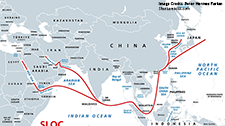
The Strait of Hormuz has traditionally been described as the world’s most important energy chokepoint. A significant share of globally traded oil and liquefied natural gas passes through this narrow maritime corridor each day, linking the Gulf to Asian, European, and global markets. Yet by 2030–35, Hormuz may be defined not only by energy flows but also by strategic competition. The emerging debate is no longer simply whether China depends on the Strait of Hormuz, but whether Beijing is steadily transforming that dependence into long-term geopolitical leverage. As China broadens its commercial reach, maritime footprint, and political influence across the Gulf and the wider Indian Ocean, Hormuz is increasingly becoming part of a larger Chinese strategic architecture.
This webinar is part of the Stockholm Center for South Asian and Indo-Pacific Affairs (SCSA-IPA) project, “The Silk Noose: China’s Power Architecture in South Asia and the Indian Ocean Region.” The entire webinar is available on YouTube. The webinar addressed the following questions:
- Will the Strait of Hormuz become central to China’s strategic architecture by 2030–35?
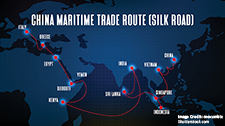
- How does the Maritime Silk Road connect Chinese commerce with geopolitical leverage in the Gulf?
- Is post-war Iran becoming China’s strategic asset or strategic liability?
- How significant are Pakistan and Gwadar to China’s Hormuz calculations?
- How are Saudi Arabia, the UAE, Oman, and Qatar balancing China’s rise with US security influence?
- Will China eventually need a larger naval role to protect its shipping interests?
- What would a stronger Chinese presence in Hormuz mean for India, Europe, Japan, and the United States?