The Rise of South Korea’s Defense Industry and Europe‑Korea Industrial Defense Cooperation: An Interview with Lt. Gen. (ret.) Chun In-bum
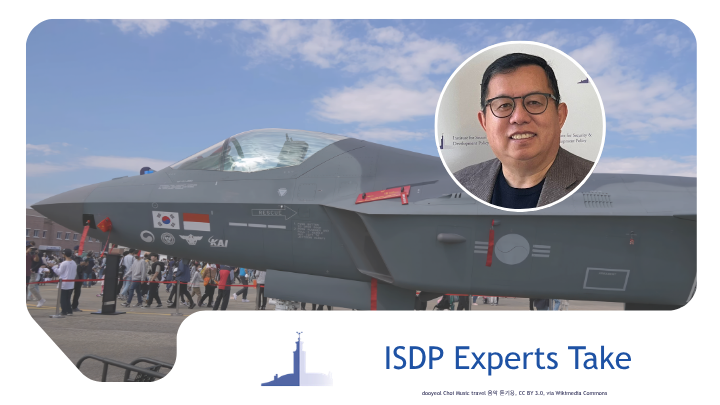
Nerea Alvarez Ariztegui and In-bum Chun
For nearly 80 years, the Republic of Korea (ROK, also known as South Korea) has technically been at war. The constant tension, paired with a delicate balance between superpowers and the escalating threat of nuclear weapons in the Democratic People’s Republic of Korea (DPRK), has motivated the country to heavily invest in its defense industry. Starting as a defense importer, Seoul crowned itself as the world’s fourth-largest exporter in 2025, rising six places in a year.
Yet, South Korea’s growing defense investment in recent years is not just a reflection of a global trend affecting the Western World as well. Unlike Seoul’s stagnation in a continuum of armistice, where the thought of war has never left the country’s mind, Europe has found itself unprepared after decades of de-escalation of military capabilities. In the wake of Russia’s invasion of Ukraine, Europe was caught unawares, indecisive, and without the means to properly defend itself. Since then, the defense sector has picked up, being reborn with the aim of rearmament. Furthermore, as new fronts appear in the Middle East (Gaza and Iran), alliances have started to shake, and European allies are reluctant to depend solely on the United States (U.S.), creating a need for diversification of arms imports in Europe, and prompting the search for new partners to fill the defense gap.
South Korea, now Europe’s second-largest arms exporter (8.6 per cent) after the U.S. (58 per cent), presents itself as an alternative defense partner with growing possibilities. Korean K9 howitzers, K2 tanks, FA-50 light attack jets, Chunmoo missiles, and KSS-III submarines are already being purchased in mass by European nations. Poland, Norway, Finland, and Estonia are drawn by the quality, interoperability, speed, and competitive prices that South Korea is able to bring to the table. However, the possibilities of cooperation could go beyond the transactional: with the rise of war, resilience should be a priority. Weapons are useful tools, but building effective industrial resilience can make the difference between winning and losing.
Nerea Alvarez Aríztegui interviews Lieutenant General (Ret.) Chun In-bum who is a decorated three-star war general from the Republic of Korea (ROK) Army, and a distinguished military fellow at ISDP explores Seoul’s defense industry evolution, its position within a divided transatlantic alliance and future areas of cooperation and growth alongside Europe: not just in a mere buyer-seller relationship, but as co-developers of industrial resilience. Chun In-bum, a retired three-star general of the South Korean Army, offers an insightful look beyond the current contracts and toward a long-term restructuring of global defense.