Opening the Arctic Route: Implications for Asia-Europe Cooperation and South Korea’s Strategic Role
In-bum Chun
Abstract
The gradual opening of Arctic maritime routes due to climate change is reshaping the geopolitical and economic landscape between Asia and Europe. The Arctic is no longer a distant northern concern; it is emerging as a strategic space with direct implications for supply chains, shipping costs, energy security, naval operations, and industrial competitiveness. South Korea has particular relevance in this changing environment. As one of the world’s leading shipbuilding nations, a major export economy dependent on maritime trade, and a country with strong interests in both Europe and the Indo-Pacific, Korea is uniquely positioned to benefit from and contribute to the development of Arctic connectivity. Korea’s strengths in ice-class ship construction, LNG carriers, port logistics, advanced navigation systems, maritime domain awareness, and naval cooperation provide it with an opportunity to play a meaningful role in the evolving Arctic order. This issue brief examines the background of Arctic shipping routes, evaluates their current status and future implications, analyzes South Korea’s potential role, and considers how Korean organizations and businesses could quietly contribute to broader strategic dialogue, alliance-building, and maritime security cooperation.
—
Introduction
For centuries, European and Asian trade has depended on maritime routes that pass through the Indian Ocean, the Strait of Malacca, the South China Sea, and the Suez Canal. These routes remain central to global commerce, but they are increasingly vulnerable to disruption. Conflict in the Middle East, piracy, great-power competition, blockages such as the 2021 Ever Given incident in the Suez Canal, and instability in chokepoints such as the Strait of Hormuz and Bab el-Mandeb have highlighted the fragility of existing maritime trade networks.
At the same time, climate change is making the Arctic more accessible. Melting sea ice is opening new maritime routes across the north, particularly during the summer and autumn months. These routes include the Northern Sea Route (NSR) along Russia’s northern coast, the Northwest Passage through the Canadian Arctic, and the Transpolar Route, which may become more viable later in the century.
The opening of these routes has profound implications for Asia-Europe relations. Shorter travel distances could reduce shipping times, lower fuel costs, and reshape global supply chains. However, these opportunities are accompanied by significant risks, including legal disputes, environmental concerns, military competition, infrastructure challenges, and uncertainty regarding seasonal accessibility.
For South Korea, the Arctic presents both an economic opportunity and a strategic challenge. Korea is one of the world’s largest trading economies and relies heavily on maritime trade routes for exports, energy imports, and industrial production. Korean shipbuilders are already global leaders in ice-class vessels and LNG carriers. Korean ports, logistics firms, technology companies, and security institutions may all have important roles to play.
This issue brief argues that South Korea should pursue a balanced Arctic strategy that combines economic engagement, technological innovation, maritime security cooperation, and alliance coordination with Europe and like-minded partners.
Background: The Arctic Route and Why It Matters
The Arctic region is warming at a rate approximately four times faster than the global average. As a result, Arctic sea ice has declined dramatically over the past several decades. According to scientific observations, summer sea ice extent has fallen significantly since satellite monitoring began in 1979.
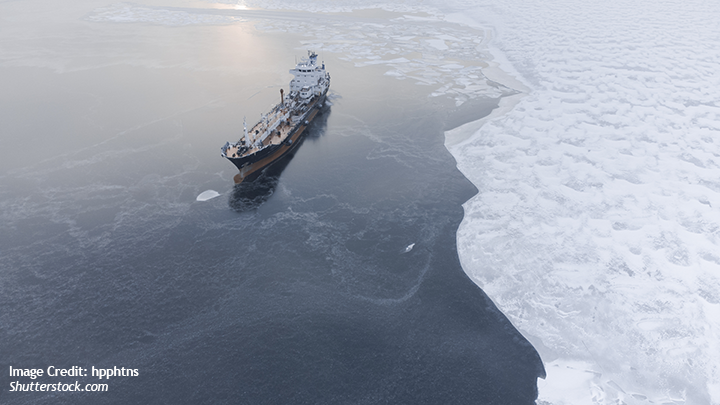
Three main maritime routes are relevant. The first is the Northern Sea Route, which follows Russia’s Arctic coastline from the Bering Strait to northern Europe. This is currently the most commercially developed Arctic route. It is shorter than the traditional route through the Suez Canal for trade between Northeast Asia and Northern Europe. The second is the Northwest Passage, which passes through the Canadian Arctic archipelago. This route is less developed and more difficult to navigate due to shallow waters, limited infrastructure, and more unpredictable ice conditions. The third is the Transpolar Route, which would cross directly over the Arctic Ocean. This route is not yet commercially viable but could become more feasible by the middle of the century if ice conditions continue to decline.
The Northern Sea Route is of greatest interest to South Korea because it offers the most immediate potential for commercial shipping between Northeast Asia and Europe. A voyage from Busan to Rotterdam via the Arctic can be significantly shorter than the route through the Suez Canal. Estimates vary, but the distance can be reduced by roughly 30 to 40 percent depending on the destination and seasonal conditions.
Shorter routes can reduce transit time by 10 to 15 days. This may lower fuel costs, reduce emissions per voyage, and improve the efficiency of just-in-time supply chains. For export-driven economies such as South Korea, Germany, Japan, and China, these benefits are significant. However, the Arctic route is not a simple replacement for traditional sea lanes. It remains seasonal, expensive, environmentally sensitive, and politically contested. Ships often require icebreaker escorts, specialized hulls, higher insurance costs, and enhanced navigation capabilities.
Current Status of the Arctic Route
The Northern Sea Route has experienced periodic increases in shipping activity over the last decade. Russia has invested heavily in Arctic infrastructure, including ports, icebreakers, satellite systems, and search-and-rescue facilities. Moscow views the Arctic as both an economic lifeline and a strategic frontier. Russia has also attempted to expand exports of liquefied natural gas (LNG), oil, and minerals through Arctic routes. Projects such as Yamal LNG demonstrated that Arctic energy shipping can be commercially viable when supported by state investment and specialized vessels. China has also shown increasing interest in the Arctic. Beijing describes itself as a “near-Arctic state” and has promoted the concept of a Polar Silk Road. China sees Arctic routes as a way to diversify supply chains, reduce dependence on vulnerable maritime chokepoints, and expand access to resources.
European countries are divided in their Arctic perspectives. Nordic states generally see opportunities in trade, energy, and infrastructure, but they are also concerned about environmental damage, Russian militarization, and growing Chinese influence. The Russian invasion of Ukraine in 2022 significantly complicated Arctic cooperation. Western sanctions have disrupted many joint projects involving Russia, limited technology transfers, and reduced commercial confidence in the Northern Sea Route. Insurance risks, sanctions compliance, and geopolitical uncertainty have made many international firms more cautious. As a result, the Arctic route remains promising but underdeveloped. Shipping volumes have increased in some areas, especially for Russian domestic cargo and LNG exports, but the route has not yet become a mainstream alternative to the Suez Canal.
Several Barriers Remain
First, the Arctic route is seasonal. Even with climate change, ice conditions vary considerably from year to year. Second, infrastructure is limited. Many Arctic ports lack repair facilities, fuel depots, rescue services, communications systems, and medical support. Third, insurance costs are high. Arctic navigation involves significant operational risks. Fourth, legal disputes continue. Russia claims strong regulatory authority over the Northern Sea Route, while some Western countries argue that parts of the route should remain open international waters. Fifth, environmental concerns are serious. Accidents in the Arctic are difficult to contain and can cause long-term ecological damage.
Future Economic Implications
If Arctic routes become more reliable, they could alter global trade patterns in several ways. First, shipping between Northeast Asia and Northern Europe could become faster and cheaper. This would benefit export-oriented economies such as South Korea, Japan, China, and Germany. Second, Arctic shipping may reduce dependence on traditional chokepoints such as the Suez Canal, the Strait of Malacca, and the Strait of Hormuz. This could increase strategic resilience in times of crisis. Third, the Arctic could become an important source of energy, minerals, rare earth elements, and fisheries. The region contains substantial untapped reserves of oil and natural gas, although extraction remains costly and controversial. Fourth, new ports, logistics hubs, and transshipment centers may emerge. Northern European ports such as Rotterdam, Narvik, Kirkenes, and Murmansk may gain importance. Asian ports such as Busan could also benefit if they position themselves as Arctic logistics gateways. Fifth, Arctic shipping could create new demand for specialized vessels, including icebreakers, ice-class cargo ships, LNG carriers, autonomous navigation systems, and cold-weather infrastructure.
This is particularly important for South Korea. Korean shipbuilders are already global leaders in advanced maritime engineering. Korean companies have significant experience building LNG carriers, ice-class vessels, and specialized commercial ships. Korean shipyards are well-positioned to benefit from growing demand for Arctic-capable vessels. Korea’s technological edge in hull design, propulsion systems, digital ship management, and fuel efficiency could provide a competitive advantage. At the same time, Korean companies could participate in Arctic port development, telecommunications, satellite navigation, maritime insurance, and logistics planning.
However, the economic benefits should not be overstated. Arctic routes will not replace traditional routes in the near future. They are more likely to supplement existing trade corridors rather than fundamentally transform them.
Security Implications
The Arctic is becoming an increasingly contested military space. Russia has expanded its Arctic military infrastructure, reopened Soviet-era bases, modernized airfields, deployed missile systems, and strengthened its Northern Fleet. The Arctic is central to Russia’s nuclear deterrent because it hosts ballistic missile submarines and strategic naval assets. The United States, Canada, Norway, Denmark, Finland, and Sweden have also increased their focus on Arctic security. NATO has become more active in the High North, especially after Finland and Sweden joined the Alliance. China’s growing Arctic presence has also raised concerns. Although China does not have Arctic territory, it has expanded research activities, invested in infrastructure, and increased cooperation with Russia.
Future Arctic competition may involve several areas.
- freedom of navigation and maritime law.
- access to natural resources.
- military basing and missile defense.
- submarine operations and anti-submarine warfare.
- cyber security, satellite communications, and undersea infrastructure protection
The Arctic is especially important for submarine operations because it offers concealment, proximity to North America and Europe, and access to major oceans. For South Korea, Arctic security may seem distant, but it has real implications. South Korea depends heavily on maritime trade and energy imports. Roughly all of its trade moves by sea. Any disruption to shipping routes affects Korean exports, inflation, energy prices, and industrial production. South Korea also has growing interests in naval modernization, maritime surveillance, unmanned systems, cyber security, and alliance coordination. The Korean Navy has developed greater blue-water capabilities in recent years. While Korea is unlikely to play a direct military role in the Arctic, it can contribute indirectly through maritime technology, logistics support, information sharing, joint exercises, and cooperation with NATO partners.
South Korea’s Potential Role
South Korea has several comparative advantages in the Arctic.
Shipbuilding
South Korea remains one of the world’s leading shipbuilding nations. Korean companies have built some of the most advanced LNG carriers and ice-class vessels in the world. Korean shipbuilders have already participated in Arctic-related projects, particularly involving LNG transportation. Their ability to design and build vessels capable of operating in icy conditions gives them an important niche advantage. Korean firms can also contribute to the development of hybrid propulsion systems, low-emission shipping, autonomous navigation, digital twins, predictive maintenance systems, and smart ship technology.
Logistics and Port Infrastructure
Busan has the potential to become a major Arctic logistics hub in Northeast Asia. It is also where the HJ Shipbuilding and Construction (HJSC) is located. This provides a Korean ship builder located in a critical port with the US having a presence adjacent to these facilities. If Arctic shipping expands, Busan could serve as a transshipment center linking Arctic routes with broader Indo-Pacific trade networks. Korean firms could also participate in Arctic port construction, cold-weather storage systems, port automation, and supply chain integration.
Energy Security
South Korea imports most of its energy. Arctic LNG projects may offer additional supply options. Diversifying energy imports can improve Korean resilience, especially during crises affecting the Middle East. At the same time, Korea should avoid overdependence on any single Arctic supplier because sanctions, conflict, and climate conditions can disrupt access.
Technology and Research
South Korea has advanced capabilities in satellite technology, AI, robotics, autonomous systems, and telecommunications. These capabilities could support Arctic navigation, maritime domain awareness, weather forecasting, search-and-rescue operations, and environmental monitoring. Korea already maintains Arctic research activities through the Korea Polar Research Institute and the Dasan Station in Svalbard. These institutions provide Korea with a foundation for deeper scientific engagement and policy influence.
Diplomacy and Multilateral Cooperation
South Korea should continue working with European countries, Nordic states, NATO partners, and Arctic institutions. Korea does not need to choose between economic cooperation and security cooperation. It can pursue both simultaneously. Korea should emphasize international law, freedom of navigation, environmental protection, and responsible development.
The Quiet Role of Korean industry
Organizations and companies, such as HJSC, can play a useful but understated role in Arctic discussions. HJSC does not need to position itself as an Arctic institution. However, it can contribute through strategic dialogue, alliance networking, military-to-military engagement, and policy exchange. HJSC and Korean industry could host conferences or roundtables involving Korean, American, European, and Nordic experts on maritime security, logistics, Arctic trade routes, and alliance cooperation. It could also facilitate discussions on dual-use technologies, shipbuilding, supply chain resilience, energy security, and the role of alliances in protecting sea lanes. Because the Arctic increasingly connects the Indo-Pacific and Europe, there is value in encouraging Korean defense and business communities to think beyond traditional regional boundaries. Korean industry can quietly support these processes without appearing overly commercial or narrowly focused.
Policy Recommendations
South Korea should adopt a long-term Arctic strategy based on five pillars. First, Korea should strengthen investment in Arctic-capable shipbuilding and maritime technology. Second, Korea should deepen partnerships with Nordic countries and European allies on Arctic logistics, infrastructure, and environmental standards. Third, Korea should improve its ability to monitor Arctic developments through satellites, AI, maritime surveillance, and research institutions. Fourth, Korea should integrate Arctic issues into broader alliance discussions involving NATO, the United States, and Europe. Fifth, Korea should pursue a balanced approach that recognizes both the opportunities and risks of Arctic development. The Arctic should not be viewed only as a commercial opportunity. It is also a strategic domain shaped by competition among major powers.
Conclusion
The opening of Arctic routes is one of the most important long-term changes in global trade and geopolitics. While the Arctic will not replace traditional sea lanes in the near future, it is becoming increasingly relevant to Asia-Europe cooperation. For South Korea, the Arctic presents an opportunity to expand its influence beyond Northeast Asia. Korea’s strengths in shipbuilding, logistics, technology, energy security, and maritime cooperation make it well suited to play a constructive role. However, Korea should approach the Arctic with caution and realism. The region remains difficult, dangerous, and politically contested. A successful Korean strategy will require close coordination with Europe, the United States, and like-minded partners. It will also require a balance between economic ambition, environmental responsibility, and security awareness. The Arctic is no longer a distant frontier. It is becoming a new strategic bridge between Asia and Europe, and South Korea has an opportunity to help shape its future.
References
Arctic Council, “Arctic Marine Shipping Assessment 2009 Report,” Arctic Council, 2009.
Danish Ministry of Defence, “Denmark’s Arctic Capacity Package,” Copenhagen, 2025.
European Commission and European External Action Service, “A Stronger EU Engagement for a Peaceful, Sustainable and Prosperous Arctic,” Joint Communication, 2021.
Finnish Government, “Finland’s Strategy for Arctic Policy,” Helsinki, 2021.
Government of the Republic of Korea, Ministry of Oceans and Fisheries, “Korea’s Arctic Policy Master Plan,” Seoul, 2013.
Heather A. Conley and Caroline Rohloff, “The New Ice Curtain: Russia’s Strategic Reach to the Arctic,” Center for Strategic and International Studies, 2015.
Intergovernmental Panel on Climate Change, “Special Report on the Ocean and Cryosphere in a Changing Climate,” 2019.
International Energy Agency, “The Role of Arctic LNG in Global Energy Markets,” Paris.
International Maritime Organization, “International Code for Ships Operating in Polar Waters (Polar Code),” 2017.
Katarzyna Zysk, “Russia’s Arctic Strategy: Ambitions and Constraints,” Survival 62, no. 6, 2013.
Korea Maritime Institute, “Busan’s Potential Role as a Northeast Asian Arctic Logistics Hub,” Seoul, 2025.
Korea Polar Research Institute, “Republic of Korea Arctic Research Activities and Strategic Outlook,” Incheon.
Lee Seong-Woo, “Korea’s Maritime Strategy and the Arctic,” Korea Institute for Maritime Strategy.
Malte Humpert, “The Future of Arctic Shipping Along the Northern Sea Route,” The Arctic Institute.
Marc Lanteigne, “China’s Emerging Arctic Strategies: Economics and Institutions,” The Polar Journal.
National Snow and Ice Data Center, “Arctic Sea Ice News and Analysis,” accessed April 2026.
North Atlantic Treaty Organization, “NATO and Security in the High North,” Brussels.
Norwegian Ministry of Foreign Affairs, “The Norwegian Government’s Arctic Strategy,” Oslo.
Organization for Economic Co-operation and Development, “The Future of the Arctic: Shipping, Resources and Climate Change,” OECD Publishing.
SIPRI, “Climate Change and Security in the Arctic,” Stockholm International Peace Research Institute.
Swedish Defence Research Agency, “Security Developments in the Arctic Region,” Stockholm.
United Nations Convention on the Law of the Sea, 1982.
United States Congressional Research Service, “Changes in the Arctic: Background and Issues for Congress,” updated regularly.
United States Department of Defense, “2024 Arctic Strategy,” Washington, D.C.
World Bank, “Global Economic Prospects: Trade Corridors and Maritime Chokepoints,” Washington, D.C.
Suggested Hyperlinked References
Arctic Council: https://arctic-council.org
International Maritime Organization Polar Code: https://www.imo.org
National Snow and Ice Data Center: https://nsidc.org
NATO Arctic Security: https://www.nato.int
European Union Arctic Policy: https://www.eeas.europa.eu
Korea Polar Research Institute: https://www.kopri.re.kr
Korea Maritime Institute: https://www.kmi.re.kr
U.S. Department of Defense Arctic Strategy: https://www.defense.gov
Congressional Research Service Arctic Reports: https://crsreports.congress.gov
The Arctic Institute: https://www.thearcticinstitute.org