-
Report of the Silk Cage Webinar-IV: Corridors of Influence? The China–Indochina Peninsula Economic Corridor and Beijing’s Expanding Power Architecture
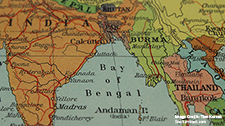
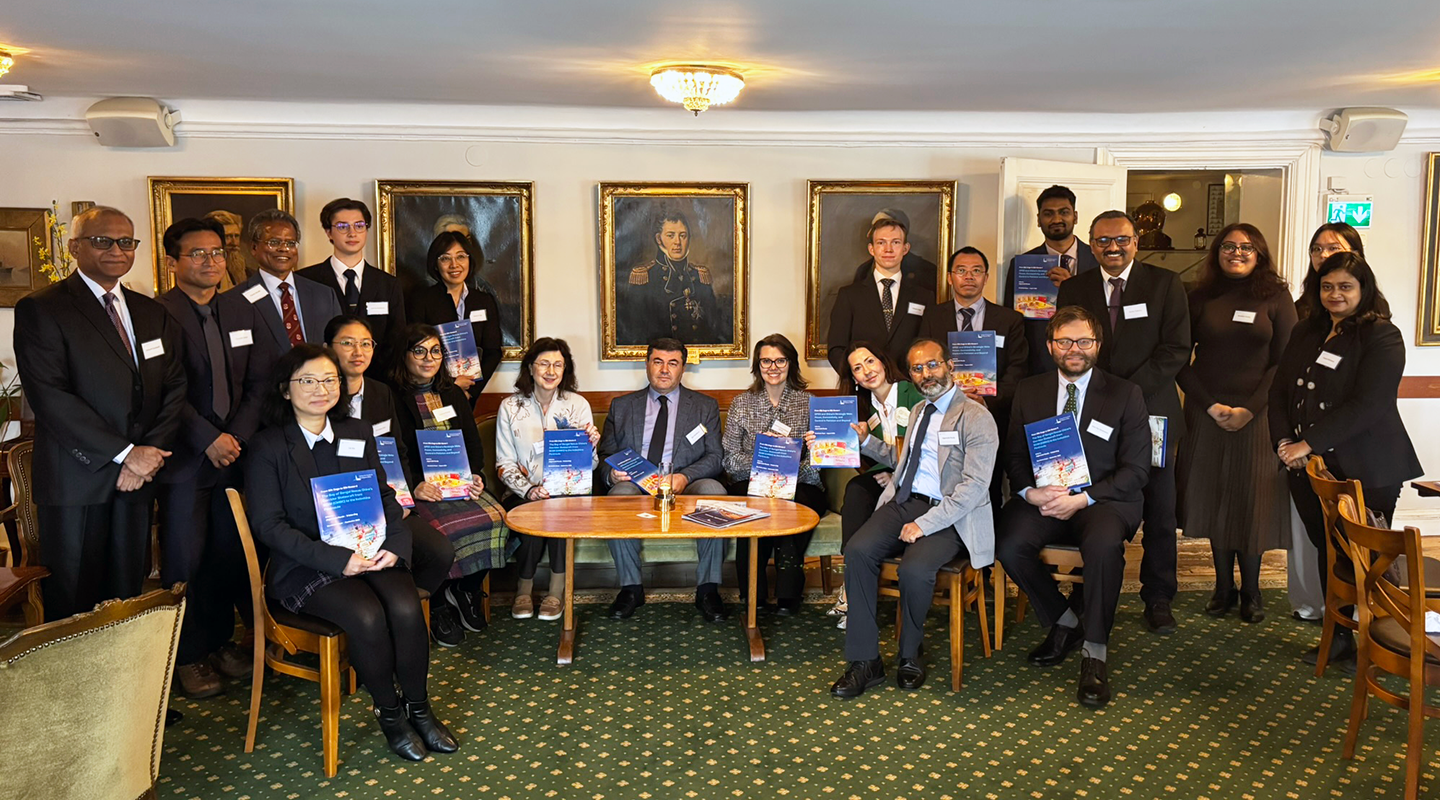
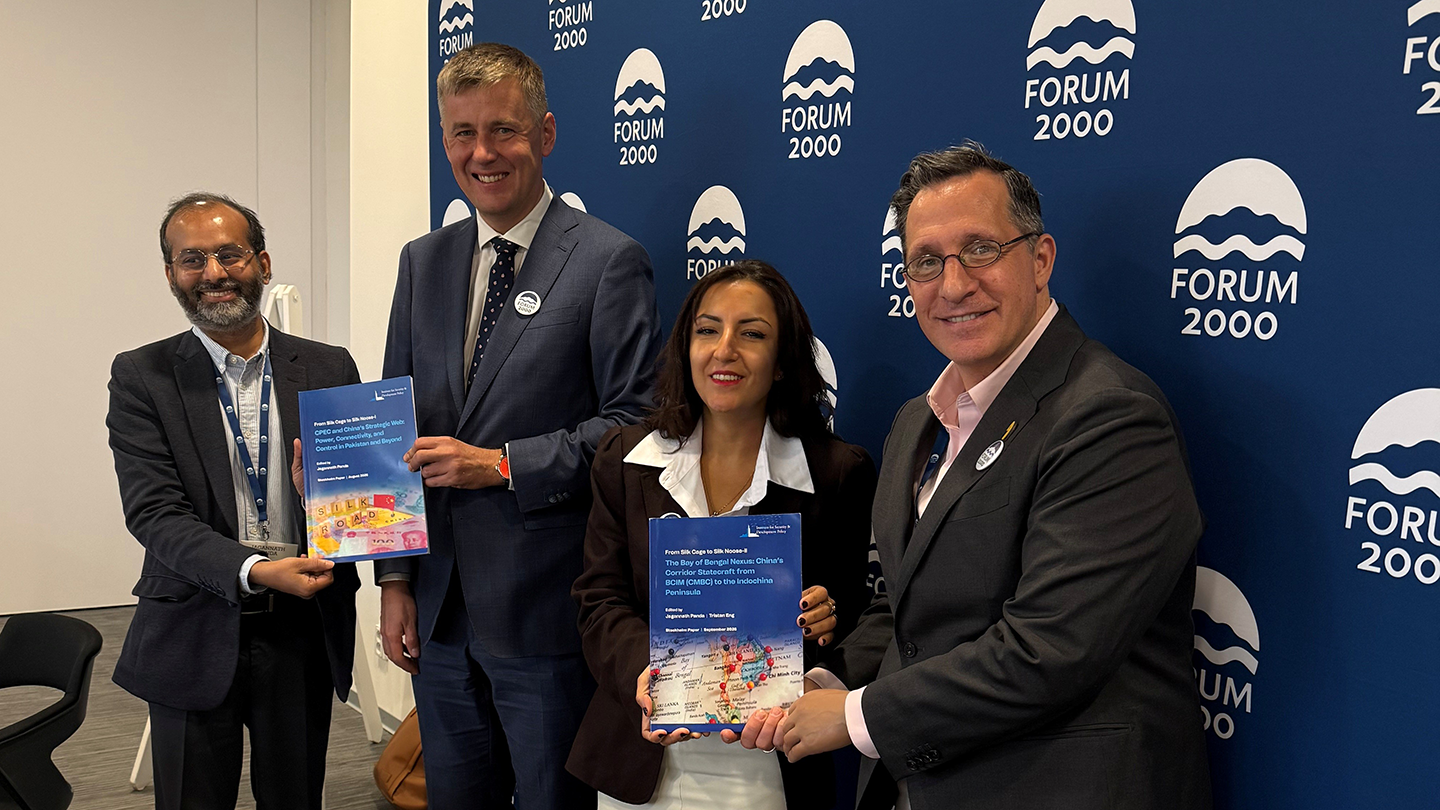
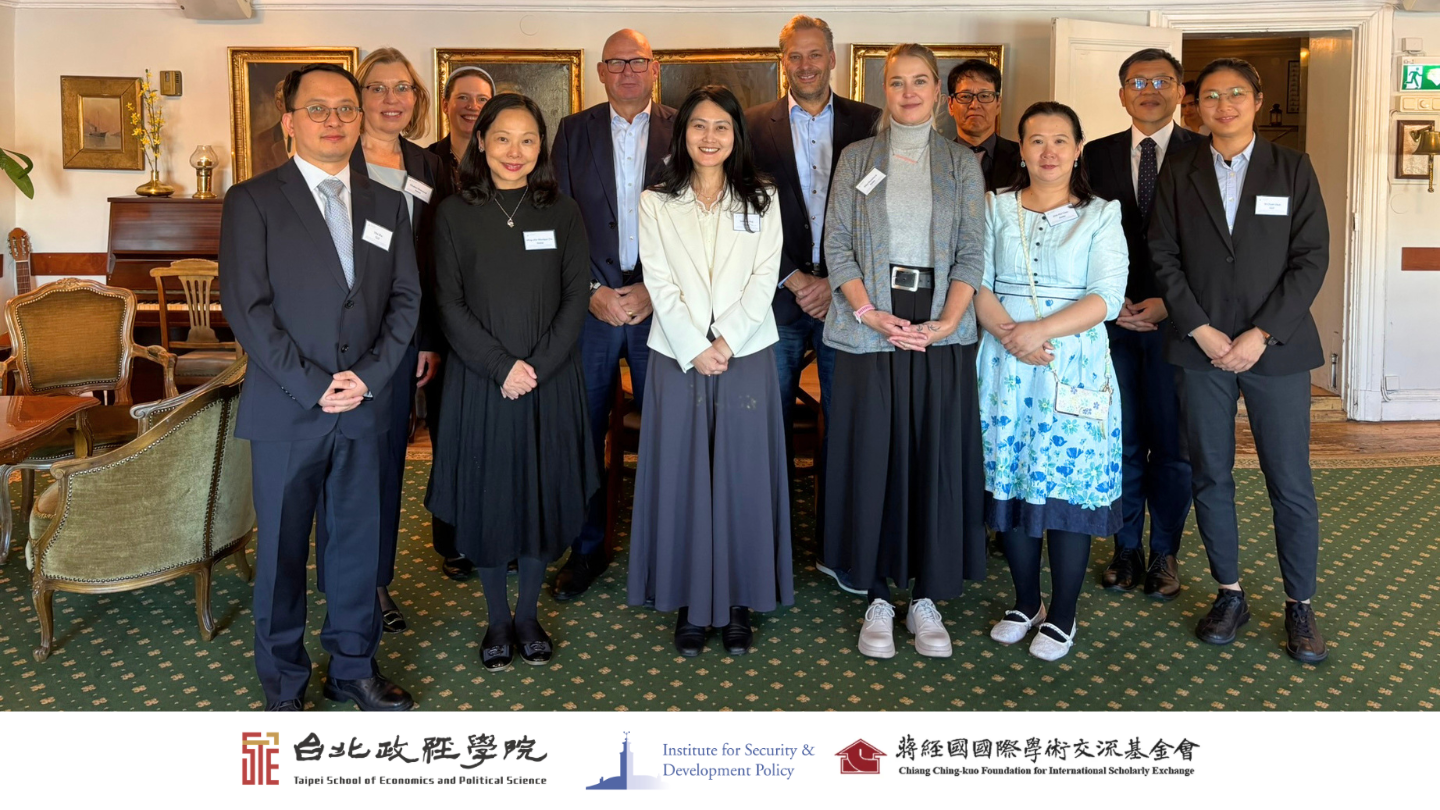
This webinar report, the fourth in the Silk Cage Series, moves beyond South Asia to examine how China’s continental corridors interface with maritime strategy, influence operations, and broader geopolitical contestation. It situates the China–Indochina Peninsula Economic Corridor (CICPEC) within a wider strategic arc linking the South China Sea to the Bay of Bengal and further into the Indian Ocean Region (IOR). As part of the Stockholm Center for South Asian and Indo-Pacific Affairs (SCSA-IPA) project, “The Silk Noose: China’s Power Architecture in South Asia and the Indian Ocean Region,” the discussion explored how China is constructing not only economic corridors, but an interlinked power architecture stretching from continental Southeast Asia into the Indian Ocean. Within this framework, South Asia represents a central theater of this evolving system, while CICPEC illustrates how adjacent regions reinforce, extend, and sustain it. Read and download the webinar report here.
-
Greenland and Arctic Security: What’s at Stake?
This ISDP factsheet maps key developments shaping Greenland’s role in Arctic security, including its governance status, economic dependence, and resource potential, as well as U.S. expansion plans, NATO’s response, and allied initiatives on critical minerals and energy cooperation. It presents key data and visual insights on emerging Arctic dynamics and highlights the implications for European security, NATO cohesion, and the evolving balance of power in the region.
-
From Corridors to Code: China’s Digital Statecraft through CPEC
This issue brief by Tristan Eng analyzes the digital dimension of the China–Pakistan Economic Corridor (CPEC), arguing that the significance of the corridor lies less in physical connectivity and more in the expansion of energy and technological infrastructure. It examines how projects such as fiber-optic networks, surveillance systems, and satellite cooperation reshape Pakistan’s security practices and economic development. The author argues that these initiatives embed Pakistan within Chinese technological standards and ecosystems, potentially generating long-term dependencies while advancing China’s strategic interests. In the long term, Pakistan’s embeddedness may complicate its ability to maintain strategic autonomy in an era of intensifying geopolitical competition, writes Tristan Eng. Read and download the issue brief here.
-
Techno-Strategic Pragmatism: The UAE–Sweden Defense Partnership in Comparative Perspective
Kristian Alexander argues in this piece that the UAE–Sweden defense partnership demonstrates that security cooperation need not be alliance-based to be strategically meaningful. It is a calibrated, technology-driven relationship that reinforces surveillance, resilience, and deterrence without escalating into overt political alignment. He further writes that compared to the platform-heavy South Korean relationship and the co-development-oriented Brazilian track, the Swedish lane stands out for its focus on enabling technologies, industrial depth, and normative predictability. It embodies techno-strategic pragmatism with guardrails: deep enough to matter, structured enough to endure, and constrained enough to remain politically sustainable, writes Alexander. Read the full piece here.
-
The Silk Road and South Asia: China’s Bridge from Regional to Global Politics
John S. Van Oudenaren, in this issue brief, writes that China’s shift under Xi Jinping from a regionally focused foreign policy in East Asia to a global strategy challenging U.S. leadership may seem abrupt, but it has unfolded gradually. South Asia has been central to this transition, particularly through its role in the Belt and Road Initiative (BRI), which has helped extend China’s influence beyond its immediate neighborhood. Several factors explain the region’s importance. South Asia’s strategic geography is critical to China’s connectivity and security objectives. Its complex power dynamics also allow Beijing to exploit tensions between India’s traditional dominance and the ambitions of states such as Pakistan and Bangladesh, writes Oudenaren. He further writes that the absence of cohesive regional institutions comparable to ASEAN enables China to expand its influence through overlapping, Sino-centric multilateral frameworks. Read and download this issue brief here.
-
‘Bridge to the West’ – Factsheet on Swedish-DPRK Relations
Sweden is frequently referred to as the “bridge to the West” of the Democratic People’s Republic of Korea (DPRK, commonly referred to as North Korea) due to its long-standing and reliable diplomatic presence in Pyongyang. Sweden was the first Western country to open an embassy in the DPRK in 1975, and it is still one of the few European nations with a presence there. Using its historical neutrality and stable engagement with Pyongyang, Sweden has taken on the crucial duty of promoting the interests of several countries involved in the security dynamics on the Korean Peninsula, particularly the United States of America (USA) and the Republic of Korea (ROK, commonly referred to as South Korea). This factsheet by Josephine Ørgaard Rasmussen outlines how Sweden has established itself as a reliable partner of the DPRK via ongoing engagement and constructive communication. Download and refer to the factsheet here.
-
Naval Operations in the Strait of Hormuz and the Greek Perspective
This issue brief by Athanasios Drivas examines the strategic significance of the Strait of Hormuz in the context of the 2026 regional crisis involving the United States, Israel, and Iran, with particular emphasis on the implications for Greece. It argues that Hormuz is not merely a regional maritime choke point, but a global centre of gravity where energy security, freedom of navigation, international law, naval deterrence, and supply-chain resilience converge. The analysis highlights the vulnerability of global oil and LNG flows, the operational risks created by asymmetric Iranian capabilities, and the limitations of purely military solutions in such a complex maritime environment. From a Greek perspective, the issue brief demonstrates that the security of Hormuz is directly connected to national maritime interests, given the scale of Greek-owned shipping and Greece’s role as a leading European maritime power. Read this issue brief here.
-
Drawing Parallels Again: What If It Was A Cross-Strait Contingency?
With everyone’s eyes glued to the ongoing conflict between the United States and Israel against Iran in West Asia, a question arises in the far eastern waters of the Taiwan Strait—how similar or different will the situation be if a cross-strait war flares up? And how will it affect its neighboring countries that host the United States military bases? Manoj Kumar Panigrahi writes that while the Russia-Ukraine war is still ongoing, the Iran conflict has given another opportunity for pundits focusing on Taiwan’s security to assess the fallout and explore options if a clash occurs between Taiwan and China. Read this piece here.