The Taiwan-Nordic Forum 2026 Emphasizes Resilience Through Cooperation as Central to Defense
Key points:
- Shared democratic values bring Taiwan and the Nordic and Baltic countries together in addressing and countering the challenges posed by authoritarianism.
- Maritime security: In an increasingly dynamic security environment, timely information sharing is essential. Deeper cooperation between Taiwan and the Nordic countries is key to strengthening collective resilience.
- Airspace incursions: Recent and escalating violations in both Taiwan and Europe represent a serious and emerging threat. Enhanced knowledge exchange is crucial to effectively respond.
- Taiwan and the Nordic and Baltic countries stand on the same side. Contingencies are no longer hypothetical, but already unfolding. This shows the importance of knowledge sharing, and continuously strengthening and expanding joint expertise.
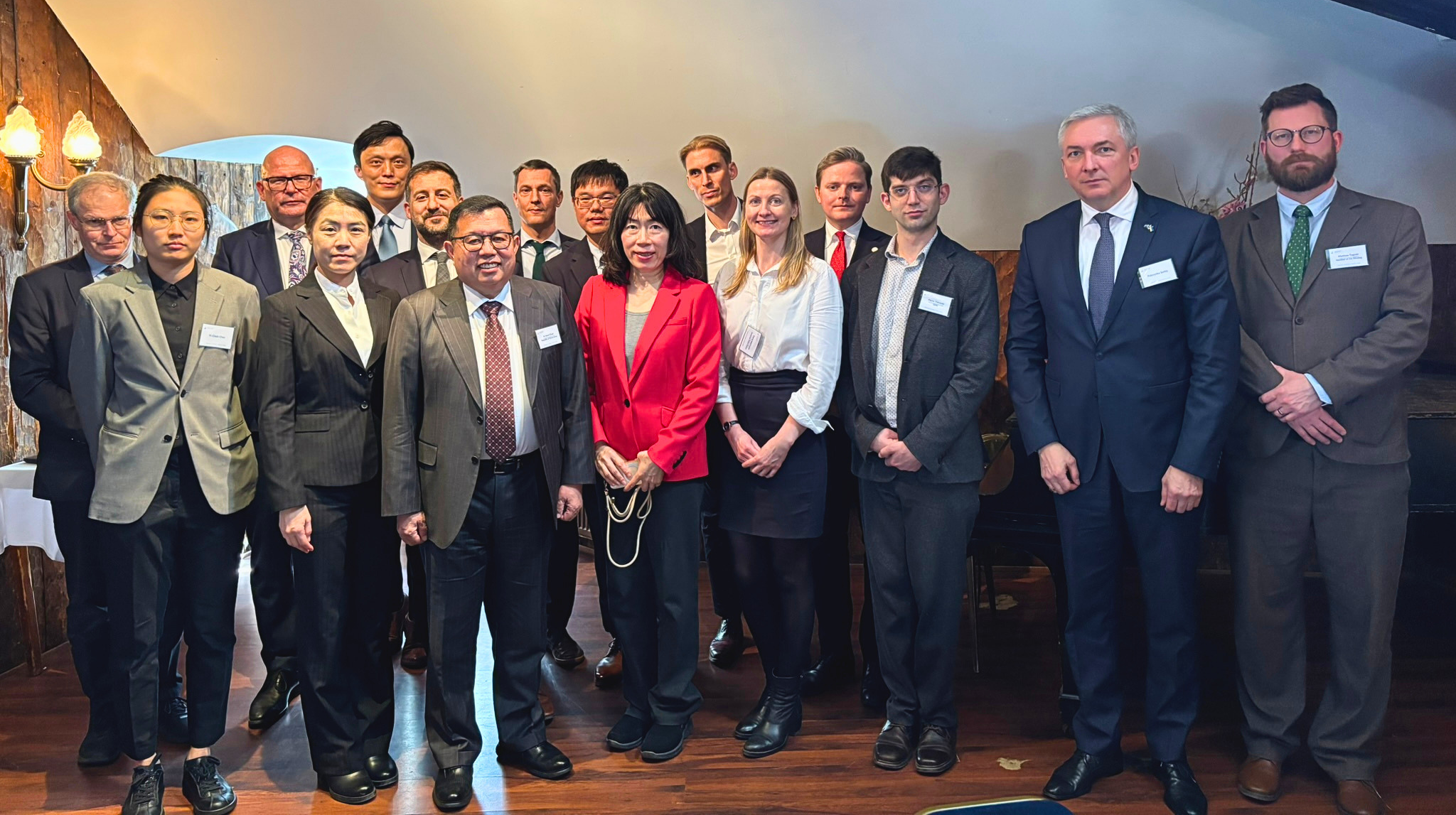
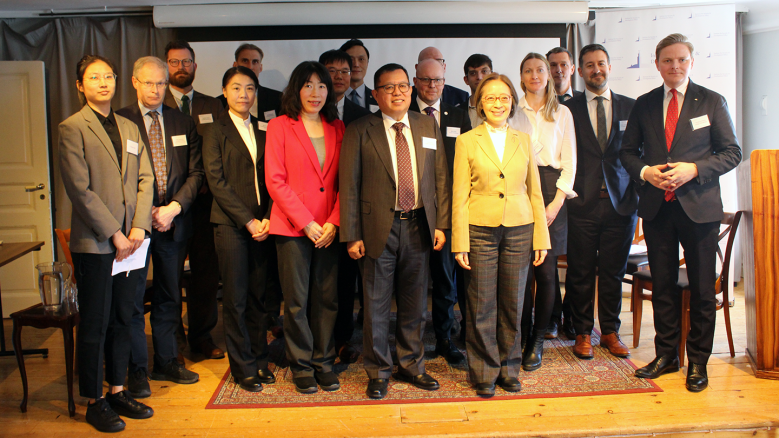
April 17, 2026: The Taiwan-Nordic Forum 2026, titled Resilience as Defense, was held on April 15, 2026, in Stockholm and called for closer cooperation, deeper knowledge sharing, and strengthened joint expertise between Taiwan and the Nordic and Baltic countries to meet emerging challenges together.
Organized by the Stockholm Taiwan Center of the Institute for Security and Development Policy (ISDP), the event focused on Taiwanese, Nordic and Baltic perspectives on critical maritime infrastructure, airspace incursions in Taiwan and Europe, and cooperation in a Taiwan contingency, including geopolitical, economic, and technological perspectives.
The annual forum brings together distinguished Nordic, Baltic, and Taiwanese scholars and experts for discussions and an exchange of ideas around important issues of mutual interest. Panel discussions were moderated by representatives from different parties in the Swedish Riksdag, with each panel showcasing Taiwanese, Nordic and Baltic voices.
The three sessions emphasized that Taiwan’s geographic vulnerability to hybrid threats calls for increased cooperation to secure peace together.
The forum began with welcome remarks from Niklas Swanström, Executive Director of the ISDP, as well as special introductory remarks from Phoebe Yeh, Representative, Taipei Mission in Sweden.
In-bum Chun, Lieutenant General (Ret.), Republic of Korea Army, delivered a keynote presentation on South Korea’s position amid a potential Taiwan contingency highlighting how geographical positions and alliances would make it inevitable to join the conflict.
The forum included three sessions, each aimed at exploring the resilience of Taiwan, Nordic, and Baltic states as a form of defense from multiple perspectives.
Learning from each other’s experiences: Taiwanese and Nordic experiences with sabotage and security in critical maritime infrastructure
Taiwan and Nordic Perspectives on Critical Maritime Infrastructure were the focus of the first panel. The discussion, moderated by Björn Söder, Member of the Riksdag, Sweden Democrats, addresses topics such as the threats and sabotage of underseas infrastructure, the role of commercial vessels in maritime security, as well as countermeasures to maritime incursions. The panel consisting of Hans Liwång, Professor, Department of Systems Science for Defence and Security, Swedish Defence University, Bin-Yi Liu, Naval Captain, Director of the Military Coordination Division in Taipei Representative Office in Denmark, Ministry of National Defense of the Republic of China (Taiwan), Pierre Thévenin, Researcher, Stockholm International Peace Research Institute and International Technical Expert for Expertise France, and Christy Ya-Chi Chiang, Deputy Representative of Taipei Representative Office in the U.K, outlined that safeguarding critical cable infrastructure brings Taiwan and the Northern and Baltic Sea states together to share lessons learned and strengthen resilience against attacks.
The discussion stressed the importance of the formation of a structural cooperation in the fast-paced security situation regarding maritime security. The speakers also emphasized that the current legal framework is outdated and lacks cohesion in key areas, creating gaps that allow vessels to enter and carry out acts of sabotage.
Airspace incursions in the gray-zone: Challenges for both Taiwan and Europe
The second panel, moderated by Gustaf Göthberg, Member of the Riksdag, Moderate Party, focused on Airspace Incursions in Taiwan and Europe. During their discussion, the speakers Tony Lawrence, Head of Defence Policy and Strategy Programme & Research Fellow, International Center for Defense and Security, Jen-you Wu, Air Force Colonel, Director of Military Coordination Division in the Taiwanese Representative Office in Lithuania, Ministry of National Defense of the Republic of China (Taiwan), and Bruno Oliveira Martins, Senior Researcher, Peace Research Institute Oslo, presented airspace incursions in the Taiwan Strait and Europe, focusing on challenges, responses, and their broader security impact.
As drones, including civilian applications, continue to gain importance, it was highlighted that they frequently operate in regulatory gray-zones, making knowledge exchange increasingly essential.
Taiwan-Nordic Cooperation in a Taiwan Contigency: Matching frontline exposure with Nordic expertise
Cooperation in a Taiwan Contingency: During the third and final panel of the forum, moderated by Mathias Tegnér, Member of the Riksdag, Social Democratic Party, panelists argued that security extends beyond regional boundaries and must be addressed as a global issue.
This panel consisted of Maria Martisiute, Policy Analyst, European Policy Centre, Tsung-Han Wu, Assistant Research Fellow, Institute for National Defense and Security Research, and Marcel Mangold, Senior Lecturer, Department of War Studies, Swedish Defense University. Their discussion focused on assessing the geopolitical and economic implications in a Taiwan contingency, Nordic and European Roles in strategic deterrence and crisis prevention in the Taiwan Strait, and opportunities for strategic cooperation in critical technologies and defense strategies.
The panel discussions showed that contingencies are already unfolding. The speakers highlighted that Taiwan, and the Nordic countries should improve their collaboration in areas such as anti-drone systems, data sharing, as well as space.
The speakers also highlighted that societal perspectives on defense and the role of civil society vary significantly. Since the 2020s, Taiwan has been developing a “whole-of-society-defense,” although public trust in the military is relatively low. In contrast, Sweden, for example, has a well-developed total defense strategy, supported by numerous volunteer-based organizations contributing to national defense. Drawing upon total defense strategies from Nordic states allows Taiwan to re-think and re, -design deterrence, civil protection and defense resilience.
Overall, the forum showed that cooperation is the strongest shared form of defense. Taiwan, the Nordic and the Baltic countries are united by common values and a commitment to democracy. This requires not only institutional collaboration, but also people-to-people exchanges, academic engagement, and the willingness to learn from one another.