Beyond Cable Protection: Taiwan’s Undersea Infrastructure Resilience in the Age of AI
Yi-Chieh Chen
Abstract
Taiwan has adopted a comprehensive approach to strengthening the resilience of its undersea infrastructure through legal reforms, enhanced surveillance and backup communication capabilities, and calls for international cooperation. In the meantime, Taipei seeks to increase its strategic importance within global digital networks by positioning itself as a hub for semiconductor production, AI development, and international communications connectivity. Despite these efforts, significant structural challenges remain. Resource constraints related to energy and water supply may limit the expansion of AI infrastructure and reduce Taiwan’s attractiveness for future undersea cable investments, while dependence on international cable repair arrangements creates vulnerabilities during periods of disruption. This policy brief argues that addressing these challenges will be essential for strengthening Taiwan’s long-term undersea infrastructure resilience and strategic position in the age of AI.
Introduction
The growing use of gray-zone tactics in Taiwan’s surrounding waters has pushed Taipei to reform its legal and policy frameworks to protect undersea infrastructure and enhance communication resilience. Undersea communication cables are the backbone of global digital connectivity, including critical financial, commercial, and security communications. For Taiwan, an island at the heart of global supply chains and geopolitics, protecting these cables is not just an economic priority but also a matter of national security.
To strengthen undersea infrastructure resilience, Taiwan has increased penalties for damage to submarine cables, expanded enforcement and surveillance capacities, developed backup communication systems, and promoted international cooperation. At the same time, Taiwan seeks to reinforce its strategic significance within the global digital network by attracting digital service providers and undersea cable operators, thereby consolidating its position as an indispensable digital node in the western Pacific. Nevertheless, Taiwan still faces major challenges in enhancing undersea infrastructure resilience due to its geographic, diplomatic, and geopolitical constraints.
This policy brief examines Taiwan’s policy landscape for undersea infrastructure resilience and argues that while Taiwan’s cable-protection policy is comprehensive, it remains constrained by resource, geopolitical, and repair challenges. It accordingly offers policy recommendations.
Taiwan’s Policy Landscape on Undersea Infrastructure Resilience
Taiwan’s efforts to enhance resilience against potential submarine cable disruptions continue to advance through both domestic policy measures and diplomatic initiatives. Key strategies include legal reforms, investments in surveillance and communication technologies, diversification of cable networks, strengthening repair capacity, and expanding international cooperation. These initiatives provide a multilayered approach to protecting critical undersea infrastructure.
- Legal and Regulatory Reforms
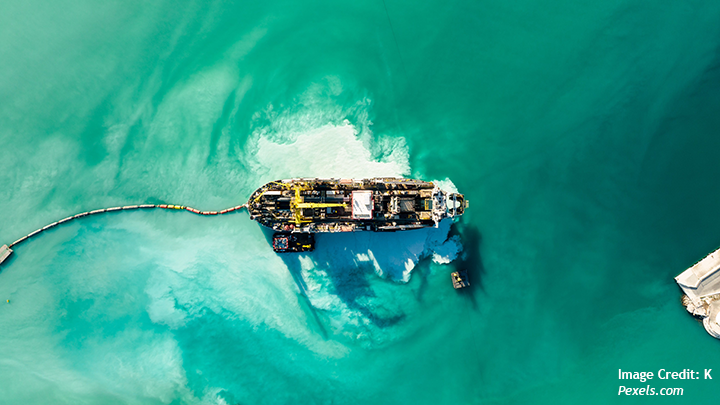
Since 2021, Taiwan has begun amending laws governing the protection of submarine cables. It started with changes to the environmentally oriented laws, such as the Law on the Exclusive Economic Zone and the Continental Shelf of the Republic of China, as well as the Sand and Gravel Excavation Act. These amendments successfully reduced illegal sand dredging around Taiwan’s islands, which has been a major cause of submarine cable damage. In 2025, Taipei further reinforced its regulatory framework by amending seven laws to safeguard undersea cables and related infrastructure, including pipelines, cable landing stations, transmission and switching facilities, and connected systems. These reforms also increase penalties to deter potential offenders and broaden the authorities’ powers to identify potential offenses.
- Undersea Cable: Network Expansion and Repair
Beyond legal reforms, Taiwan has continued to build backup communication capacities by constructing new undersea cables with international companies and by enhancing satellite autonomy to improve surveillance and communication capabilities. Meanwhile, Taiwan is proactively positioning itself as a leading hub for data centers and AI infrastructure to strengthen its strategic position in the digital world. Its strategies include constructing optical cable conduits and submarine cable landing stations to attract international submarine cable companies and enhance fiber-optic connectivity, with the goal of becoming a key undersea cable network hub in the western Pacific. These efforts are expected to attract global cloud providers and data center operators to establish facilities in Taiwan.
Currently, Taiwan has 10 domestic and 15 international undersea cables, and it continues to expand its undersea cable network. Chunghwa Telecom, the largest telecommunications service provider in Taiwan, has been actively collaborating with international companies to construct undersea cables to increase data capacity and resilience. In 2025, the internationally funded cables, Apricot and Southeast Asia-Japan Cable 2 (SJC2), were successfully activated. In addition, Chunghwa Telecom is investing in AGU East and E2A, which are expected to be completed in 2028 and 2029, respectively.
On the cable repair front, Taiwan lacks domestic repair capabilities, but Chunghwa Telecom has joined two international submarine cable repair regions, Yokohama Zone (YZ) and the Southeast Asia Indian Ocean Maintenance Agreement (SEAIOCMA), to increase the efficiency and cost-effectiveness of repairing cables.