Gauging the Influence of China’s PLA over the Ruling Junta in Myanmar
Mark S. Cogan
Abstract
Since the February 2021 coup in Myanmar, China has been a critical lifeline for the ruling military regime. However, its outsized political influence over state-run institutions does not directly translate to the People’s Liberation Army (PLA), which operates primarily along the Chinese side of their shared borders. This analysis examines how the PLA operates in the bureaucracy of Chinese institutions. It highlights the limits of PLA influence, as shown by a CCP-led anti-corruption crackdown on top PLA officers and the growth of both private security companies (PSCs) and the influence of state-owned defense manufacturers.
Introduction
Understanding the extent of China’s complex relationship with the ruling military-backed government requires comprehension of the intricate but tightly-managed relationships between China’s formal institutions and the array of ethnic armed groups (EAOs) vying for control in the post-coup conflict environment. As China works to maintain influence over Southeast Asia’s “last frontier,” it also carefully controls its own state institutions, including the People’s Liberation Army (PLA). The purpose of this issue brief is to analyze how the PLA operates within Myanmar, while acknowledging both the limitations placed upon it and the potential for its influence among a myriad of regional actors.
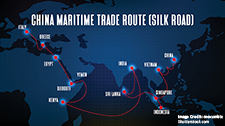
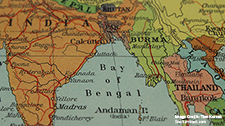
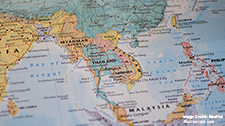
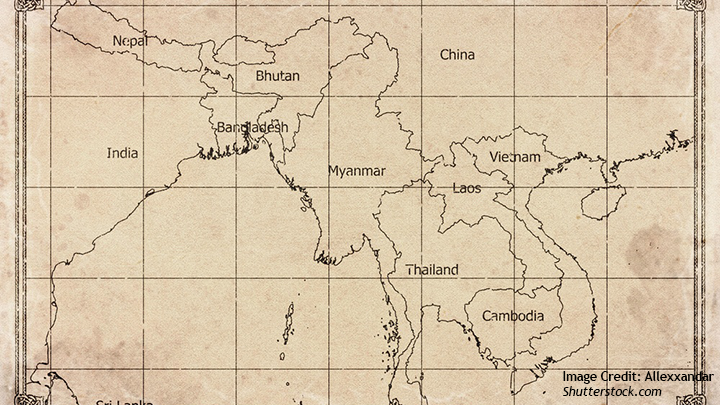
In the post-2021 security environment in Myanmar, Beijing’s ability to protect its own interests has steadily diminished over time. For instance, the China-Myanmar Economic Corridor (CMEC), a giant Belt and Road Initiative (BRI) project, extends across the heart of the country into conflict-prone states, running from the Kyaukphyu Special Economic Zone (SEZ) on the Bay of Bengal to Yunnan Province in China. Cross-border trade has diminished between Yunnan and two Myanmar administrative regions, Shan State to China’s southeast and Kachin State to its northwest. To make matters worse, state-sanctioned criminal organizations have created significant regional problems with neighboring Thailand, ensnaring thousands of Chinese nationals into scam center compounds operated by border militias in alliance with the ruling military regime. These pressing Chinese regional security concerns led to its tacit approval of “Operation 1027” in late 2023, an offensive against the Myanmar regime involving 15,000 fighters from three different groups, the Arakan Army, the Myanmar National Democratic Alliance Army (MNDAA), and the the Ta’ang National Liberation Army (TNLA).
The PLA does not explicitly operate in Myanmar, but rather along its borders. Through the Southern Theater Command, the PLA carries out periodic armed patrols near the Yunnan provincial border in southwest China, where EAOs have been fighting for territory in the adjacent Myanmar administrative regions. In 2024, live-fire exercises consisted of armed patrols and joint air-ground patrols designed to build the capacity to block, control, and strike together. China also uses the live-fire drills as a deterrent and a warning to both the Tatmadaw and EAOs, particularly if the conflict spreads or endangers Chinese nationals living in the border areas.
However, institutional relationships can be dissimilar at the ministerial and senior leadership levels, as well as in interpersonal relations. The diplomatic relationships, largely channeled through China’s Ministry of Foreign Affairs, appear pragmatic, but are far more influential due to the large number of institutions that are tightly-controlled by the Chinese Communist Party (CCP). Power and influence are seen in earlier denials of recognition, evidenced in the long delay in granting Senior General Hlaing recognition as head of state, and the two-year gap before an official visit by then-Foreign Minister Qin Gang, which did not occur until May 2023. The tension in the state-level relationship also dates back to 2009, when then-Lieutenant General and Chief of the Bureau of Special Operations, Min Aung Hlaing led Tatmadaw ground operations against the MNDAA, a Chinese-backed Kokang militia, driving them out of Laukkai, a region of Shan State.[vi] This continued into 2015, when clashes between Myanmar troops and the MNDAA saw Myanmar blame China for providing weapons to Kokang rebels and order an airstrike on insurgents in the border regions, causing five Chinese casualties. A live-fire exercise by the PLA did not dissuade Myanmar from its offensive against the MNDAA. Unlike neighboring Thailand, where the military plays a role in back channel diplomacy, other Chinese state institutions are tasked with engagement with Myanmar’s EAOs, including the MNDAA, the United Wa State Army (UWSA), and the National Democratic Alliance Army (NDAA), groups that received Chinese support after a brutal Burmese crackdown following the 8888 Uprising and subsequent sanctions by Western states on the State Law and Order Restoration Council (SLORC).
It is against this backdrop that Chinese state officials, rather than the PLA, drive current security cooperation with Myanmar. This can be seen through the lens of Xi Jinping’s Global Security Initiative (GSI), under which coordination has been driven by China’s Assistant Minister for Public Security, Liu Zhongyi to tighten law enforcement cooperation along the Thai-Myanmar border. The contrast in power dynamics can also be also seen in mediation efforts to force the MNDAA, an ethnic Kokang-Chinese group that operates along the shared border in northern Shan State, into a ceasefire in 2025. The efforts were conducted by China’s Special Envoy for Asian Affairs Deng Xijun, who informed the UWSA that China would not accept the collapse of Myanmar’s military-backed regime or the potential rise of a National Unity Government (NUG) and pressured the group to deny the MNDAA further food, fuel, weapons, or other provisions. In these mediation efforts, it was the Envoy’s Office rather than the Central Military Commission (CMC) which has primary authority over the PLA—or the PLA chain of command—that brokered cross-border closures, oversaw the detention of MNDAA commander Peng Daxun, coordinated electrical blackouts, and gathered relevant intelligence. The layering, or separation of the PLA from Chinese state-level affairs is common, with recent interaction between junta officials and CMC-level officials coming relatively late, with Major-General Yang Yang, of the Central Military Commission meeting with then-Deputy Prime Minister Soe Win in May 2023 to promote “cooperation between the two armies”[xiii] and a 2024 meeting between Myanmar’s Defence Minister Tin Aung San and then-CMC Vice Chairman He Weidong in Beijing in September 2024.
The aforementioned incidents indicate that the PLA is far more tightly controlled as an institution than is observed in other Southeast Asian contexts. The separation of state-level interactions from that of the PLA is a deliberate expression of CCP institutional control, and meetings between CMC officials and junta leaders should not be seen as personalist in nature, but rather through the lens of China’s institutional command structures. Comparatively, a Thailand-Myanmar military-style relationship, where “khaki capital”—which refers to the accumulation of assets, holdings, and economic power within a nation’s armed services for the purposes of political influence[xv]—is precisely the type of institutional corruption that the CCP would like to avoid. Thus, maneuvers by the PLA along the border regions, such as the previously mentioned unilateral live-fire drills in 2024 by the Southern Theater Command, were carried out under their respective institutional mandates.