The Tibet-Nepal Flood Is a Himalayan Climate Security Warning
Saroj Kumar Aryal and Jagannath Panda
The catastrophic flash flood that struck the Tibet-Nepal border on August 26 should not be treated simply as another Himalayan natural disaster. It is better understood as a warning from a rapidly destabilizing cryosphere, one that transcends political borders and exposes the growing collision between climate change, geological fragility, infrastructure expansion, and weak transboundary environmental governance. What happened along the Nepal-Tibet frontier reinforces an argument that climate researchers have increasingly made: the Himalayan-Tibetan ecosystem must be approached not merely as an environmental space but as a critical arena of transboundary climate and cryosphere security.
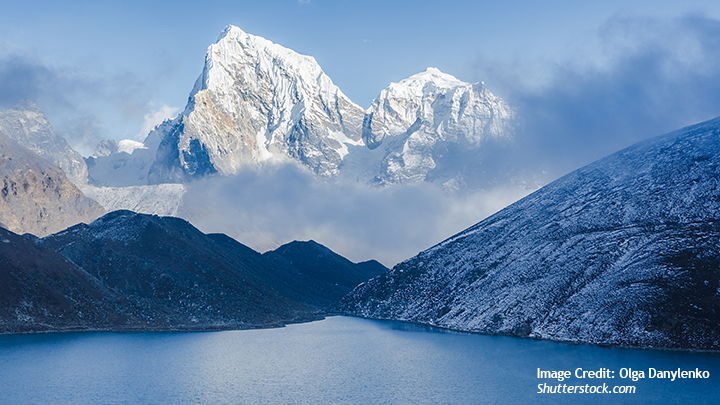
The immediate scientific explanation is striking. Initial reports suggested that an earthquake had triggered the disaster. Subsequent analysis by the U.S. Geological Survey indicated something different: the seismic signal was generated by the collapse itself, rather than a preceding tectonic earthquake. A large section of a high-altitude glacier broke away at roughly 5,200 metres and plunged approximately 1,200 metres toward the valley floor. The resulting ice-rock avalanche entrained enormous quantities of debris and appears to have temporarily obstructed the Lhende Khola before releasing a devastating surge downstream.
This distinction matters. The tragedy was not simply a conventional flood produced by excessive rainfall. Nor does the evidence currently justify describing it straightforwardly as an earthquake-triggered disaster. It was a cascading high-mountain event in which ice, rock, gravity, water and steep topography combined. The narrow Himalayan valleys then acted as conduits for an exceptionally fast-moving mixture of water, sediment and boulders. The disaster therefore raises two questions that should extend well beyond its immediate aftermath: How safe is the accelerating infrastructure expansion across Tibet when the geological and cryospheric foundations of the plateau are becoming increasingly unstable? And when environmental disturbances originating in Tibet can rapidly become disasters in Nepal and other downstream states, should Tibet’s climate crisis continue to be treated primarily as China’s domestic environmental concern?