Walking the Tightrope: India in the U.S.-Israel-Iran Fire
Jagannath Panda
The U.S.-Israel-Iran conflict, notwithstanding the temporary ceasefire, has once again drawn India into complex diplomatic terrain that demands restraint. Official statements from India’s Ministry of External Affairs have remained consistent, including expressions of “deep concern,” calls for de-escalation, and emphasis on dialogue and protecting civilians. This language reflects India’s attempt to avoid premature alignment while preserving maneuverability in a conflict situation involving multiple key partners.
India’s calibrated response to the ongoing Middle East conflict is shaped by competing strategic imperatives and growing domestic scrutiny. While officially maintaining balance, subtle signals—particularly in non-official discourse—suggest a quiet tilt toward Israel, complicating India’s positioning in a deeply polarized regional environment. This ambiguity allows New Delhi to preserve ties with Israel, Iran, and the United States, but it also exposes the limits of hedging as tensions intensify: Can India continue to balance without alienating key partners? At what point does ambiguity become untenable? The current temporary ceasefire offers brief respite, yet sustaining such strategic flexibility may prove increasingly difficult if alignments harden.
Neutrality as Strategic Necessity
India’s response to the Middle East war reflects a historical foreign policy pattern: strategic autonomy through calibrated ambiguity. But in the present context, neutrality is an active, deliberate, and managed strategy shaped by competing powers and geopolitical pressures. It involves calibrated diplomatic signaling, selective engagement, and issue-based positioning—supporting de-escalation publicly while quietly maintaining functional ties with all sides. India’s participation in multilateral forums, its continued engagement with Gulf partners, and its avoidance of inflammatory rhetoric are all part of this active balancing strategy.
Indeed, New Delhi has avoided rigid alignments in West Asia for decades, preferring instead to maintain working relations with all major actors. This approach has allowed India to navigate crises like the Israel-Palestine conflict without being drawn into regional rivalries. However, India today is far more integrated into global energy markets, more deeply tied to Israel in defense and technology, and more economically intertwined with the Gulf. Its choices, therefore, have greater consequences.
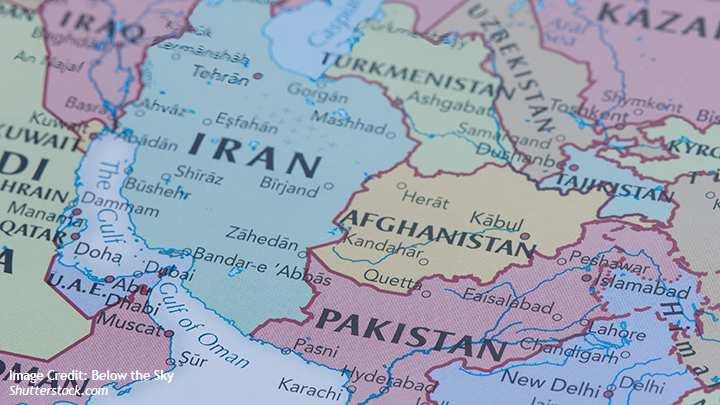
Energy remains the most immediate concern. India imports around 80 to 85 percent of its crude oil, with a large share passing through the Strait of Hormuz. That makes the Strait a critical artery for the Indian economy. Any escalation in the U.S.-Israel-Iran conflict risks disrupting this flow, triggering price volatility and domestic inflation, which is already on the rise. Such developments carry serious political consequences. Rising fuel prices have direct implications for domestic constituencies in India, affecting everything from transportation costs to food prices. For a government managing economic growth alongside electoral expectations, energy market stability is critical. To some extent, the impacts of disruptions to shipping are already becoming evident domestically, impacting the movement of hydrocarbon and influencing the logistical costs and energy prices. Thus, India’s cautious stance is shaped not only by external strategic considerations but also by internal economic and political sensitivities.
Importantly, New Delhi’s position in this conflict is not an outlier. Several countries across Europe (as well as the European Union), the Gulf, and Asia have adopted similar positions, urging restraint and dialogue. Yet most have avoided supporting any particular side. Even China, despite its systemic rivalry with the United States, has refrained from adopting an overtly confrontational stance, emphasizing stability and negotiation. This convergence underscores widespread strategic hesitation: Even major powers are hedging the U.S.-Israel-Iran conflict. With Iran allowing Indian tankers through the Strait of Hormuz and the United States announcing a 30-day waiver for India to purchase Russian oil, the strategy appears to be paying dividends.
Balancing Israel, Iran, and the United States: A Real-Time Strategic Dilemma
The current conflict has highlighted that India’s relationships with Israel and Iran are embedded within a broader geopolitical matrix shaped significantly by the United States and evolving regional alignments.
New Delhi’s growing proximity with Israel has been one of the defining features of its contemporary West Asia policy. Israel is among India’s leading defense partners, contributing roughly 10 to 15 percent of its arms imports and providing advanced capabilities in areas such as missile defense, drones, and cyber security. This partnership is reinforced by shared concerns over terrorism and extremism. In addition, India’s experience with cross-border militancy creates a natural alignment with Israel’s security doctrine. Intelligence sharing, including cyber cooperation, between the two countries has expanded significantly, making Israel a valuable partner in India’s security architecture.
At the same time, India’s engagement with Israel is embedded within a broader regional framework that includes the United States and the United Arab Emirates, reflecting a convergence of economic, technological, and strategic interests in West Asia. Crucially, the normalization of relations between Israel and several Arab states following the Abraham Accords has opened new possibilities for India, allowing it and many other countries to simultaneously deepen engagement with Israel and key Arab partners without being constrained by historical ideological divides.
The United States adds a critical layer to this balancing act. As Israel’s principal strategic backer and India’s key partner in the Indo-Pacific, Washington’s expectations carry significant weight. India’s response to the war is therefore also being read through the lens of U.S.-India relations, which have been uncomfortable throughout 2025 amid tariff pressure and warming U.S.-Pakistan ties. Importantly, India is cautious not to be drawn into a U.S.-centric regional framework: New Delhi’s reluctance to fully align with Washington’s position reflects its awareness that overt alignment could undermine its equities in Iran and the wider region.
Iran, meanwhile, remains strategically important to India despite significant constraints on the bilateral relationship. U.S. sanctions have been a persistent constraint on India’s ability to engage economically with Iran; at its peak, Iran accounted for over 10 percent of India’s oil imports, but sanctions have significantly reduced this share. Iran’s growing alignment with China further complicates India’s position: Long-term strategic agreements between Tehran and Beijing, factoring in the Belt and Road Initiative (BRI), signal a shift that shrinks India’s space for strategic engagement. Additionally, Iran’s ties with Pakistan and its positioning within broader Islamic geopolitics introduce sensitivities that India has always chosen to navigate cautiously.
Despite these constraints, Iran’s role in the Strait of Hormuz, membership in regional organizations (including in the SCO, where India is a member), geographic centrality at the intersection of West, Central, and South Asia, and participation in connectivity objectives like Chabahar Port all ensure that India cannot afford to disengage. The erstwhile 2023 Saudi-Iran détente further reinforced this calculus, opening space for greater engagement with Iran.
Taking these equities and constraints all together, India finds itself in a difficult position vis-à-vis the current war. Its geopolitical alignment with Israel and the United States does not automatically translate into endorsement of all their positions in the region. New Delhi’s criticism of the war’s violence highlights this distinction and allows it to retain a degree of strategic flexibility.
The current conflict also places certain pressures on India from Iran. Tehran expects a degree of diplomatic understanding from New Delhi, rooted in historical ties and shared interests. However, India’s evolving strategic partnerships limit the extent to which it can meet these expectations. India’s three-pronged challenge, therefore, is managing relations with Israel, Iran, and the United States, all while safeguarding its own strategic autonomy.
Tightrope Walk
Criticism of India’s stance in the U.S.-Israel-Iran war often centers on the perceived lack of moral clarity, but such critiques overlook the complexity of India’s strategic environment. Direct involvement or explicit alignment would impose costs without delivering proportional benefits. India’s neutrality, therefore, is not an evasion of choice, but a strategy of postponing irreversible commitments. This approach allows New Delhi to navigate competing pressures while preserving flexibility. However, it is inherently contingent on the ability to maintain equilibrium among actors whose own positions are becoming increasingly polarized. If U.S. expectations of alignment grow stronger, India may find that the space for neutrality narrows significantly. In such a scenario, the very strategy that has enabled India’s flexibility could become a source of strain. India’s tightrope walk, therefore, is not just about maintaining balance today, but about preparing for a future in which balance itself may become increasingly difficult to sustain.
(This piece was first published in The South Asian Voices at the Stimson Center on April 10, 2026).