Afghanistan in China’s Extended CPEC 2.0 Strategy
Ratish Mehta
Summary
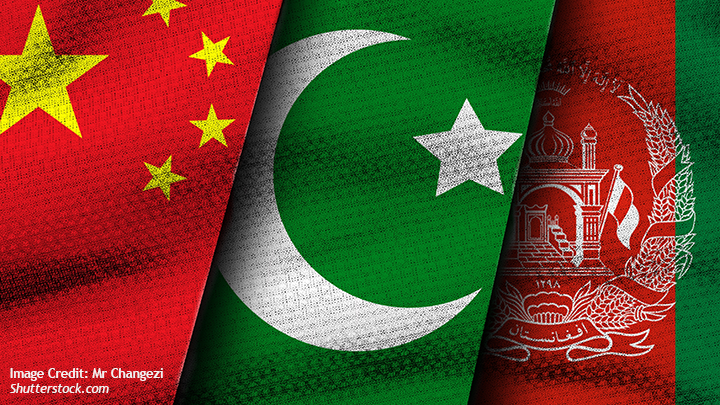
The May 2025 trilateral agreement between China, Pakistan, and Afghanistan, formalizing the extension of the China-Pakistan Economic Corridor (CPEC) into Afghan territory, marked what Beijing celebrated as a turning point in Central and South Asian geopolitics. Within five months however, Pakistan and Afghanistan were exchanging artillery fire and airstrikes across their contested border. This policy brief argues that Beijing’s reliance on economic statecraft as its primary instrument of regional engagement has proven insufficient for the political complexity it confronts. Beijing’s trilateral diplomacy produced agreements on paper while leaving untouched the ideological-military nexus that makes the Af-Pak border one of the most volatile frontiers in Asia.
The recent February 2026 rupture between Pakistan and Afghanistan, coming within months of the second China-brokered trilateral announcing CPEC extension, demands not recalibration but fundamental reappraisal of the assumptions underlying regional engagement. The following recommendations are addressed to the international community and multilateral institutions.
- Engage the post-conflict space: The West’s disengagement from Afghanistan created the vacuum that China is attempting to fill. Alternative connectivity frameworks such as Chabahar, INSTC, and Central Asian-linked corridors should be actively resourced.
- Develop a critical minerals strategy for Afghanistan: A framework modelled on Clean Energy Supply Chain initiatives in Europe and North America should enable sustainable resource development in Afghanistan without ceding extraction monopoly to China.
- Establish a dedicated Af-Pak border monitoring mechanism: A multilateral mechanism with real-time information sharing could interrupt escalation cycles before they reach the level of sustained military exchanges.
- Promote inclusive regional connectivity frameworks: Regional stakeholders should develop connectivity frameworks that include India, Iran, and Central Asian states, rather than leaving the field to bilateral Sino-Pakistani architecture.
- Treat the Af-Pak conflict as a European security issue, not a peripheral bilateral dispute: Each escalation cycle on the Pakistan-Afghanistan border generates displacement flows that arrive, eventually, at European borders.
- Use the EU-Central Asia Strategic Partnership to keep Afghanistan’s connectivity options open: The April 2025 EU-Central Asia Summit upgraded the relationship to a strategic partnership with connectivity identified as a core priority. The EU’s existing Border Management Programme in Central Asia and Afghanistan provides an institutional channel for engagement that should be renewed and activated rather than allowed to lapse as the security situation deteriorates.