Poland-South Korea Defense Cooperation and Changing Security Perspective
Saroj Kumar Aryal, Zuzanna Ptaszyńska and Nitya Pokharel
Abstract
One of the most significant geopolitical outcomes of the Russian war against Ukraine is the incremental growth in defense cooperation between Poland and South Korea. It started as a practical procurement decision by Poland, which has now developed into a deeper strategic cooperation between the most influential middle powers in the Indo-Pacific and Europe. This is not just a transactional partnership but the emergence of cross-regional defense cooperation that eschews conventional Western suppliers, diversifies deterrent systems, and reconfigures the geography of strategic dependency, which is a symptom of a structural change in global security politics.
Background
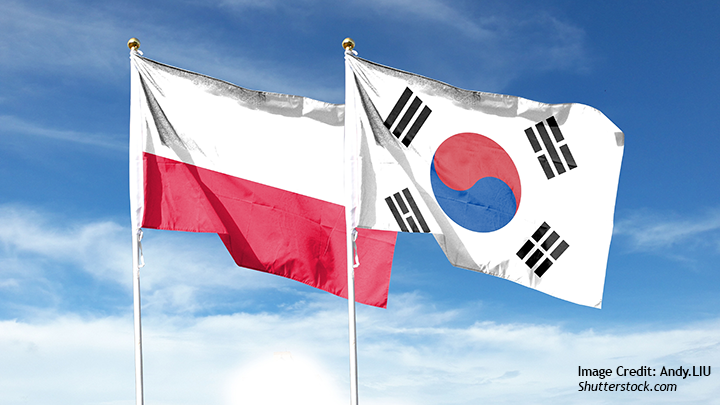
Within today’s international security paradigm, the idea that regional rivalries, competition, and strategic games can be analyzed solely on the basis of their geographic scope is becoming less relevant. The Russian invasion of Ukraine in 2022 challenged the very foundation of the European security architecture, raising doubts about the conventional approach to treating Eastern Europe and the Indo-Pacific as separate strategic zones. In this light, the increasing defense cooperation between Poland and South Korea becomes a valuable example of security interdependence and defense industry cooperation across regions.
It is important to understand how the security concerns faced by Poland and South Korea relate to their respective strategic interests to comprehend the importance of defense cooperation between these states. In the case of Poland, located on NATO’s the eastern flank and increasingly concerned about Russia’s assertive policies, the consequences of the war in Ukraine, and the need to develop effective deterrence in Eastern Europe are among the primary security concerns of the state. At the same time, the defense partnership is crucial for South Korea as the country faces a military threat from North Korea, the instability of the Korean Peninsula, and the growing power competition in the broader Indo-Pacific region. Even though these two countries are located in different parts of the world, their security concerns are connected via defense technology, military modernization, manufacturing, and partnerships.
The most obvious sign of the partnership between Poland and South Korea is Poland’s acquisition of South Korean military hardware.[iii] However, the partnership encompasses more than just arms procurement. It includes technology transfer, local manufacturing, maintenance, military training, and industrial cooperation, which distinguishes it from an ordinary arms deal. Therefore, this cooperation forms part of larger discussions on Europe’s defense industrial capacity, diversification of supply chains, and defense burden-sharing among partner countries.
The issue is also especially important in the context of the NATO-EU security architecture. While NATO’s main goal is to guarantee the collective defense and security of its members, the EU plays an important role in strengthening defense industrial capacity, resilience, and overall security policy. In Poland’s case, its defense capability improvement and cooperation with South Korea presents both opportunities and problems for these institutions. On the one hand, defense equipment from South Korea can strengthen Poland’s military preparedness and deterrence capacity on NATO’s eastern flank. On the other, its raises concerns related to dependency on foreign suppliers, interoperability of various weapons systems, maintenance costs, and competition with the European defense industry. Thus, when assessing such cooperation, it is necessary to consider not only its obvious military benefits but also the connection between NATO’s principle of collective defense and the EU’s objective of greater industrial-defense autonomy.
Another important feature of this case study is the strengthening of the institutional linkages between the security architecture of the Indo-Pacific and the Euro-Atlantic. Specifically, military cooperation between Russia and North Korea makes the security connection between Eastern Europe and the Indo-Pacific more tangible. Analyzing the war in Ukraine and the security situation on the Korean Peninsula separately is becoming increasingly difficult. Despite the differences in the causes of conflicts, political context, and military situation in both regions, developments such as military cooperation, arms deals, or strategic alignment in one region may have consequences for the security situation in the other region. The importance of reconsidering traditional concepts of regional security becomes obvious. Nowadays security is not merely a question of geographical area in which threats emerge; it is also shaped by the interconnections between different regions through military, industrial, technological, economic, and diplomatic interactions.
Against the above-mentioned background, this issue brief examines Polish-South Korean defense cooperation in the context of changes in the global security situation. The aim of this brief is to evaluate the impact of this defense partnership on Poland’s military modernization, NATO’s deterrence capacity on its eastern flank, the EU’s defense industry priorities, and strategic relations with the Indo-Pacific region. In addition, the brief outlines opportunities for further defense cooperation, identifies possible challenges in case of dependence and coordination and explores policy options. In this sense, the Poland-South Korea relationship represents more than just a bilateral partnership; it serves as a significant case study for understanding how security dynamics in Eastern Europe and the Indo-Pacific are becoming interconnected and how this interplay may shape the future of the international security architecture.