From Silk Cage to Silk Noose-II: The Bay of Bengal Nexus: China’s Corridor Statecraft from BCIM (CMBC) to the Indochina Peninsula Stockholm Center
Jagannath Panda, Tristan Eng, Lei Xie, Katarzyna Anna Nawrot, Su Myat Thwe, Mark S. Cogan, Sanjay Pulipaka, Shahab E. Khan, Jessica C. Liao, J. Mohan Malik and Stephen R. Nagy
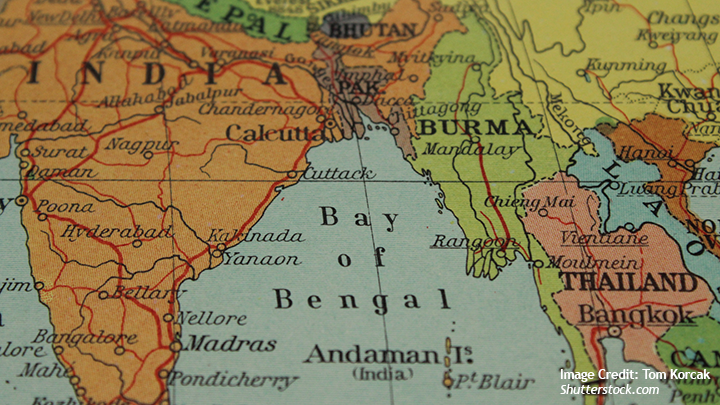
This Stockholm Paper, the second in the ‘From Silk Cage to Silk Noose’ series, examines the Bay of Bengal as an increasingly consequential theater of China’s regional statecraft. The ‘Silk Noose’ concept describes the cumulative strategic effect of relationships across economic, military, and other domains that can progressively narrow the room for maneuver of smaller states and alter the regional balance in China’s favor. As such, the Silk Noose should be understood as a process rather than an end.
This volume attempts to illustrate this process by bringing together analyses of hydro-geoeconomics; the evolution beyond BCIM; the China-Indochina Peninsula Economic Corridor; Myanmar’s political and military relationship with Beijing; China’s expanding role in Bangladesh; the blue economy; maritime strategy; and economic coercion. Its central proposition is that China’s engagement with the Bay must be analyzed as a coherent and strategic response to a convergence of continental and maritime interests in and around the region. Moving beyond the binary debate about what China does or does not want, the volume examines how China has responded to this convergence through economic and political relationships and projects, and how these can, over time, narrow the room for maneuver of smaller states.
In doing so, the volume asks whether the post-BCIM geography of the Bay of Bengal is producing a new phase of Chinese corridor statecraft in which Beijing increasingly links the BRI’s continental and maritime dimensions through pivot states like Bangladesh and Myanmar and across the wider Southeast Asian mainland. If this is the case, other regional and great powers are unlikely to acquiesce to a narrowing of their own room for maneuver, potentially intensifying strategic competition and transforming the Bay into one of the most consequential spaces in the Indo-Pacific.