China’s Strategic Corridor in Pakistan: Progress, Dependency, and the Uncertain Future of CPEC
Jagannath Panda, Anne Weiler, Sevil Khikmatova and Tristan Eng
Abstract
The China–Pakistan Economic Corridor (CPEC) was promoted as a transformative partnership to modernize Pakistan’s economy, address energy shortages, and enhance regional connectivity. More than a decade later, however, CPEC increasingly reflects Pakistan’s gradual transformation into a “Silk Cage” state, where infrastructure connectivity and economic dependence are closely linked to China’s expanding strategic influence. This Focus Asia paper argues that while CPEC Phase I delivered visible gains in roads, energy infrastructure, digital connectivity, and Gwadar Port, it also entrenched structural dependency through mounting debt, political alignment, and reliance on Chinese finance, technology, and security arrangements. Rather than driving broad-based industrial transformation, Phase I exposed Pakistan’s institutional fragility, regional inequalities, and governance challenges. The transition to CPEC Phase II or “CPEC 2.0” marks a strategic shift from large-scale infrastructure financing toward deeper economic integration through Special Economic Zones, green technologies, mining, and private-sector partnerships. The paper concludes that CPEC has evolved beyond a development initiative into a long-term mechanism of strategic influence, embedding China within Pakistan’s economic and political architecture and strengtheninig its broader Eurasian ambitions.
Introduction
Few connectivity initiatives in contemporary global politics have generated as much debate as the China–Pakistan Economic Corridor (CPEC). First envisioned in 2013 and formally launched in 2015 as a flagship project of China’s Belt and Road Initiative (BRI), the corridor was promoted as a transformative partnership capable of modernizing Pakistan’s economy, addressing chronic energy shortages, and linking Western China to the Arabian Sea through a network of roads, ports, energy plants, and industrial zones. For Pakistan’s political leadership and media, CPEC quickly became synonymous with economic revival and was often described as the country’s most significant “game-changing” development initiative.
Yet more than a decade after its launch, the outcomes of CPEC remain contested. While the corridor has delivered visible infrastructure projects, particularly in transportation and energy generation, the broader economic transformation promised by the initiative has been slower and more uneven than anticipated. Many projects have faced delays, renegotiations, or security challenges, while Pakistan’s rising financial obligations to Chinese lenders have raised concerns about long-term economic dependency.
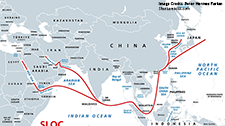
From Beijing’s perspective, however, CPEC represents far more than a development initiative. Strategically located at the crossroads of South Asia, Central Asia, and the Middle East, Pakistan provides China with access to the Arabian Sea through the Gwadar Port (see Map) and an overland connection linking Xinjiang with Gulf energy markets. In an era of intensifying geopolitical competition and maritime vulnerability, especially given the risks surrounding chokepoints like the Strait of Malacca, CPEC offers Beijing a potential alternative route for trade and energy flows. The evolving regional environment further enhances the corridor’s strategic relevance. Ongoing instability in the Middle East, including tensions involving Iran, Israel and the United States, as well as broader disruptions in Gulf geopolitics, has increased the importance of logistical routes connecting the Persian Gulf to Asia. In this context, Gwadar and the wider CPEC network could emerge as a critical node in China’s broader Eurasian connectivity strategy.
Particularly noteworthy is the extent to which the strategic communities in both Pakistan and China increasingly view this corridor through complementary lenses, suggesting the growing influence of Chinese narratives within Pakistan’s knowledge community. CPEC was first envisioned in 2013 through the signing of a Memorandum of Understanding and the formulation of a Long-Term Plan, while the CPEC Framework Agreement signed on July 5, 2015, formally launched the initiative under the banner of “Early Harvest” projects. By 2017, the Long-Term Plan had taken institutional shape through important projects such as the Main Line-1 (ML-1) Railway Project, extending implementation timelines to 2030. In subsequent policy and scholarly discourse, these stages have been consolidated into a broader transition from an infrastructure-focused Phase I (2015–2025) to a more industrial and development-oriented Phase II (2025–2030), commonly referred to as “CPEC 2.0”.
These phased developments raise several critical questions. First, what distinguishes the outcomes of CPEC Phase I from the ambitions of Phase II? Second, how has China recalibrated its approach to Pakistan as financial and political challenges have emerged? Third, does the corridor represent a sustainable development partnership or a structural mechanism through which China consolidates long-term strategic influence in Pakistan?