Hybrid Threats Overview: Baltic Sea Factsheet
Melita Phachulia and Gustav Bremer
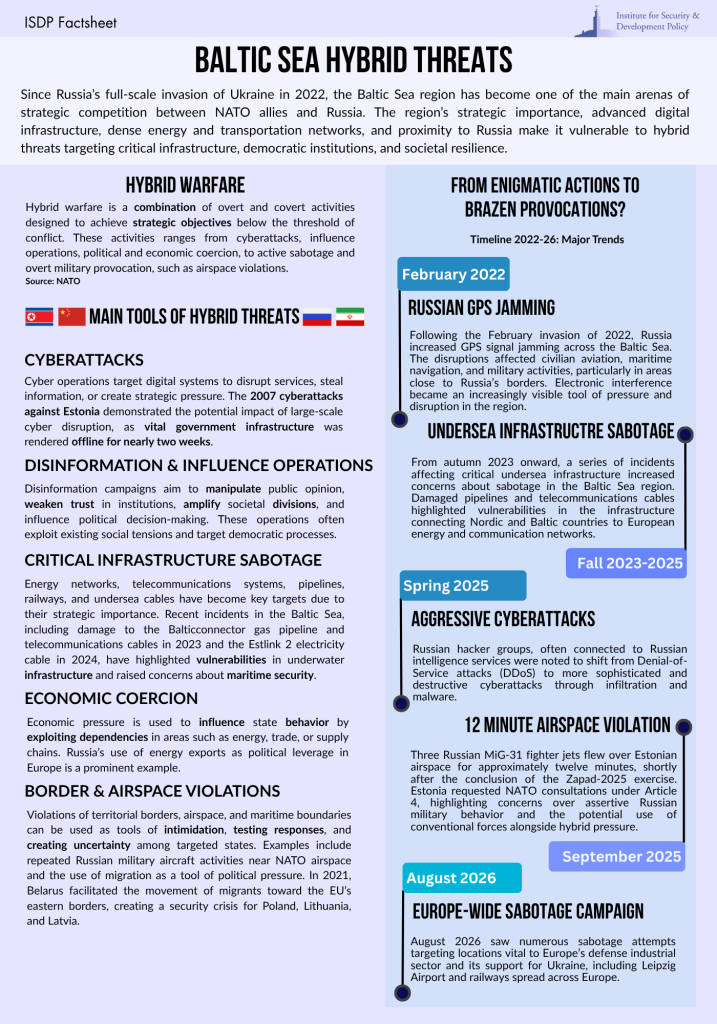
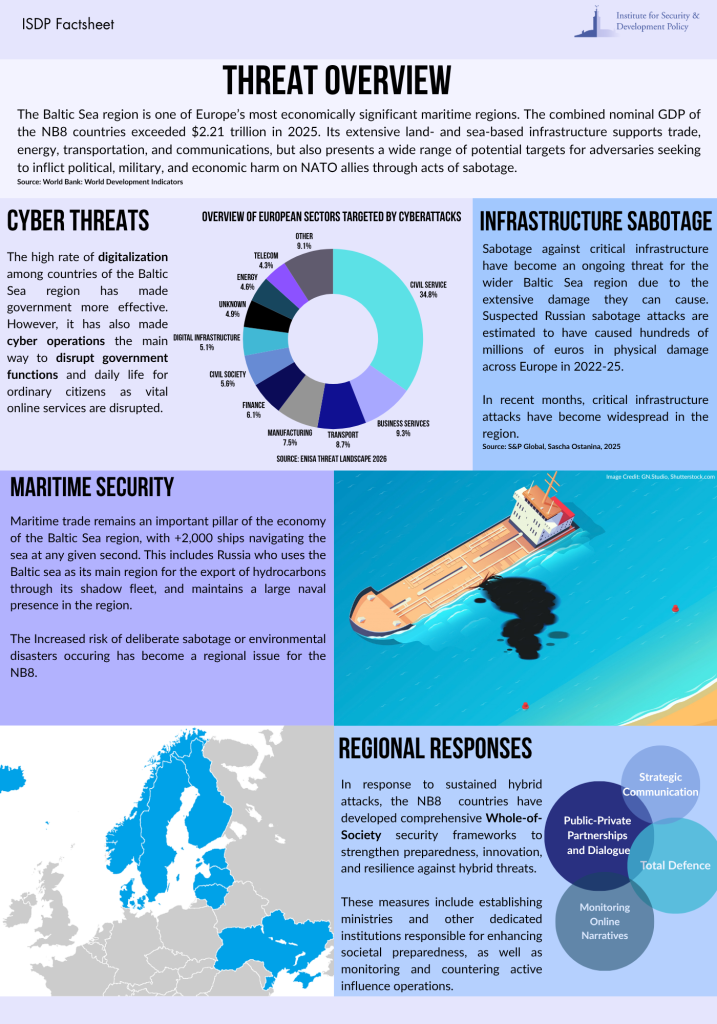
Today, the Baltic Sea region is one of the principal arenas of strategic rivalry between the North Atlantic Treaty Organization (NATO) and Russia. Its highly developed digital infrastructure, extensive energy and transport networks, and proximity to Russia make it particularly vulnerable to hybrid threats targeting critical infrastructure, democratic institutions, and societal resilience.
Following Russia’s full-scale invasion of Ukraine in 2022, Finland and Sweden ended decades of military non-alignment by joining NATO, leaving Russia as the only Baltic Sea coastal state outside the Alliance. At the same time, Moscow has continued to expand its use of hybrid tools to intimidate, coerce, and destabilize the region’s democracies.
The Baltic Sea is also one of Europe’s most economically significant maritime regions. In 2025, the Nordic-Baltic Eight (NB8) countries generated a combined nominal GDP of more than $2.21 trillion. The extensive land- and sea-based infrastructure that supports trade, energy supply, transportation, and communications provides numerous opportunities for adversaries to conduct sabotage and inflict political, military, and economic costs on NATO allies.
This factsheet examines the main tools of hybrid warfare and highlights trends in Russian hybrid activities targeting the Nordic-Baltic Eight (NB8) countries. It concludes with an overview of the current hybrid threat landscape in the Baltic Sea region.