Why It’s a Mistake to Drop the ‘Indo’ from Indo-Pacific
Jagannath Panda
The decision of the United States to restore the US Indo-Pacific Command to its former designation as the “US Pacific Command” may appear, at first glance, to be little more than bureaucratic housekeeping. Governments rename institutions all the time. Acronyms change. Organizational charts evolve. Yet in international politics, symbols often reveal deeper strategic thinking. Names are not merely administrative labels; they are declarations of priority, geography, and purpose. That is why removing the “Indo” from America’s most important regional military command matters.
The significance of this decision extends far beyond semantics. It raises fundamental questions about how the United States views the emerging balance of power in Asia, the future of its relationship with India, and the role that partnerships will play in sustaining a stable international order. More importantly, it signals a possible retreat from one of the most successful strategic concepts Washington has developed in recent decades: the Indo-Pacific.
For India, the issue is particularly consequential. The inclusion of “Indo” in the Indo-Pacific concept was never merely geographic. It represented American recognition that India had become indispensable to the future strategic architecture of Asia and the Indian Ocean. It acknowledged that the Pacific and Indian Oceans had become a single interconnected strategic space and that India was central to maintaining balance within it. To remove the “Indo” today is to risk sending a message that India’s role in American strategy is somehow secondary or optional.
That would be a profound strategic mistake.
The Strategic Context of the “Indo-Pacific”
The US-India partnership is no longer a bilateral relationship confined to trade, defense cooperation, or diplomatic engagement. It has evolved into one of the defining strategic relationships of the 21st century. The trajectory of this partnership will influence the future balance of power not only in Asia but also across the wider international system. Few countries today possess India’s combination of demographic weight, economic potential, technological capabilities, military capacity, and geopolitical reach.
India is emerging as a leading power at a time when the international system is experiencing unprecedented turbulence. It sits astride the Indian Ocean, one of the world’s most critical maritime spaces. It is increasingly central to global supply chains. It plays an influential role in the Global South. It remains one of the few major powers capable of engaging simultaneously with the United States, Europe, Japan, Southeast Asia, the Middle East, and Africa.
For Washington, this reality should make India a long-term strategic necessity rather than a temporary geopolitical convenience. Yet recent developments suggest that some within the Trump administration may view India through a narrower, more transactional lens. The apparent downgrading of the Indo-Pacific concept, combined with controversies surrounding the incorrect depiction of India’s territorial boundaries, has generated understandable concerns in New Delhi. Such developments are not isolated incidents. Together, they contribute to a perception that America may be underestimating the strategic value of its partnership with India. If that perception takes root, the consequences could be significant.
Trust remains the foundation of every successful strategic partnership. Military agreements, defense exercises, intelligence sharing, and technology cooperation are important, but they cannot substitute for confidence. Partnerships thrive when both sides believe that their interests are understood and respected. The Indo-Pacific concept helped create precisely that confidence. It represented an American acknowledgment that India mattered, not simply because of China, but because of India itself. It recognized that the future of maritime stability, economic connectivity, and regional order would increasingly depend upon India’s role in the Indian Ocean. That recognition should not be casually abandoned.
Why the United States Needs India Now More Than Ever
The strategic logic behind the Indo-Pacific has only become stronger. China is expanding its influence across the Indian Ocean at an unprecedented pace. From ports and logistics facilities to maritime infrastructure and naval access arrangements, Beijing is steadily building a long-term presence across critical sea lanes. Chinese strategic thinking increasingly views the Indian Ocean as essential to China’s future security and economic ambitions. In this environment, America requires more partners, not fewer. It requires stronger cooperation with India, not a greater distance.
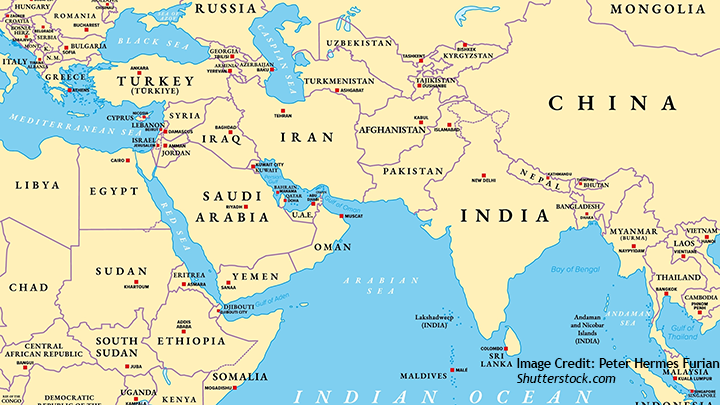
The notion that Washington can effectively manage Asia’s future security landscape without placing India at the center of its calculations is detached from geopolitical reality. Geography alone makes such an approach impossible. The Indian Ocean carries a substantial share of global trade, energy flows, and maritime commerce. The world’s most important chokepoints, from the Strait of Hormuz to the Bab el-Mandeb and the Strait of Malacca, are directly connected to India’s strategic environment. No sustainable maritime order can emerge without India’s participation.