The ‘Hormuz Shock,’ China’s 15th FYP, and Guangdong’s Energy Dilemma
Dominik Mierzejewski
Abstract
This issue brief examines how the Middle East conflict, particularly the disruption of energy flows through the Strait of Hormuz, reinforces the strategic logic underpinning China’s 15th Five-Year Plan (2026–2030). Contrary to analyses that focus primarily on great-power competition or China’s diplomatic posture, the brief argues that the crisis highlights a fundamental challenge for China’s technological modernization agenda: the dependence of advanced industrial development on secure and affordable energy supplies. Beijing has responded by strengthening energy security through a combination of domestic fossil-fuel production, renewable-energy expansion, strategic reserves, grid modernization, and regional power-market integration. Particular attention is paid to Guangdong and Southern China, where dependence on imported LNG exposes key centers of advanced manufacturing to external shocks. The brief concludes that the “Hormuz shock” accelerates China’s pursuit of energy self-reliance and elevates interprovincial electricity coordination into a central national-security priority.
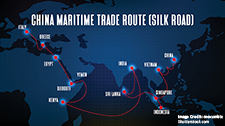
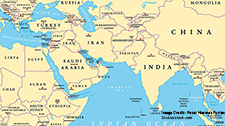
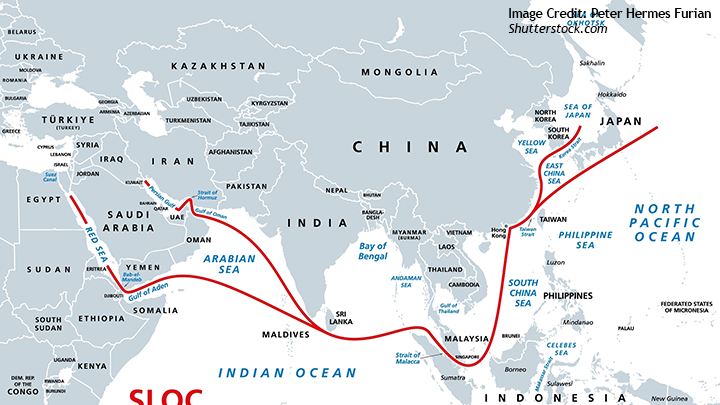
The war in the Middle East is mainly seen through the lens of power competition and China’s future engagement in the region. Nothing could be further from the truth. More fundamentally, it affects China’s 15th Five-Year Plan (FYP) by confirming its central assumption: technological modernization now depends as much on stable energy sources as on technological capabilities themselves. The 15th FYP already describes the international environment as one in which great-power rivalry, geopolitical conflicts, protectionism, deficits in global governance, and external uncertainty increasingly affect domestic development. This is exactly the kind of risk represented by the U.S.–Israeli attack on Iran and the disruption around the Strait of Hormuz. The Strait of Hormuz is a major global chokepoint: according to UNCTAD, it carries around one-quarter of global seaborne oil trade and significant LNG volumes, and the disruption has pushed up oil, transport, insurance and broader supply-chain costs. The plan, therefore, should be read not only as an industrial development document but also as a national security strategy: China wants technological self-reliance, but this requires energy self-reliance, grid resilience, domestic reserves, and control over strategic supply chains.
China’s Central Government Reaction and 15th FYP
China’s formal diplomatic response was predictable: Beijing condemned the U.S.–Israeli strikes, called them a violation of Iranian sovereignty, and urged an immediate end to military operations. Later, the Foreign Ministry directly linked the disruption in the Strait of Hormuz to the U.S.–Israel operation and warned that the crisis could damage the global economy and energy security.
But the more important reaction is not diplomatic. It is domestic and structural: China has used the crisis to justify a stronger push for energy security within the 15th FYP framework. On March 23, 2026, the National Development and Reform Commission (NDRC) introduced temporary control measures to mitigate the domestic impact of abnormal increases in international oil prices. Domestic gasoline and diesel prices were raised by RMB 1,160 and RMB 1,115 per ton, respectively. The NDRC also ordered CNPC, Sinopec, CNOOC and other refiners to organize production and transport, guarantee a stable supply, and strictly implement the state price policy. In addition, China reportedly restricted refined-fuel exports, ordering an immediate ban on exports of gasoline, diesel, and aviation fuel to pre-empt a possible domestic fuel shortage caused by the U.S.-Israeli war on Iran. The reported ban applied to cargoes not yet cleared by March 11, except for aviation bunkering fuel.
Apart from the NDRC regulations, the National Energy Administration presented China’s response as a comprehensive energy security initiative. By the end of March 2026, China’s renewable-energy installed capacity reached 2.395 billion kilowatts, up 22 percent year-on-year, accounting for about 60.4 percent of the country’s total installed capacity. China had strengthened domestic oil and gas exploration, kept crude output above 200 million tons per year, expanded long-distance oil and gas pipelines to more than 200,000 km, increased LNG receiving capacity to over 120 million tons per year, and built oil and gas trade with nearly 50 countries. Between January and March 2026, China’s crude output reached 54.8 million tonnes, up 1.3 percent year on year; crude imports reached 146.83 million tons, up 8.9 percent; and crude processing reached an estimated 181.7 million tons, up 3.1 percent. Coal, however, remained a backstop. But here too the situation was not entirely stable. International coal prices rose sharply due to the developments in the Middle East. Still, China’s domestic coal market remained broadly stable: raw coal output in the first quarter reached 1.2 billion tons, power-plant coal stocks reached 190 million tons, enough for 32 days, and the market showed “slight price increases, sufficient inventories, and stable supply-demand.”
Facing the “Hormuz shock”, however, the vulnerability is clear. In 2025, China officially imported around 42 percent of its crude oil from Middle Eastern suppliers. China also imported around 31 percent of its LNG from the Middle East, with Qatar as the dominant supplier. Columbia University’s Centre on Global Energy Policy notes that around half of China’s oil imports and nearly one-third of its LNG imports transit the Strait of Hormuz, making the conflict a direct threat to China’s energy security.
For the 15th FYP, this creates a basic contradiction. China wants to accelerate AI, semiconductors, EVs, robotics, new materials, advanced manufacturing, digital infrastructure, and data centers. But all of these sectors require stable and affordable electricity. A war that raises oil prices, disrupts LNG supply, increases shipping insurance costs, and creates uncertainty in energy markets threatens not only China’s import bill but also the operating conditions necessary for its industrial upgrading strategy.
The 15th FYP gives this logic a formal policy framework. It sets the goal of building a clean, low-carbon, secure, and efficient new energy system and calls for the “safe, reliable and orderly replacement” of fossil fuels with non-fossil fuels. It highlights wind, solar, hydropower, nuclear power, offshore wind, coastal nuclear power, distributed energy, green hydrogen, green ammonia, green methanol, solar thermal power, geothermal energy, pumped storage, new energy storage, smart grids, and a national unified electricity market.
At the same time, the plan does not abandon fossil energy. It explicitly says China must strengthen the energy production, supply, storage, and distribution system; keep crude oil production at around 200 million tons per year; steadily increase natural gas production; strengthen coal-to-oil and coal-to-gas capacity and technology reserves; expand national petroleum reserves; improve gas-storage capacity; increase coal reserves; strengthen medium- and long-term energy contracts, and improve emergency dispatch and backup power capabilities. This is the central point: China’s energy self-reliance is not simply a decarbonization strategy. It is a mixed approach combining domestic fossil-fuel backup, non-fossil-fuel expansion, reserves, electrification, and grid coordination. The 15th FYP’s target of reaching 58 billion tons of standard coal equivalent in comprehensive energy production capacity by 2030 turns energy production itself into a national security indicator.