Right Place, Right Time? Pakistan’s Role in the US-Israel-Iran War Ceasefire
Jagannath Panda
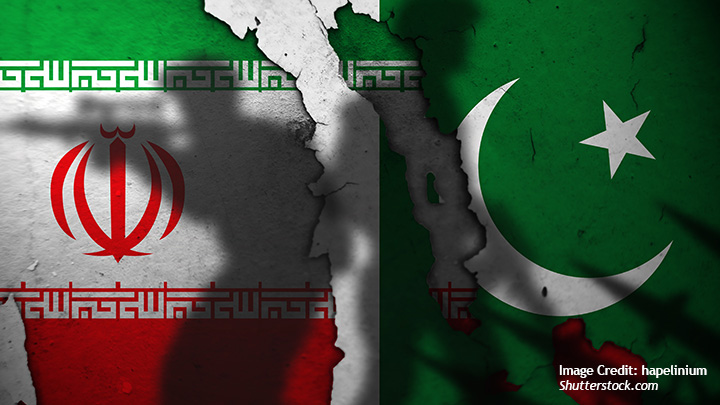
The Middle East conflict is not going away any time soon. The two-week ceasefire between the United States and Iran does not inspire much hope. The first 21-hour talks in Islamabad led to no breakthrough, while Israel continued to bomb Lebanon. The headlines began portraying Pakistan as a pivotal broker in the media, in the recent Iran-Israel-U.S. ceasefire diplomacy. The image of a troubled South Asian state suddenly emerging as a stabilizing bridge between rival powers in West Asia was undoubtedly politically valuable for Islamabad, suggesting diplomatic relevance, strategic depth and renewed global utility. Yet the reality is far less impressive. Pakistan has played a supporting or facilitating role through backchannels, geography and selective contacts, but was it really central to the ceasefire?
Interestingly, as the talks were being held in Islamabad, Pakistan was sending fighter jets and troops to Saudi Arabia, while the Saudis agreed to expedite a $5 billion investment package while simultaneously siding with Iran by insisting that Lebanon was part of the ceasefire agreement. In reality, the current ceasefire involving Iran, Israel and the United States was ultimately shaped by hard power calculations, deterrence thresholds, energy risks and great-power messaging. Pakistan’s room for manoeuvre was narrow, and its contribution was largely enabled by others, in particular China, Gulf interlocutors and Washington’s own tactical choices. The question, therefore, is not whether Pakistan spoke to one side or another, but whether it possesses the credibility and moral authority to present itself as a peace facilitator. On that test, the record remains weak.
Geography is not diplomacy
Pakistan’s location undeniably gives it relevance: it borders Iran, sits close to the Persian Gulf and retains longstanding cultural, religious and political links across parts of the Islamic world. Thus, Islamabad can communicate with Tehran in ways some Western states cannot, and it can read regional anxieties more fluently than distant powers.
But geography alone should not be mistaken for diplomatic leadership. Many states enjoy strategic locations without becoming trusted mediators. Diplomatic credibility is also founded in policy consistency, neutrality and a demonstrated history of constructive peace-making. Pakistan’s geography may have opened doors, but it did not automatically make it the architect of the ceasefire. In reality, larger powers were seeking channels wherever available, and Pakistan was one such channel, not ‘the channel’.
Concerns over Islamabad’s role as peacemaker in the region arise from its long credibility problem on peace and counterterrorism. For decades, Islamabad has faced accusations of distinguishing between “good” and “bad” militant groups depending on strategic utility. Militant networks operating against India and in Afghanistan have repeatedly damaged Pakistan’s international standing, and when Pakistan itself suffered grievously from terrorism, outside powers remained sceptical of selective enforcement. Moreover, Pakistan’s own ties with Iran have historically fluctuated. Border tensions, militant activity in Baloch regions, sectarian undercurrents and competition over regional alignments have periodically strained relations. As a result, Tehran is unlikely to rely solely on Islamabad’s assurances when its core security interests are at stake.
A state associated for years with cross-border militancy faces a difficult burden when presenting itself as a neutral peacemaker. Mediation requires both trust and confidence that the intermediary is not advancing concealed strategic interests, and Pakistan continues to face scepticism on both fronts. Its uneven positions in international forums – ranging from sanctions debates to extremist designations and regional crises – have reinforced doubts about the consistency of its diplomacy. This credibility gap also explains why Pakistan has never evolved into a meaningful security interlocuter for Israel on counterterrorism matters, despite Israel’s central place in current regional security calculations.
For that reason, Pakistan’s emergence in the ceasefire episode should be understood less as the rise of a trusted mediator and more as the temporary utility of an available conduit. Islamabad was able to be “in the right place at the right time” because it maintained lines of communication with Iran, workable ties with Gulf actors and relevance to both the United States and China. Yet, being a channel is not the same as being the channel. A true mediator shapes outcomes through accumulated trust and accepted neutrality; Pakistan, by contrast, was useful mainly because larger powers were searching for any practical route to de-escalation.
This opening was further amplified by the return of Donald Trump and the revival of transnational diplomacy in Washington. Trump’s foreign policy instinct often privileges immediate tactical gains over long-term normative consistency. If Pakistan could offer a line into Tehran, reduce escalation risks or quietly coordinate with Gulf capitals, Washington had reason to use that access regardless of Islamabad’s historical baggage. This did not signify a strategic rehabilitation of Pakistan; it reflected crisis pragmatism. There is an important difference between being indispensable and being temporarily convenient – and Islamabad appears eager to blur that distinction.
Beijing’s quiet hand and Islamabad’s timely utility
A deeper contradiction remains. If Pakistan had meaningful leverage over actors involved in the war, why did it not act earlier and more visibly to prevent escalation? Why emerge only when costs mounted, and major powers were already searching for exits? This raises the possibility that Pakistan did not shape the ceasefire so much to attach itself to an outcome others had already decided to pursue. By playing a mediating role that is actually closer to a late-stage facilitator, Pakistan gains prestige without bearing the costs of earlier action. Iran, for its part, requires credible commitments to accept a brokered peace: secure borders, action against sectarian proxies, predictable energy cooperation and respect for sovereignty. As we have seen above, due to a shared historical past, Tehran is likely to treat Pakistani claims with caution.
Yet, Pakistan’s late activism was not driven only by diplomacy. It was more about strategic visibility and security projection. At a moment of regional war, Islamabad had incentives to present itself as a relevant security actor capable of speaking to multiple camps – Iran, Gulf monarchies, China and the United States. For a state often viewed through the lens of domestic instability, appearing as a crisis manager carried both international and domestic value. It suggested that Pakistan remained geopolitically useful despite economic fragility and internal turbulence.
A more convincing explanation for Islamabad’s sudden prominence lies in its alignment with China. Beijing possesses greater influence in Tehran through energy ties, sanctions-era engagement, infrastructure promises and sustained diplomatic contact. But precisely because China sought to avoid being seen as the overt architect of crisis bargaining, Pakistan became useful as a low-profile intermediary. Islamabad could test messages, signal intentions and keep channels open in ways that allowed Beijing to preserve a plausible distance while still shaping the environment. In that sense, Pakistan was less an alternative to Chinese diplomacy than an auxiliary instrument of it.
This also explains why China did not move earlier or more publicly on its own. Beijing had first incentives to watch the balance of costs, protect its ties across the region and avoid direct ownership of a volatile conflict involving Israel, Iran and the United States. Once escalation began threatening shipping routes, oil flows and wider instability, discreet intervention became more attractive. Pakistan’s geography, military links with Gulf states and access to Tehran then became practical advantages China could leverage without placing itself at the centre of the diplomatic spotlight.
Being China’s closest strategic partner, Pakistan may therefore have acted as a useful extension of Chinese outreach, a “Silk Cage” country that has served the Chinese interests for a long time via the China-Pakistan Economic Corridor (CPEC). In this case, messages delivered by Pakistan may have carried weight because Tehran, both as a neighbour and SCO member, understood the broader strategic ecosystem behind them. Pakistan’s leverage, in other words, was not entirely self-generated; it was amplified by the power standing behind it. Thus, Pakistan’s diplomatic visibility may have reflected Chinese geopolitical convenience as much as Pakistani statecraft. Pakistan’s internal crisis also helps to explain the search for diplomatic relevance. The country continues to wrestle with inflation, debt pressures, energy shortages, civil-military tensions and recurring political instability. The surging international oil prices have quickly filtered into Pakistan’s domestic economy and impacted costs. In fact, Pakistan is said to be considering fuel rationing measures in earnest. The strain on household budgets is growing as the energy shock has also intensified food inflation. The increase in poverty since 2020 has been attributed to overlapping economic crises, rising inflation and weakened purchasing power in Pakistan, according to the World Bank.
A role in a high-profile ceasefire also allows Islamabad to showcase relevance to domestic audiences, reassure partners and attract renewed international attention. It also supports Pakistan’s longer-term goal of improving ties with Iran while keeping China satisfied and preserving access to Western institutions. Multilateral platforms such as the Shanghai Cooperation Organisation (SCO) are especially important here. Pakistan wants to appear as a connector state within and beyond the SCO framework – bridging China, Iran, Central Asia and the Gulf. Public diplomacy around the ceasefire, albeit temporary, serves that ambition.
Symbolism over substance
Its geography, Islamic-world ties, Chinese backing and open channels have played out well for Pakistan. The narrative that Pakistan was a central peace broker is more public relations messaging than geopolitical reality. Israel is definitely not listening to Pakistan as it continues to bomb Beirut, saying that Lebanon is not part of the ceasefire terms. And why should it? The two have no formal diplomatic relations and do not recognize one another. Without Israel on the table, can a ceasefire be truly achieved?
Ultimately, the current de-escalation is driven by military exhaustion, energy-market fears, U.S. calculations, Israeli risk assessments, Iranian deterrence limits and broader great-power concerns. Pakistan may have helped transmit messages or smooth contacts, but it did not determine the strategic outcome. Islamabad’s deeper challenge remains unresolved: a state cannot sustainably market itself as a peace guarantor while carrying unresolved baggage on militancy, selective security policy and chronic domestic fragility. Until those structural issues are addressed, Pakistan’s diplomatic triumphs will continue to look larger in headlines than in history.
(This piece was first published at The Italian Institute for International Political Studies on April 15, 2026)