Forging the Arsenal Corridor: China–Pakistan Defense Integration and the New Strategic Supply Chain
Seong Hyeon Choi and Jagannath Panda
Abstract
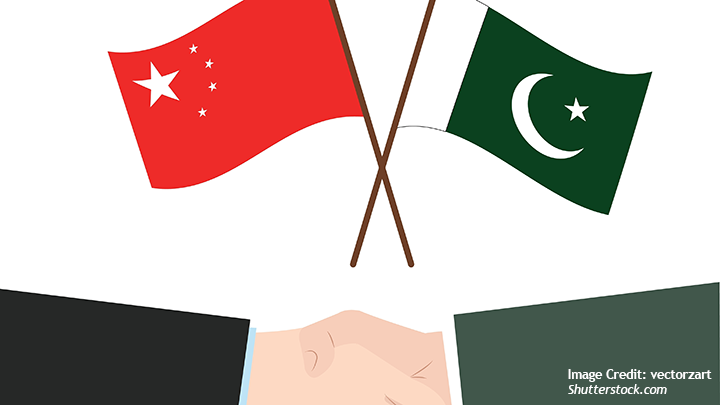
China’s military partnership with Pakistan has undergone a significant transformation over the past decade, evolving from a traditional supplier-recipient relationship into a deeply integrated strategic arrangement. This issue brief examines how Chinese defense transfers, technology sharing, and industrial cooperation have reshaped Pakistan’s military capabilities across the air, land, maritime, and emerging technology domains. It argues that Beijing’s support serves not only to balance India’s conventional military advantage but also to advance broader Chinese strategic objectives associated with the Belt and Road Initiative (BRI) and the China-Pakistan Economic Corridor (CPEC). It explores Chinese debates regarding Pakistan’s strategic value, highlighting perceptions of Pakistan as both a critical security partner and a source of long-term vulnerabilities. It further analyzes the growing integration of military supply chains, the strategic significance of Gwadar, and the emergence of trilateral dynamics involving Turkey. Finally, the issue brief assesses how evolving maritime security challenges, particularly around the Strait of Hormuz, may deepen defense cooperation and reinforce Pakistan’s role within China’s expanding Indian Ocean strategy.
Introduction
The debate is no longer confined to whether China’s military support to Pakistan is routine or exceptional: it now centers on whether this partnership is reshaping the very logic of deterrence and connectivity in South Asia and beyond. One view holds that Beijing’s defense transfers simply enable Pakistan to maintain minimum credible deterrence against a conventionally superior India. Another contends that the scale, technological depth, and systemic integration of Chinese support have moved far beyond balancing, creating a new form of embedded strategic dependence with wider regional consequences. Recent upgrades have rapidly transformed Pakistan’s military profile, with the induction of advanced fighter aircraft, layered air defense systems, next-generation naval platforms, and a growing emphasis on drones and digital warfare.
At first glance, this is not a continuous modernization. Rather, it is a structural recalibration. China is no longer just a supplier; it is shaping Pakistan’s defense ecosystem, doctrine, and long-term capability trajectory. At the same time, this evolving military partnership intersects with larger geopolitical currents: India’s rising defense preparedness, China’s Belt and Road Initiative (BRI), and a widening network of defense collaborations involving actors such as Turkey. The convergence of military supply, strategic geography, and economic corridors suggests that what is unfolding is not merely a bilateral defense relationship, but the emergence of a broader strategic architecture.
This raises critical questions that frame the discussion ahead: Is China’s defense engagement with Pakistan primarily about balancing India, or is it about building a deeper strategic corridor of influence? How does this military supply chain connect with and secure China’s Belt and Road ambitions? And, in the shadow of emerging crises such as the Strait of Hormuz, what future trajectory will this defense chemistry take?
The Chinese Debate on Pakistan as a Military Partner
Chinese scholars and policy analysts rarely use the term “client state” publicly. Beijing avoids such language because it contradicts China’s diplomatic narrative of “South-South cooperation” and “mutual respect,” And instead framing the China-Pakistan relations as “All-Weather Strategic Cooperative Partnership.” Nevertheless, many strategic writings implicitly portray Pakistan as a dependent security partner whose military and economic vulnerabilities create long-term leverage opportunities for China. In this context, Pakistan is increasingly viewed not merely as a friend, but as a strategic platform for China’s western Indian Ocean ambitions and continental balancing against India. These analysts argue that the relationship between China, India, and Pakistan is not a cooperative framework, but a rigid strategic triangle locked in place by rivalry and structural imbalance. Within this matrix, China leverages Pakistan to offset India’s regional ambitions, India builds coalitions to check China, and Pakistan remains fixated on deterring its eastern neighbor. They argue that this complex cross-balancing effectively deters open conflict.
One major debate within China concerns the extent to which Pakistan can remain militarily stable and institutionally reliable. Chinese analysts acknowledge that Pakistan’s political fragility, economic crises, and internal militancy create operational risks for Chinese investments and security projects. The repeated attacks on Chinese engineers and workers in Balochistan and Khyber Pakhtunkhwa have significantly altered Chinese perceptions. In many Chinese policy discussions, Pakistan is no longer seen only through the lens of geopolitical utility; it is also increasingly assessed as a security liability that requires continuous Chinese protection, intelligence coordination, and military assistance.
This has deepened the military-client dynamic. China today is Pakistan’s largest arms supplier, with deliveries ranging from fighter aircraft and naval platforms to missile systems, drones, and surveillance technologies. The JF-17 fighter program symbolizes more than defense cooperation; it reflects China’s strategy of embedding Pakistan into a long-term Chinese military-industrial ecosystem. Pakistan offers China a rare opportunity to demonstrate its military technologies in a live strategic environment against a major regional power like India.
This issue brief is a part of the SCSA-IPA research project, “The Silk Noose: China’s Power Architecture in South Asia and the Indian Ocean Region”.