Beijing’s Quiet Calculus in the Iran–Israel War
Jagannath Panda
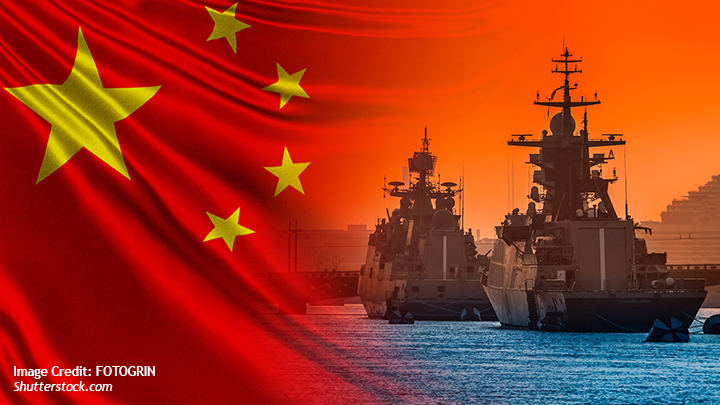
As missiles streak across the Middle East and Washington doubles down on its support for Israel, Beijing has responded with a familiar script: calls for restraint, appeals to sovereignty, and warnings against escalation. Yet, beneath this diplomatic language lies a deeper strategic ambiguity. China has neither endorsed Iran outright nor meaningfully challenged the US–Israel axis. Instead, it has chosen a position that is at once cautious, opportunistic, and quietly consequential. The debate, therefore, is not whether China supports Iran or opposes Israel. The real question is what China gains from this war continuing—just enough to weaken others, but not enough to destabilize itself.
China’s official position appears consistent with its long-standing foreign policy principles: non-intervention, territorial integrity, and opposition to unilateral sanctions. It condemns escalation and calls for dialogue. But this is only the surface. In practice, China’s stance reflects a doctrine of calibrated ambiguity. It has avoided direct military support to Iran, refrained from overt diplomatic confrontation with Israel, and stopped short of leading any meaningful mediation effort. This is not neutrality. Rather, it is selective engagement shaped by strategic caution.
Ironically, even China is now facing pressure to provide military support for the American campaign in the Middle East. The much-anticipated summit between US President Donald Trump and Chinese President Xi Jinping was postponed this week, with Trump saying the ongoing conflict required him to remain in Washington. Doubts about the planned meeting in Beijing surfaced after Trump warned he might delay the summit if China declined to assist the United States in reopening the Strait of Hormuz. In response, China’s Foreign Ministry reiterated its call for “all parties to immediately cease military operations.”
Chinese state media has, meanwhile, amplified narratives portraying the United States as the principal destabilizing force, while highlighting the humanitarian consequences of Israeli military actions. Yet these narratives are carefully curated. They stop short of endorsing Iran’s retaliation or framing the conflict as a civilizational struggle. The messaging is precise: question the deteriorating conditions of the international order, critique the US-led order without being drawn into the conflict itself. Within China’s strategic community, however, the tone is more candid. Analysts increasingly view the war as exposing the limits of American power, accelerating global fragmentation, and opening space for China’s gradual influence expansion. The duality is striking—restrained official rhetoric paired with quietly opportunistic strategic thinking.
Energy First: The Hormuz Constraint
At the core of China’s cautious posture lies an unambiguous priority: energy security. China’s economic engine depends heavily on Middle Eastern oil, with Iran serving as a critical—if often unofficial—supplier. China purchases over 80 percent of Iran’s oil exports. In 2025, this amounted to about 1.38 million barrels per day—roughly 13 to 14 percent of China’s total seaborne crude imports. Even under sanctions, Iranian crude continues to flow into China through discounted channels. More importantly, a significant share of China’s oil imports passes through the Strait of Hormuz. About 44 percent of China’s oil imports come from the wider Middle East. As a result, any major disruption at key transit chokepoints would have consequences far beyond Iran’s direct contribution to China’s supply.
This creates a structural dilemma. China cannot afford a collapse of Iran, which would disrupt supply chains and remove a key energy partner. At the same time, it cannot risk a wider regional war that would threaten maritime routes and trigger price volatility. Beijing’s approach, therefore, is to stabilize without resolving. It seeks to maintain a level of tension that keeps Iran dependent and the United States engaged, but avoids a full-scale regional breakdown.
This energy calculus also explains China’s restrained criticism of Israel. A broader war involving Gulf states or a direct US–Iran confrontation would endanger shipping lanes and destabilize global markets. For China, the Strait of Hormuz is not just a geographic passage; it is a strategic lifeline. Ideology takes a backseat to economic survival. The shortfall has forced countries to seek alternative crude suppliers beyond the Gulf, while others are drawing on their own oil reserves. After the US, China is the world’s second-largest oil consumer, consuming nearly 15 to 16 million barrels of oil per day. Beijing’s push for renewables and considerable reserves likely put China in a better position than most countries. Crude oil only made up around a fifth of China’s total energy consumption in 2024, and demand is not likely to increase any time soon, as per the International Energy Agency (IEA). But it is not immune, as evinced by the recent rise in gasoline and diesel retail prices, following the sharp rise in international oil prices.
China’s caution is also shaped by its domestic security concerns, particularly its historical sensitivity regarding Xinjiang and the Uyghur population. Beijing has long been wary of Islamist mobilization and transnational ideological flows that could resonate within its borders. This has resulted in a deeply pragmatic, non-ideological engagement with the Islamic world. Despite Iran’s identity as an Islamic republic, China’s relationship with Tehran remains transactional. Iran’s silence on Uyghur issues and China’s avoidance of religious framing in the current conflict reflect a mutual understanding rooted in strategic necessity rather than shared values.
A Weakened Iran, a Stronger China?
A more provocative interpretation of China’s stance is that Beijing does not necessarily seek a decisive Iranian victory. Instead, it benefits from a scenario in which Iran remains under sustained pressure and therefore increasingly dependent. A stronger, more autonomous Iran could diversify its partnerships and reduce reliance on China. A constrained Iran, by contrast, is more likely to accept discounted oil exports, deepen economic ties, and align more closely with Beijing’s strategic preferences.
This logic helps explain China’s reluctance to provide overt military support. Direct involvement would risk escalation and potentially empower Iran beyond Beijing’s comfort. What China appears to prefer is a prolonged but contained conflict in which Iran survives, the United States remains entangled, and regional instability stays within manageable limits. To Beijing, such an approach needs strategic patience.
The China–Iran relationship under the Belt and Road Initiative illustrates this dynamic. Despite high-profile agreements, Chinese investments in Iran have been cautious and limited. Sanctions, political risk, and infrastructural challenges have slowed progress. Bilateral trade is still relatively limited compared to China’s overall global portfolio. The ongoing war is unlikely to reverse this trend. Instead, China is likely to continue prioritizing low-risk, high-return engagements, particularly in energy, while avoiding large-scale infrastructure commitments. In effect, Beijing benefits from Iran’s vulnerabilities without assuming responsibility for its recovery.
China’s approach is also shaped by its evolving relationship with Russia. Both countries abstained from voting on a United Nations Security Council draft resolution concerning the situation in Iran, as it did not mention the US and Israeli strikes on Iran. While both countries may share an interest in countering US influence, their approaches to Iran differ. Russia has been more openly supportive, including through visible military cooperation. China, by contrast, remains cautious and economically focused. This divergence underscores the limits of China–Russia alignment. On Iran, the difference between Russian and Chinese approaches is that Moscow seeks immediate geopolitical leverage, while Beijing prioritizes long-term economic advantage. The relationship is complementary but not fully coordinated, allowing Beijing to benefit from Moscow’s risk-taking without sharing its exposure.
Quiet Opportunism in a US War
As the United States concentrates on fighting in the Middle East, its attention to the Indo-Pacific has waned, even as Beijing continues to project military power and issue threats. Washington’s campaign in Iran has already redirected key assets from the region. The USS Abraham Lincoln aircraft carrier, for instance, had been operating in the South China Sea before being reassigned to the Middle East to support the war effort.
China’s stance on the Iran–Israel war is also linked to its broader position on the Israel–Palestine conflict. Beijing has consistently expressed support for Palestinian statehood and criticized Israeli military actions, particularly in Gaza. Yet this has not translated into a fundamentally adversarial relationship with Israel. China continues to maintain strong trade ties and technological cooperation with Israel, reflecting a pragmatic balancing act. It uses the Palestinian issue rhetorically to position itself within the Global South, but avoids actions that would constrain its economic interests or diplomatic flexibility.
Interestingly, India remains a peripheral factor in China’s calculus. While India has stakes in Iran and close ties with Israel, Beijing’s Middle East strategy is driven primarily by its competition with the United States rather than its rivalry with India. Indirect implications do exist. China’s economic engagement with Iran could complicate India’s connectivity ambitions, while instability in the Gulf affects India’s energy security as much as China’s. Over time, Beijing’s expanding footprint in the region may narrow India’s strategic space, even if it is not an immediate consideration in Chinese policymaking.
China’s approach to the war is therefore neither passive nor principled. It is a calculated strategy rooted in ambiguity and restraint. Beijing opposes escalation but does little to prevent it. It criticizes US intervention but avoids confrontation. It supports Iran’s sovereignty but stops short of a meaningful commitment. China is effectively betting that time, rather than intervention, will reshape the Middle East in its favour. A prolonged conflict weakens US credibility, deepens regional dependencies, and creates opportunities for China to expand its influence without assuming major risks. Yet this strategy is not without danger. A wider war could disrupt energy flows, destabilize global markets, and force China into choices it has so far avoided.
More recently, Beijing has sought to portray itself as the only major power capable of projecting stability, restraint, and adherence to international law amid the turbulence associated with the Trump administration. The Iran conflict has offered China an opportunity to reinforce this narrative, casting the United States as reactive and overstretched while positioning itself as disciplined and strategically patient. Yet this posture remains deeply instrumental. China’s approach is not about resolving the crisis but appears as a responsible stakeholder, managing its consequences to its advantage—preserving energy flows, expanding strategic space, and avoiding costly entanglements. This calibrated ambiguity allows Beijing to benefit from disorder without owning its risks. However, the sustainability of this approach is far from guaranteed. Should the conflict widen or disrupt critical supply chains, China may find that its preference for distance becomes increasingly untenable, forcing it to confront the very instability it has thus far sought to navigate from the sidelines.
This piece was first published at the Italian Institute for International Political Studies, Italy on March 23, 2026.