
Europe’s Industrial Accelerator Must Not Leave Asia’s Democratic Partners Behind
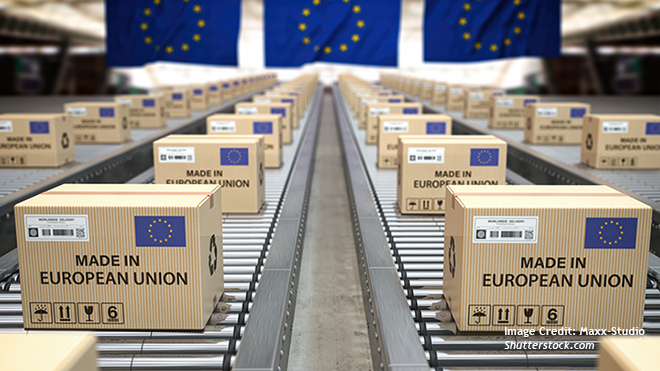
The European Union’s Industrial Accelerator Act (IAA) is a necessary and much-welcomed response to a changing geopolitical landscape in which Presidents Trump, Xi, and Putin have increasingly sought to shape international affairs. The era when Europe could rely on inexpensive Russian energy, U.S. security guarantees, frictionless globalization, and largely apolitical supply chains has ended with a big bang. Russia’s full-scale invasion of Ukraine, the growing tensions in the Indo-Pacific, and increasing concerns over economic coercion have demonstrated that industrial capacity is once again a central component of national power.
Yet Europe risks making a serious mistake when implementing this much-needed legislation. In its effort to strengthen economic security, Brussels could inadvertently exclude some of the very partners essential to achieving its objectives. The debate surrounding industrial acceleration has largely focused on Europe, the United States, and China. Far less attention has been paid to Japan, South Korea, and Taiwan, even though these three economies are central to the technologies, industries, and supply chains Europe seeks to secure. This should concern European policymakers because the challenge is no longer simply economic; it is very much strategic and political.
The Necessity of Partnership
Europe’s industrial future is deeply interconnected with Northeast Asia. Taiwan Semiconductor Manufacturing Company (TSMC), which is currently investing in Dresden, produces the world’s most advanced semiconductors. Samsung and SK Hynix remain indispensable to global memory-chip production and advanced electronics. Japanese companies such as Tokyo Electron, Hitachi, Mitsubishi Heavy Industries, Keyence, and Murata provide critical equipment, materials, and industrial technologies that underpin global manufacturing. By making it more difficult for these companies to operate and invest in Europe, or for European companies to collaborate with them, will undermine the very security that the IAA is attempting to create.
It is evident that Europe does not need these partners at the margin. It needs them at the core of its industrial strategy. Yet discussions about strategic autonomy often imply that resilience can be achieved primarily through European initiatives. In practice, resilience is more likely to emerge through trusted networks than through geographic concentration. The question, therefore, is not whether Europe should strengthen its industrial base. It is whether Europe can build resilience without weakening the political relationships on which that resilience depends.
For policymakers in Tokyo, Seoul, and Taipei, industrial policy has become inseparable from national security, and it should be in Europe as well. Japan, South Korea, and Taiwan have all undergone various forms of Chinese economic pressure, coercion, or market restrictions over the past decade. Their hard-earned experience offers valuable lessons for European policymakers now grappling with similar vulnerabilities. Decisions involving semiconductors, critical minerals, artificial intelligence, batteries, telecommunications, and advanced manufacturing are shaped by proximity to an increasingly assertive China. Economic policy and security policy are no longer separate domains.
Beyond semiconductors, Japan and South Korea are increasingly important partners in the wider industrial transition. Korean firms such as LG Energy Solution, Samsung SDI, and SK On are among the world’s leading battery producers, while Japan remains a critical supplier of advanced materials, specialty chemicals, and precision manufacturing equipment. As Europe seeks to accelerate implementation of green technologies, electrification, and advanced industrial production, reducing excessive dependence on any single supplier will require deeper cooperation with trusted Indo-Pacific economies rather than greater autarky.
Europe has also asked these countries to support its own security priorities, not least in Ukraine. Japan has emerged as one of the most important non-European supporters of Ukraine, providing financial assistance, reconstruction funding, sanctions coordination, and diplomatic support. South Korea has become a critical defense-industrial partner for Europe as European states rebuild their armed forces, even with the current ROK-Ukraine political challenges. Poland’s large-scale procurement of South Korean K2 tanks, K9 howitzers, and FA-50 aircraft illustrates how deeply European security is already connected to Asian industrial capacity. Taiwan, meanwhile, has consistently provided humanitarian and political support for Ukraine despite facing significant pressure from Beijing.
These developments represent more than isolated acts of solidarity. They reflect a growing recognition that European security and Indo-Pacific security are increasingly linked. European leaders frequently argue that stability in the Taiwan Strait matters for Europe. They are painfully correct. A crisis around Taiwan would brutally disrupt semiconductor supply chains, global trade routes, and critical technologies. Yet the inverse is also true. Developments in Europe matter greatly in Tokyo, Seoul, and Taipei. The war in Ukraine has become a case study in deterrence, alliance cohesion, sanctions effectiveness, and industrial mobilization.
Strategic solidarity therefore requires reciprocity. Europe cannot reasonably expect long-term support on Ukraine and Russia while paying insufficient attention to the concerns of partners confronting Chinese coercion. A partnership built primarily around European expectations will eventually encounter limits. This argument should resonate particularly in the Nordic and Baltic regions. Sweden, Finland, Denmark, Estonia, Latvia, and Lithuania have invested enormous political capital in mobilizing support for Ukraine. Maintaining that coalition requires recognizing that strategic partnerships are sustained through mutual commitment rather than one-sided expectations.
The Nordic countries are also uniquely positioned to champion a more inclusive approach. Their emphasis on resilience, technological innovation, maritime security, and international cooperation aligns naturally with the priorities of Japan, South Korea, and Taiwan. Nordic policymakers frequently speak about building communities of trusted partners. The Industrial Accelerator Act offers an opportunity to translate that language into policy.
Europe already possesses models for differentiated integration. Norway participates closely in numerous European frameworks despite remaining outside the European Union. The United Kingdom continues to maintain privileged forms of security and industrial cooperation despite Brexit. While Northeast Asian partners should not be treated identically, the principle is instructive: trusted partners can be integrated into EU frameworks without full membership.
Three Future Steps
First, the European Union should establish a Trusted Industrial Partnership Framework covering Japan, South Korea, and Taiwan. Participation in selected industrial programs, research initiatives, standards-setting mechanisms, and supply-chain resilience projects should become easier for trusted partners than for strategic competitors. Industrial competition is increasingly also a competition over standards. Whether in artificial intelligence, telecommunications, cybersecurity, green technologies, or data governance, Europe will find it easier to shape international norms when acting alongside technologically advanced democratic partners. A fragmented approach risks ceding influence to actors whose vision of technological governance differs fundamentally from Europe’s.
Second, Brussels should link industrial cooperation more directly to security cooperation. Europe’s engagement in the Indo-Pacific must become more visible and sustained. Occasional port visits are no substitute for a consistent presence. Regular naval deployments, defense-industrial cooperation, maritime domain awareness initiatives, and cybersecurity partnerships would demonstrate that Europe’s interest extends beyond rhetoric.
Third, Europe should establish a Europe–Indo-Pacific Economic Security Council. Bringing together the EU, Japan, South Korea, and Taiwan would institutionalize consultations on export controls, critical technologies, investment screening, supply-chain vulnerabilities, and crisis-response coordination. Resilience is most effective when built before disruption occurs.
Conclusion
The ultimate test of the Industrial Accelerator Act is not how many factories are built or how many subsidies are distributed. It is whether Europe strengthens the broader coalition of democratic states capable of competing, innovating, and deterring together.
At a time when Russia, China, North Korea, and Iran are expanding their strategic cooperation, democracies cannot afford to create unnecessary barriers among themselves. Europe’s industrial future will be stronger if it is built not only for Europe but with those partners that have repeatedly demonstrated both shared interests and shared values.
The choice facing Europe is therefore straightforward. It can pursue industrial acceleration as an essentially European project, or it can use the Industrial Accelerator Act to anchor a wider coalition of trusted partners across both the Euro-Atlantic and Indo-Pacific regions. Europe’s industrial future will not be secured by building higher walls around the continent. It will be secured by building stronger networks among the world’s leading democratic economies. The success of the Industrial Accelerator Act will ultimately depend not only on what Europe builds at home, but also on whom it chooses to build with.