Scandinavian Agriculture’s AI-led Transformation has been Significant
Niklas Swanström
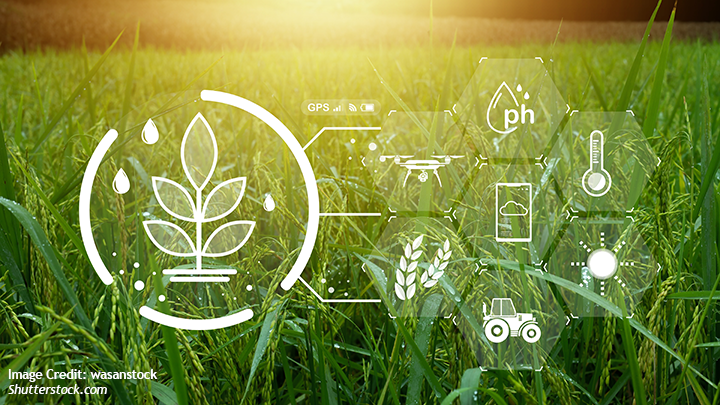
Scandinavian agriculture has experienced a significant transformation as AI has been progressively implemented, especially in precision farming and other sustainable practices. Farmers across the region have embraced smart farming technologies, using AI algorithms to analyse satellite imagery and sensor data, thus enabling them to optimise crop management and reduce environmental impact.
As the global population is projected to grow and reach 9.7 billion by 2050, food security has become one of humanity’s most pressing challenges. Development Goals highlight the need to achieve Zero Hunger by 2030, making agricultural innovation critical.
Artificial Intelligence (AI) is emerging as a transformative force in agriculture, offering innovative solutions to increase crop yields, optimise resource usage, and create more sustainable farming practices.
The convergence of AI with traditional farming practices represents a paradigm shift in agriculture, termed Agriculture 4.0 or 5.0. (Agriculture 4.0 focuses on digitalisation, using IoT, AI, big data, and automation for precision farming to optimise efficiency and yields. Agriculture 5.0 builds on this by integrating human-machine collaboration, sustainability, and social or ecological responsibility, shifting from mere efficiency to regenerative, human-centric farming practices.)
This revolution combines AI, Internet of Things (IoT), robotics, and data analytics to create intelligent farming systems that are more efficient, sustainable, and productive than ever before.
Integrating these technologies is crucial as agriculture faces unprecedented challenges from climate change, diminishing arable land and increasing water scarcity. These challenges are most acute in the developing world, where the convergence of climate change and economic instability creates a unique set of vulnerabilities to food insecurity.
The global agrifood system accounts for approximately 70 per cent of global freshwater withdrawals and 30 per cent of global energy consumption. With resource pressures rising, the need for innovative solutions has never been more critical. AI technologies have the potential to significantly improve resource efficiency while increasing productivity, making them essential tools in combating global food insecurity.
(This is the introduction to the article shared in the Global Dialogue Review’s issue “Shaping a Global South of Shared Values”. The article can be found here. The complete ebook is available here.)