Factsheet: Democratic Struggle and Resilience in South Korea (1948-2026)
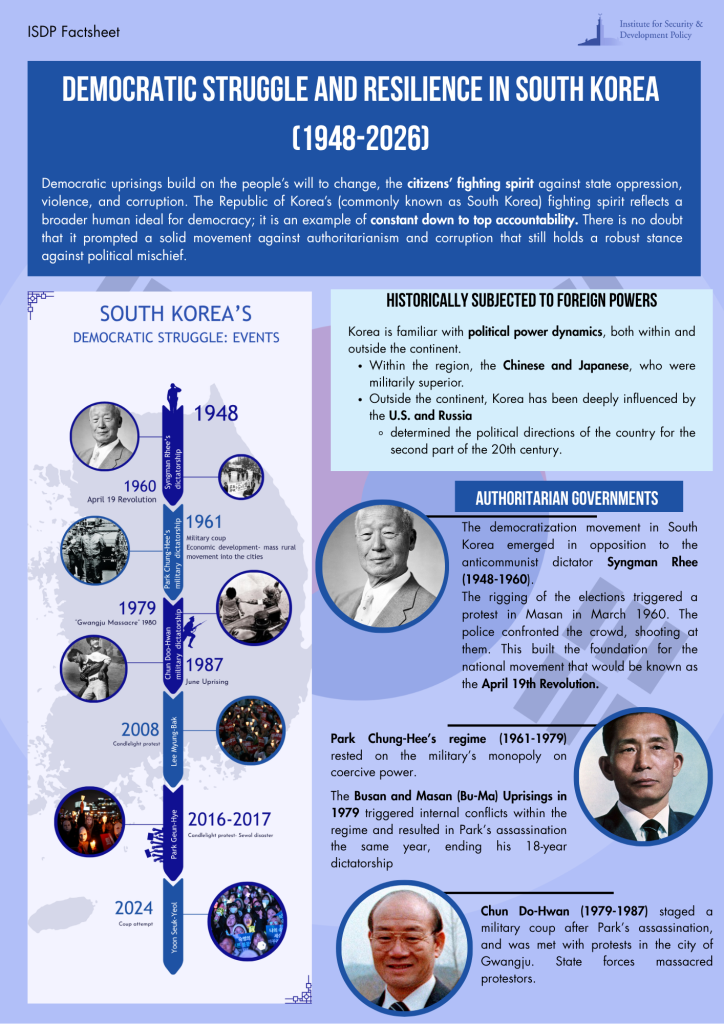
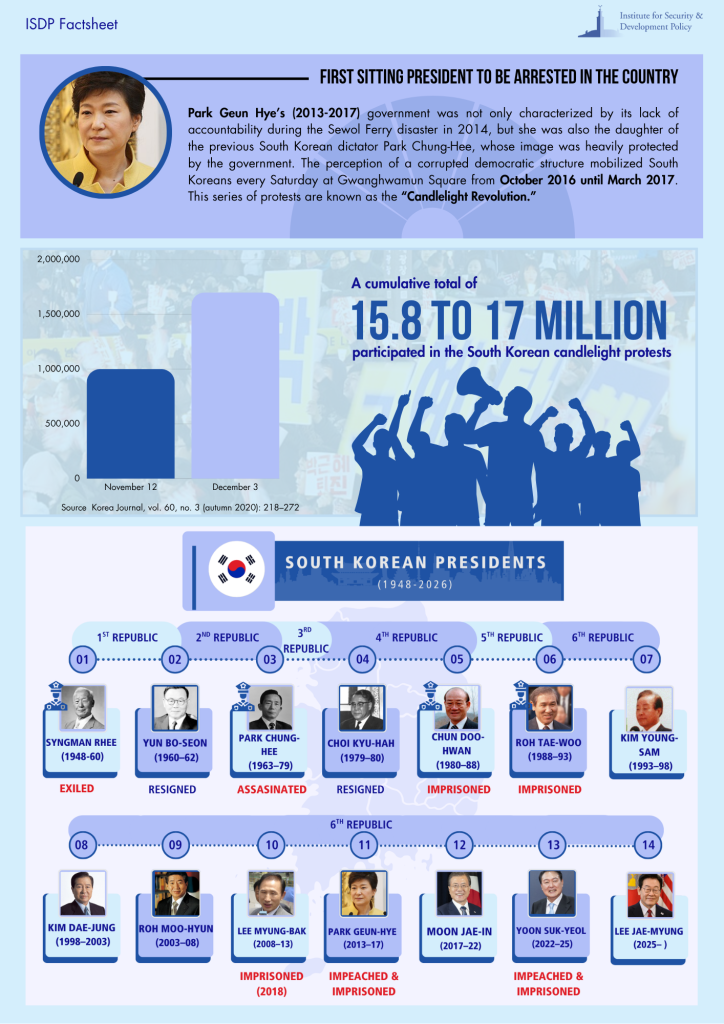
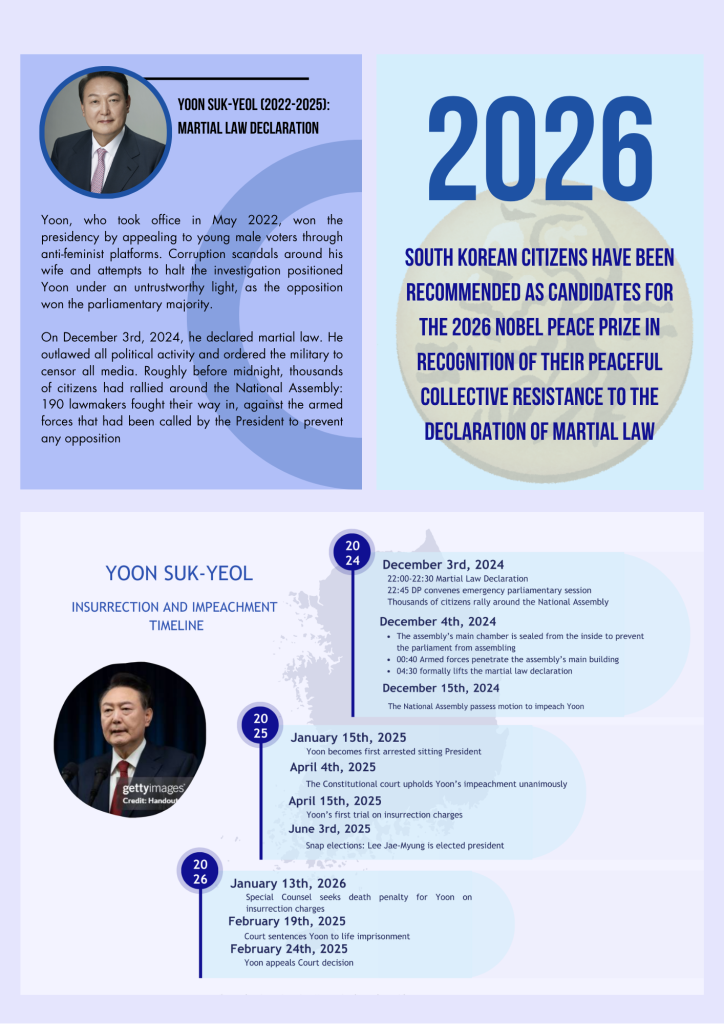
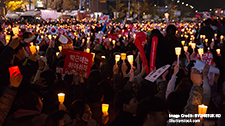
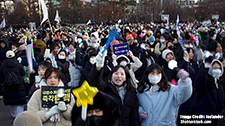
Democratic uprisings build on the people’s will to change and the citizens’ fighting spirit against state oppression, violence, and corruption. The Republic of Korea (commonly known as South Korea)’s fighting spirit reflects a bigger human ideal for democracy; it is an example of constant bottom-up accountability. It is an image of specific cultural traits (which one could argue for or against), but there is no doubt that it prompted a solid movement against authoritarianism and corruption that still maintains a robust stance against political mischief. From the April Revolution against Syngman Rhee to the mass protests that impeached Park Geun-hye, South Korea’s modern history has been defined by its citizens’ persistent fight for democracy. This factsheet traces the arc of civic-led resistance from 1948 until 2026, highlighting key events such as the Gwangju Uprising (1980), the June Democracy Movement (1987), and the recent martial law crisis of 2024.