What Xi Jinping’s New Year Speech Signals to India
Jagannath Panda
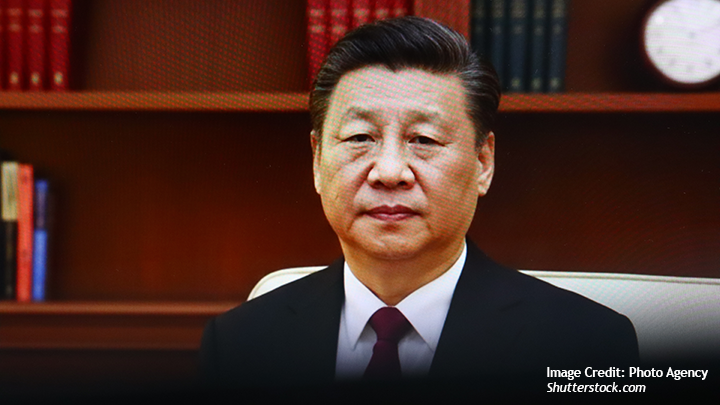
Xi Jinping’s New Year address for 2026 was not meant to reassure China’s neighbours or signal diplomatic accommodation. Instead, it projected a China increasingly certain of its place in the global hierarchy, confident enough to speak less about partnership and more about power. Delivered amid global economic uncertainty, intensifying US–China rivalry, and unresolved regional disputes, the speech avoided naming adversaries or outlining conciliatory pathways. For India, however, the message lay as much in what was left unsaid as in what was articulated; the silence was not accidental, but strategic.
A China that no longer feels compelled to reference India directly is a China that believes the balance of momentum has tilted decisively in its favour. Throughout the address, Xi framed China’s trajectory as one of cumulative ascent, economic resilience, technological self-reliance, and military modernisation, reinforcing one another. He declared that China’s “economic strength, scientific and technological abilities, defence capabilities, and composite national strength all reached new heights.” The line was less celebratory rhetoric than a summary of Beijing’s self-image: China has entered a phase where power consolidation, not reassurance, defines its external posture. Innovation is no longer just economic; it is strategic to China. Military capability is no longer a deterrent alone; it is political signalling with power projection. And global governance, in Xi’s framing, is no longer about participation but leadership.
For India, Xi’s speech raises deeper questions. As China’s technological and military power continues to grow, the central issue is whether Beijing can accommodate a stable coexistence with India as an autonomous Asian power, or whether strategic asymmetry is becoming structurally entrenched? Can economic pragmatism still act as a stabilising force in China–India relations at a time when strategic distrust is deepening under the shadow of US–China rivalry? And, how should India position itself within an emerging China-India-United States triangle, in which Beijing has long viewed Washington as the principal disruptor, while increasingly treating New Delhi as the pivotal variable? The answers to these questions will shape the contours of the Asian order in 2026 and beyond, determining whether competitive coexistence between China and India remains possible or whether sharper strategic alignment and rivalry become unavoidable in the years ahead.
Read the full piece at The Diplomat, published on January 6, 2026.