-
‘Vasudhaiva Kutumbakam’ to ‘Vishwa Guru’: India’s shrewd management of (In)security in Indo-Pacific
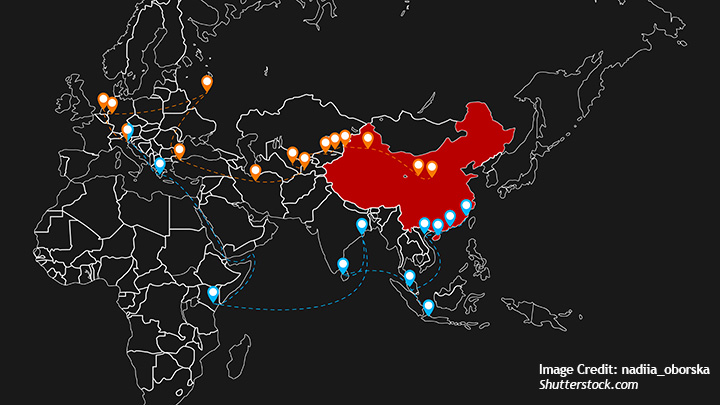
This article by Jagannath Panda examines how the concept of ontological insecurity has shaped India’s foreign policy in the context of its regional and global engagements. Specifically, it explores how India’s narratives of Vasudhaiva Kutumbakam (One Earth, One Family, One Future) and Vishwa Guru (World Leader) have emerged as strategic tools to address identity-based challenges, particularly those posed by China’s growing influence and revisionist policies. By analyzing critical events such as the Doklam standoff, China’s Belt and Road Initiative, and the Galwan Valley clashes, the article argues that India’s foreign policy reflects an attempt to manage disruptions to its ontological security. Access the article here.
-
Xi Jinping’s Multilateral Diplomacy and Pakistan: China’s Strategic Shield in International Institutions
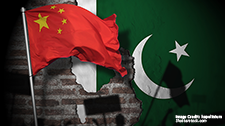
Niklas Swanström writes that the Chinese use of multilateral diplomacy to shield Pakistan represents one of the most consequential dimensions of Sino-Pakistan relations and reveals fundamental tensions in Beijing’s approach to the rules-based international order. While China publicly champions counter-terrorism cooperation and positions itself as a responsible stakeholder in international institutions, its systematic protection of Pakistan at the United Nations Security Council and other multilateral forums directly contradicts these stated principles. This issue brief by Niklas Swanström discusses how China’s behavioral pattern offers insights into Xi Jinping’s strategic priorities, the limits of Chinese commitment to multilateral norms, and the emerging contours of great power competition in South Asia. Read and download the brief here.
-
China’s Anti-Corruption Campaign in the PLA
This ISDP factsheet maps key investigations and leadership removals affecting China’s military since 2023 and presents data on developments within the PLA’s senior leadership. It also highlights the potential implications of these developments for China’s military modernization, defense industry performance, and the evolving security environment around Taiwan. Download and read this factsheet here.
-
India-Sweden Strategic Compass; A Bi-Monthly Newsletter
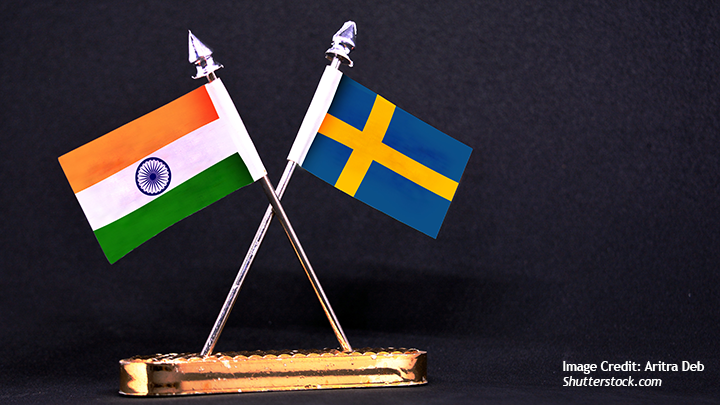
How are India-Sweden ties progressing at the beginning of the year 2026? India–Sweden relations are entering a new phase of strategic depth, driven by technology cooperation, expanding trade, and shared ambitions for sustainable growth. A key catalyst could be the proposed India–EU Free Trade Agreement, which has the potential to significantly strengthen technology and investment linkages between India and Sweden. The agreement would open new avenues for Swedish SMEs and Indian MSMEs to collaborate, expand cross-border trade, and integrate more deeply into each other’s innovation ecosystems. Read the latest issue of India-Sweden Strategic Compass here.
-
Understanding Korea: Pansori, the Korean blues
Lars Vargo examines why Pansori is recognized as one of Korea’s representative forms of intangible cultural heritage and was inscribed on UNESCO’s Representative List of the Intangible Cultural Heritage of Humanity in 2003. He writes that Pansori is sometimes described as a Korean form of opera, but a much more accurate description is to call it a Korean form of blues. Without a certain amount of suffering, blues is not blues. The same applies to pansori, writes Vargo. Read the full piece here.
-
A New Realism at the Indo-Pacific’s Edge: India, ASEAN, and the Perils of Transactional Power in a Post-Trump Order
Jagannath Panda writes on how President Trump's "America First" policy is changing the geopolitical equation in ASEAN and in the larger Indo-Pacific region. He addresses a few critical questions in this NIDS special volume: Does Trump 2.0 still see India and ASEAN as the fulcrum of America’s Indo-Pacific strategy, or merely as competitors to be contained through tariffs and transactional diplomacy? And, if America continues to turn inward under Trump’s “economic nationalism,” can Asia sustain its Indo-Pacific vision? And, equally important, can ASEAN, India, and Japan find collaboration pathways to do so? Panda argues that Trump’s renewed “America First” realism, designed to reclaim leverage from both adversaries and allies, is inadvertently pushing Asia toward self-correction. Read this special volume from NIDS in Japan here.
-
Report of the Silk Cage-I Webinar on “From Corridors to Control: China’s Long Shadow in South Asia and the Indian Ocean Region”
This report is an outcome of the webinar, organized by the Stockholm Center for South Asian and Indo-Pacific Affairs (SCSA-IPA), which was held on February 17, 2026, as the first part of a series on the ‘Silk Cage’. This series seeks to address China’s expanding role in South Asia and the Indian Ocean Region (IOR). It revolves around the central question: where does connectivity end and strategic control begin? This first webinar of the ‘Silk Cage Series’ situates South Asia and the Indian Ocean within China’s evolving strategic architecture. Read and download the webinar report here.
-
Taiwan in the Hidden War: The Contest for Technological Sovereignty Against Infiltration
This special volume, edited by Yi-Chieh Chen and Niklas Swanström, presents a comprehensive examination of Taiwan’s approach to technology security challenges across multiple sectors and policy domains. The contributors in this volume, drawn from academic institutions and government agencies, offer diverse perspectives on the challenges Taiwan faces and the strategies it has developed to address them. The volume is structured to provide both sectoral analysis and cross-cutting themes that illuminate the broader patterns of Taiwan’s technology security challenges. The contributors have sought to present a balanced assessment that acknowledges both the successes and limitations of Taiwan’s approach while identifying areas where further development may be necessary. Read and download this special volume here.