
Is There Anything “Strategically Stable” between Beijing and Washington?
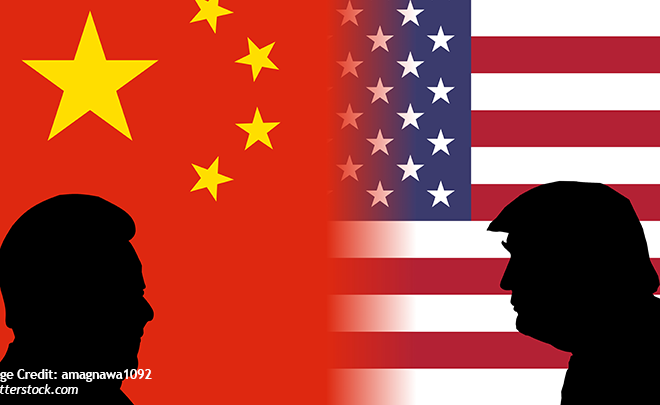
After the recent visit by two of the most powerful world leaders, from the pageantry of the Joint Base Andrews arrival to a private tea at the White House, Xi Jinping and Donald Trump announced on September 25 that they would build a “constructive relationship of strategic stability”. The phrase ‘strategic stability’ suggests a settled condition. At best, it describes the intention of the two countries to create “stable conditions”. The more interesting question, however, is what this phrase might conceal.
Two kinds of readings are dominating in strategic circles worldwide. Optimists point to Beijing’s inward-looking rhetoric, arguing that China is preoccupied with domestic stability concerns while Washington fears Chinese ambition—hence the call for stability. Realists take the opposite view, pointing toward Xi’s internal speeches that describe a long and staggering contest with the West, suggesting that this idea of stability is largely a camouflage for the next move waiting around the corner. Neither side till now has suggested why Beijing might have chosen these specific words.
Why Beijing Wants Some “Quiet”
At the outset, China has very strong reasons to want some level of calm. The leadership of the CCP prioritizes regime survival and development over anything else. And, China’s current economic situation, demographic decline, heavy debt and conditions of deflation, are not products of Western policy. Entering 2027, the leadership in Beijing is prioritizing access to capital, technology, and, more importantly, markets. It also wants visible wins, such as agricultural purchases or aircraft orders, making a “constructive relationship” with Washington a logical objective.
The question of G2 is another matter, one that has received more attention in the strategic community than it warrants. Trump has so far framed the relationship with Beijing through his personal rapport with Xi. Xi, by contrast, frames it as a relationship between two states. More importantly, a probable G2 would require China to share the burden of stabilizing recurrent strains in the current tumultuous world order. Yet, Beijing itself uses the idea of “hegemony” as a political insult, and has not yet shown any willingness to putting boots on the ground, as the U.S. did in Afghanistan, for example. Beijing clearly wants recognition as America’s only “near-peer competitor”—a status acknowledged in the 2025 U.S. National Security Strategy (NSS). Beijing does not, however, want to underwrite the system alongside it.
The Devil is in the Details
The mistake is to assume that the idea of a “constructive relationship” is equivalent to a “convergent one”. A closer look at what Beijing wants from Washington reveals three clear strands. First, respect. In Xinhua’s account of the White House conversation, Xi has stressed that the two countries have clearly different historical contexts, social systems, and development paths. He has also suggested that these differences should be recognized and respected. Reading between the lines, it means that the contest over political systems should be set aside, and that the Party’s legitimacy should not be questioned. It also means placing Beijing’s core interests, like the question of Taiwan, beyond bargain or negotiation. The same reading also underscores Xi’s clear and uncontested emphasis on the idea of “great rejuvenation” in his remarks to his American hosts. He is clear in reminding them that national revival is the source of the Party’s authority.
Second, fairness. Beijing argues that American export controls and tariffs are unfair. It wants its own version of subsidies and industrial policies left untouched. Third, reciprocity. In Beijing’s language, this means leverage answered with leverage. Rare earth controls answer chip controls, and tariffs answer tariffs. Whatever Washington offers in policy concessions, Beijing will match in purchases and promises. Beyond these three strands, what is not said out loud is the larger ask: that America’s security commitments in China’s neighborhood become a question of negotiation. Beijing’s overall objective, as we observe, is for the United States to stay out of its way. The language of “stability” is to make that request more palatable.
Is There a Pattern Here?
Beijing’s habit of negotiation has largely been consistent since the start of the trade war. China fell short of its purchase commitments, yet the relationship survived intact, and the pressure eased. The American political calendar gives Beijing enough room to breathe. A president wanting a domestic win, Democrats calling the visit a sell out and even Republican sympathizers describing the Xi-Trump meeting as ill-timed all send the same signal: Beijing can sit out a four-year cycle; Washington cannot afford to.
The result is an asymmetric idea of stability. America is asked to restrain tangible instruments of pressure such as tariffs, technology controls, and an arms package for Taipei. China’s reciprocal commitments are purchases, dialogues, and assurances, all of which can be paused at any time. The pessimists and the optimists both have strong arguments. Realists argue that communist regimes grow bolder when comfortable and more manageable when pressed. Optimists counter that pressure tends to harden Beijing rather than soften it.
China’s aim is limited in its scope for now. There is little evidence of a plan to replace America as the global hegemon or even to export China’s political model. But there is a sequence which cannot be missed. First the economy and technology, then the periphery, with Taiwan being non-negotiable throughout. In that sequence, the call for “stability” becomes an instrument. Beijing’s current posture may be defensive right now, borne out of insecurity at home, but the idea of “strategic stability” also serves to freeze America’s competitive tools while China builds its own capabilities on a pre-decided trajectory.
For this reason, there is nothing strategic about this “strategic stability”, neither is there anything stable. Two reasons substantiate this. First, there is no visible agreement on the hardest questions between the two countries: Taiwan, maritime disputes, and nuclear arms were completely left out. Second, the “truce” has a clear political expiry date, tied to who sits next in Capitol Hill. A more accurate label for this relationship would be “deferred competition” rather than “strategic stability”.
What Does it Mean for New Delhi?
For New Delhi, the stakes are practical. India’s boundary with China remains unresolved. A calmer relationship between Beijing and Washington might make Beijing restless or adventurous in its own neighborhood. India should not, however read this Washington tea as signaling the end of great-power rivalry. The sensible response is to keep building capacity at home, deepen partnerships with Japan, Australia, and like-minded partners in Southeast Asia, while engaging Beijing from a position of leverage and not hope. China might want a “constructive relationship” with America, but who is defining what is “constructive” and more importantly, “who will pay for the calm?”