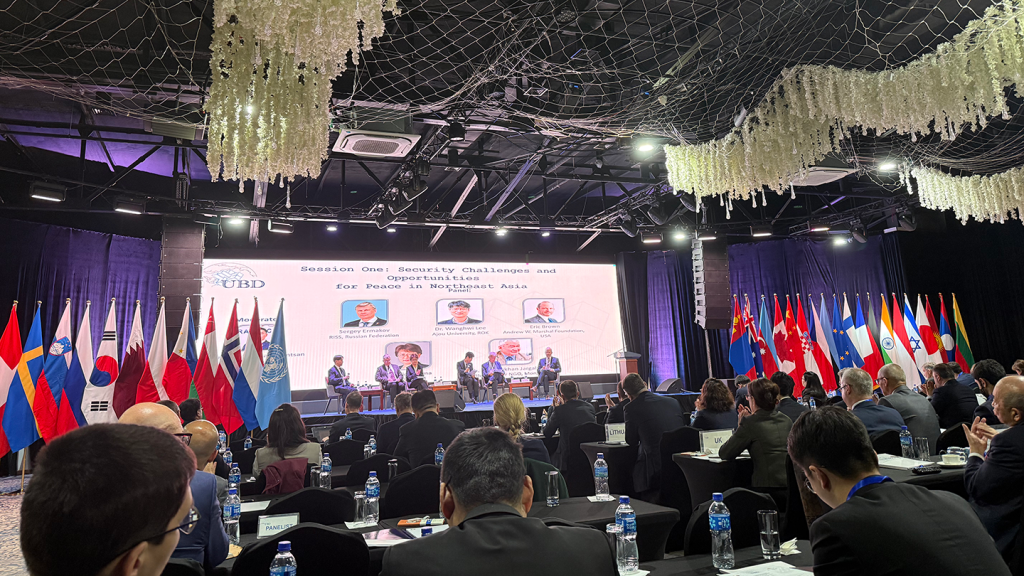
Niklas Swanström and Jagannath Panda participated in the 11th Ulaanbaatar Dialogue (UBD) International Conference
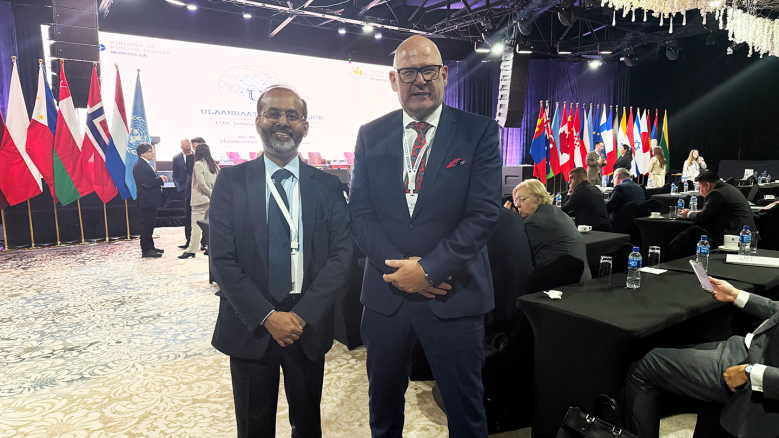
June 5, 2026: The Institute for Security and Development Policy (ISDP), represented by Dr. Niklas Swanström, Director of ISDP, and Dr. Jagannath Panda, Head of the Stockholm Center for South Asian and Indo-Pacific Affairs (SCSA-IPA), participated in the 11th Ulaanbaatar Dialogue (UBD) International Conference held in Ulaanbaatar, Mongolia, on 4–5 June 2026. Organized by the Ministry of Foreign Affairs of Mongolia and the Institute for Strategic Studies of Mongolia, the conference brought together leading policymakers, diplomats, scholars, and strategic experts from across the world to deliberate on major regional and global security challenges.
The 2026 edition of the Ulaanbaatar Dialogue focused on critical themes such as security challenges and opportunities for peace in Northeast Asia, preventive diplomacy and mediation pathways, artificial intelligence and emerging security risks, regional connectivity between Northeast and Central Asia, and green power corridors linking the two regions. The conference highlighted Mongolia’s growing role as a neutral diplomatic platform promoting dialogue, confidence-building, and regional cooperation amid intensifying geopolitical competition. The active support and cooperation of the Mongolian Ministry of Foreign Affairs reinforced the importance of the UBD as one of Northeast Asia’s leading multilateral strategic dialogue mechanisms.
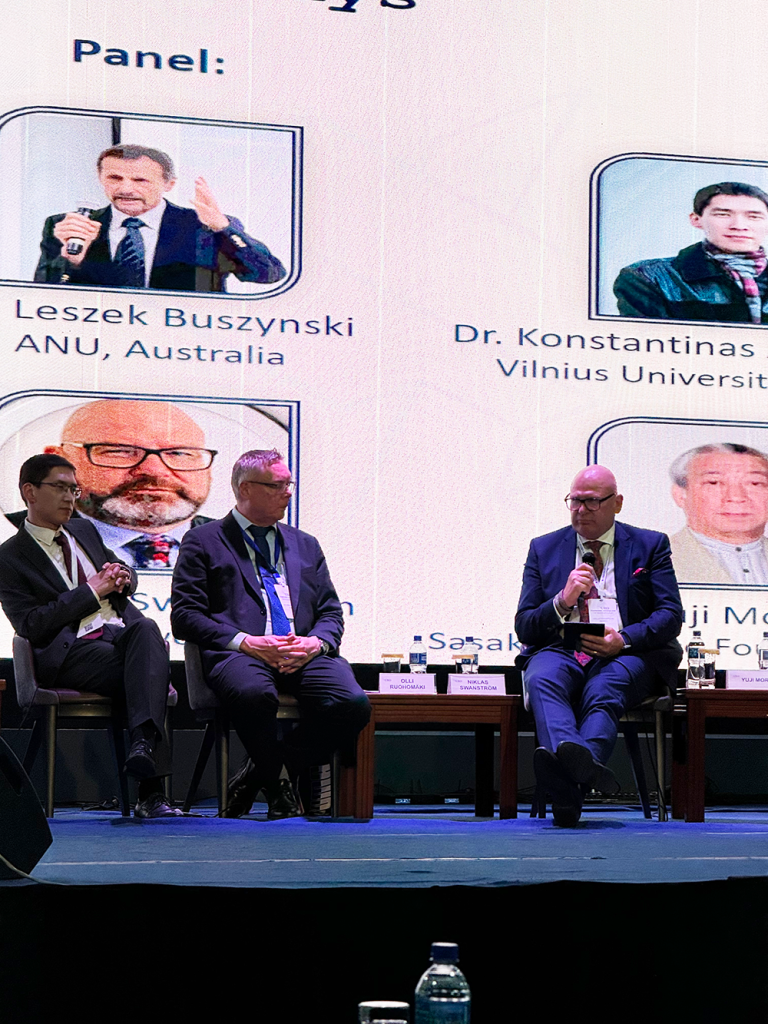
Dr. Niklas Swanström participated in Session Two on “Preventive Diplomacy and Mediation Pathways,” where he underscored the necessity of strengthening practical confidence-building mechanisms in Northeast Asia amidst rising geopolitical fragmentation and strategic mistrust. He emphasized the importance of sustained dialogue platforms, multilateral engagement, and middle-power diplomacy in mitigating regional tensions and enhancing long-term regional stability.
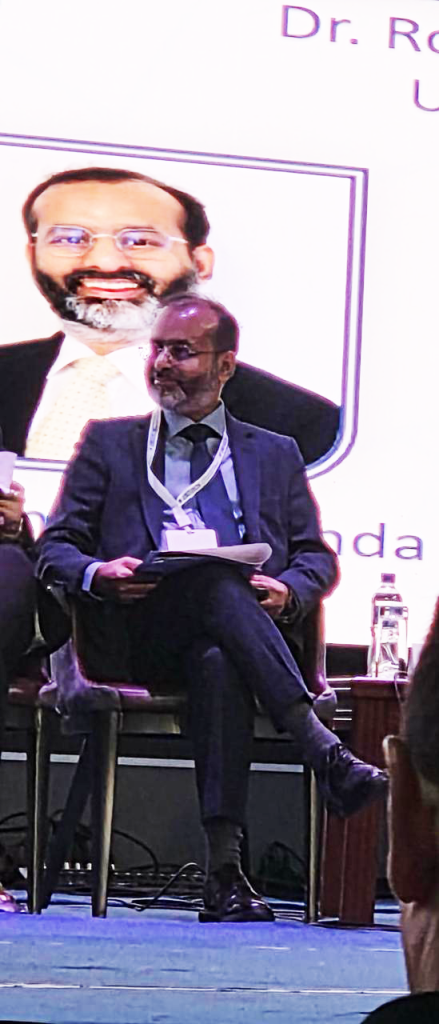
Dr. Jagannath Panda participated in Session Three on “Emerging Security Challenges (Artificial Intelligence),” where discussions centered on the growing intersection of AI, security governance, and geopolitical competition. Dr. Panda highlighted the strategic and political implications of AI in shaping future regional and global order, while stressing the need for transparent governance frameworks, responsible use of AI technologies, and greater international cooperation to prevent technological fragmentation and security escalation.
The conference witnessed participation from a broad range of countries including the United States, Canada, the United Kingdom, Japan, India, South Korea, Russia, China, Australia, and several European countries, reflecting the expanding global relevance of Northeast Asian security discussions. Sweden also maintained a notable presence through ISDP’s as well as other scholars and representatives participation from other think-tanks and broader European representation. The diversity of participation demonstrated the increasing significance of the Ulaanbaatar Dialogue as an inclusive platform connecting regional and global perspectives on peace, security, connectivity, and emerging technologies.