
David Biggs Proposes New Research Security and International Collaboration Paradigms and Approaches at Major Conferences
David Biggs, Senior Fellow, ISDP’s Stockholm Center for Research and Innovation Security (SCRIS), is active throughout 2026 as a keynote speaker and featured contributor at international conferences focused on research security, scientific collaboration, and global innovation policy.
In these engagements, he is focusing broadly on two messages: that research security is the collective effort of working toward and even promoting safe, trusted, and reciprocal scientific and research partnerships – partnerships that are the foundation of our economies, our health, our security, and our standards of living; and that we need to stop messaging that openness and security are at odds – openness and security are not contradictory but complementary and mutually reinforcing concepts.
Promoting Science Diplomacy Through Research Security Practices at EECARO’s Annual Conference
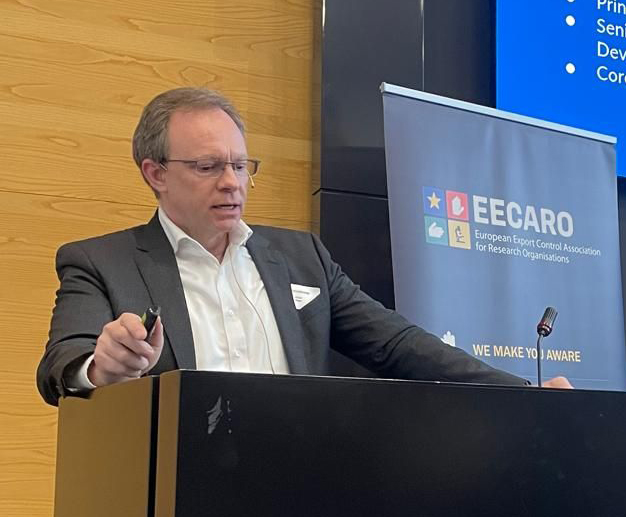
Most recently David provided closing remarks at The European Export Control Association for Research Organisations (EECARO) annual conference in Copenhagen, Denmark.
In this keynote, he argued that in today’s more adversarial geopolitical environment, research security must be framed not as a defensive, compliance-driven exercise but as a proactive effort to empower and sustain international scientific collaboration, which remains essential for economic growth, public health, and national security. He contends that disengagement is not a viable option — even with some countries that pose risks — and instead proposes a new framework centered on empowering researchers: ensuring they are aware of the risks, are motivated to act, and have the tools to understand and mitigate them. By placing researchers at the center, Biggs presents research security as a foundation of science diplomacy, arguing that secure, trusted partnerships strengthen — not constrain — openness, and that treating security and openness as complementary rather than conflicting is key to maintaining global innovation and cooperation.
Advancing Research Security at the ASCE Conference
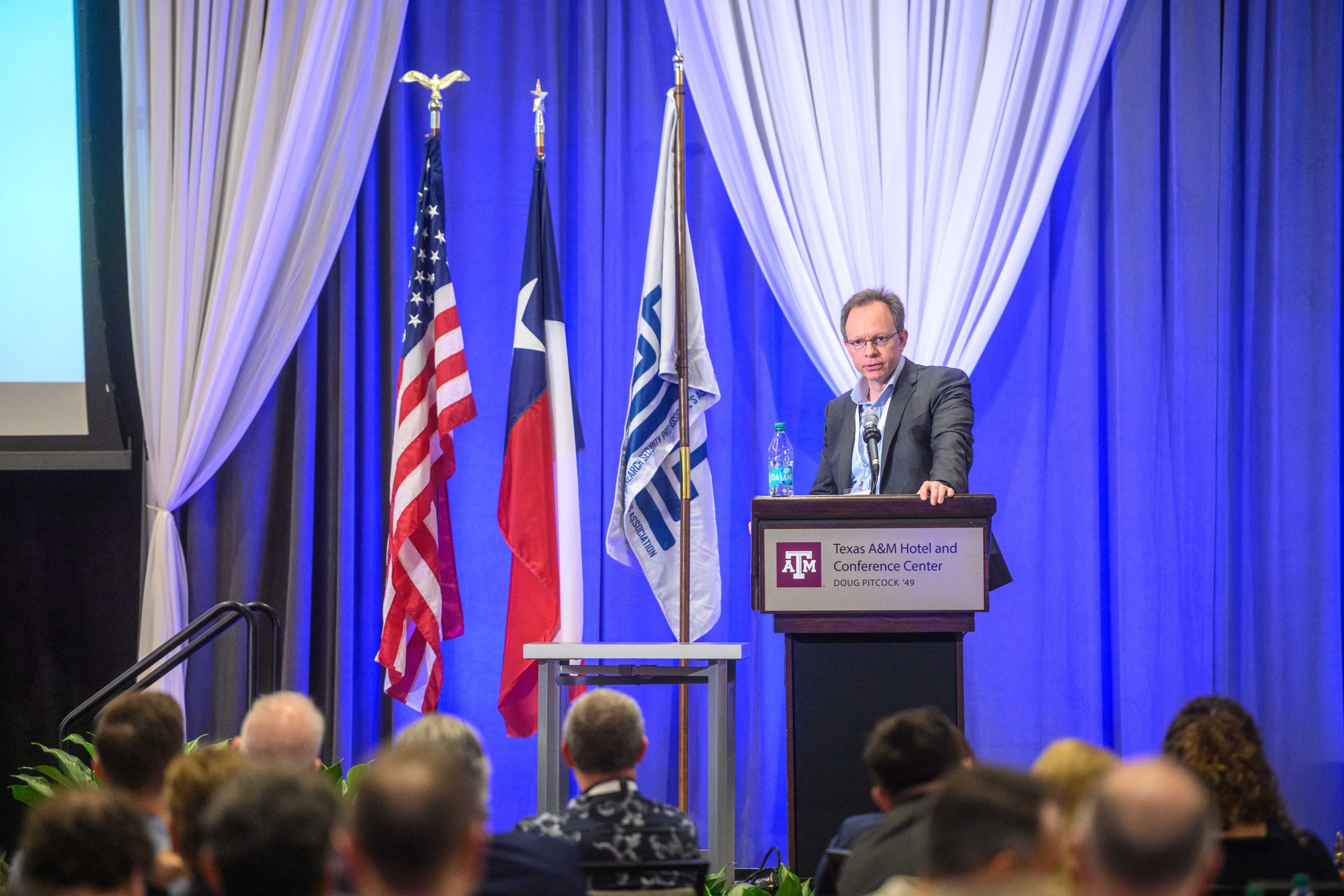
Biggs delivered both a keynote address and a panel session at the Academic Security and Counter-Exploitation (ASCE) Conference, a leading forum bringing together policymakers, academic leaders, and security professionals to address risks in international research collaboration.
In his keynote, “Advancing Secure Research Partnerships Through Collective Subnational Solidarity,” Biggs argued that the future of research security will depend not only on national governments but also on states, cities, and individual institutions working in coordinated networks. He emphasized that subnational actors will be increasingly central to shaping research ecosystems and must play a more deliberate role in safeguarding them.
During a separate session titled “Empowering Researchers, Protecting Partnerships: A New Paradigm for International Research Security,” Biggs outlined an implementation framework centered on the needs and incentives of researchers themselves.
Looking Ahead: Continued Engagement Through 2026
David is scheduled to continue his engagement on research security and science diplomacy at the 2026 Johns Hopkins Science Diplomacy Summit in Washington DC, the inaugural European Network Conference on Research Security in Delft, the Netherlands, the Imagining New Ground for Science Diplomacy conference in Aarhus, Denmark, and in a Science|Business virtual roundtable discussion on research security policy from across Europe, held in partnership with Digital Science.
These ongoing discussions are expected to further develop and present practical, implementable strategies for promoting and pursuing global research collaborations.
Bridging Policy, Practice, and Perspective
Through his recent speaking engagements, Biggs has positioned himself at the intersection of theory, policy, and application — bringing together insights from national security, academic research, and even historical disciplines such as renaissance fencing to offer fresh perspectives on complex global challenges meant to shine a light to move through the fog toward concrete plans and implementation strategies.
As international collaboration continues to evolve, ISDP remains committed to contributing to these conversations, supporting efforts to ensure that scientific progress remains both open and secure.
Read our interview with David Biggs: Resilient Science: Transatlantic Challenges and Opportunities; Interview with Alicia Hennig and David Biggs