The Future of Korean Research from a Nordic Perspective
Josephine Ørgaard Rasmussen
The Nordic countries have been long-standing partners with South Korea, engaging in dialogue and collaborating on regional and global concerns since 1959. Despite a long history of state-level cooperation, the Nordic public’s knowledge of Korean affairs remains comparatively low compared with other regional powers in East Asia, particularly China and Japan. However, over the last decade, there has been a noticeable increase in societal interest in South Korea throughout the Nordic region. Nonetheless, the present structures for information and knowledge exchange on Korean issues within the Nordic region are insufficient and appear obsolete in addressing 21st-century challenges, ranging from increasing awareness of regional security interdependence and shared values to promoting common business opportunities and cultural exchanges.
To this end, the ISDP Korea Center conducts the Nordic-Korea Next Generation Policy Expert Program with generous support from the Korea Foundation. The program aims to strengthen cooperative relationships between South Korea and the Nordic region, as well as to serve as an energizing incubator for the next generation of Korean policy experts, by providing young scholars with a forum to discuss their research with senior Nordic and South Korean colleagues, along with practical hands-on experience in policy-related work.
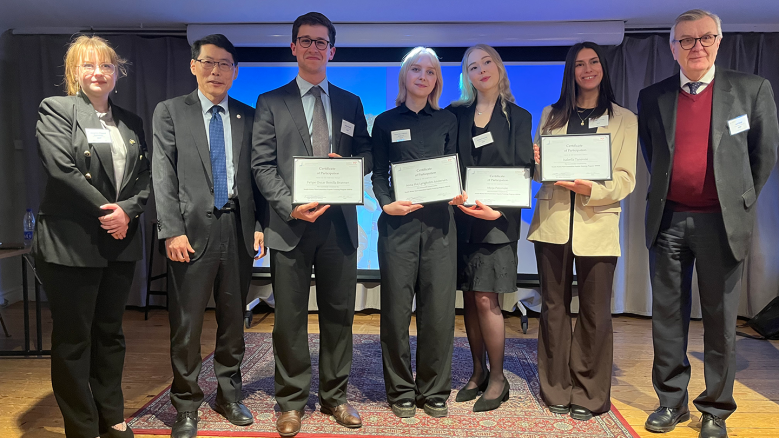
The ISDP Korea Center had, once again in 2025-2026, the pleasure of welcoming four young professionals from different Nordic nations with diverse professional backgrounds as part of the program. During the training program, the participants attended a three-day session in Stockholm, where they received lectures from leading academics, policy analysts, and diplomats from the Nordic countries, Europe, and South Korea. Following the three-day training session, each participant was allocated a senior mentor with relevant experience in their research topic. With the assistance of their respective mentors, the participants submitted policy papers reflecting their personal perspectives on topics ranging from Korean Peninsula security dynamics to demographic challenges and potential collaboration between South Korea and the Nordic countries to address these. This booklet is thus a compilation of the participants’ research and the culmination of the Nordic-Korea Next Generation Training Program.
ISDP’s Korea Center would like to thank the Korea Foundation for their ongoing support over the years, as well as for being the primary sponsor of the Nordic-Korea Next Generation Training Program. We hope that, with their continued support, we can further strengthen the ties between the Nordic countries and the Korean Peninsula in the future.