
Undersea Cables at Risk: Lessons from the EU and Taiwan
The Hidden Fragilities of Global Connectivity
In 1866, around a decade after the installation of the very first undersea cable, messages between Europe and America could transmit six to eight words per minute, and charged US$5 per word – equivalent to more than US$100 in 2026 value. Today, the development of key system components in undersea cable performance has been even faster than semiconductors, enabling high-speed, high-capacity connections that were unforeseeable only three decades ago. Undersea cables now carry over 95 percent of the world’s internet traffic, enabling everything from financial transactions and government communications to everyday digital services.
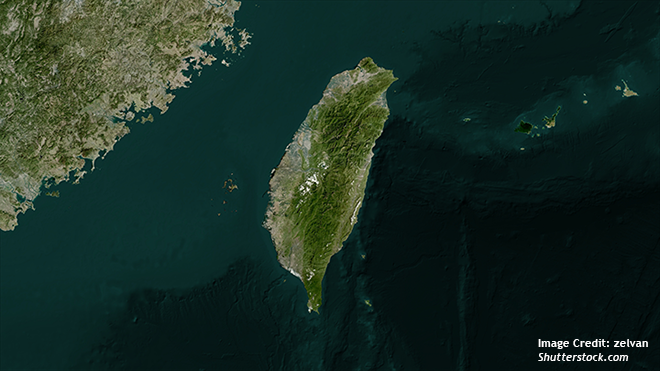
Despite finding themselves at two distant corners of the globe, Taiwan and the European Union (EU) share a common threat. China has allegedly been involved in multiple malicious activities in the waters surrounding Taiwan, while Russian vessels have supposedly conducted similar hostile operations in the Baltic Sea. Both actors leverage weak maritime attribution mechanisms in international law to shield their malevolent actions behind plausible deniability. Addressing this challenge requires a civil-military approach that encompasses every level of governance, from strategic planning to operational execution and technical resilience. While the EU can rely on a community of like-minded states acting collectively to tackle emerging threats, Taiwan’s diplomatic isolation, modest size, and lack of trusted partners complicate the picture. The recent legislative turn in Taipei signals a growing awareness of the urgency to respond effectively to the threat, but many vulnerabilities remain to be addressed, including the structural vulnerability of undersea cables. Learning from the EU’s model of coordination, resilience, and legal clarity can help Taiwan mitigate them. Durable and efficient connectivity alternatives beyond the seabed, including in the space domain, have become increasingly necessary.
How the EU is Addressing Undersea Cable Security
Dealing with undersea cable cuts is complex, and despite recent progress, Europe has yet to fully solve the issue. Nonetheless, over the years it has significantly strengthened its legal and policy frameworks, recognizing undersea cables as critical infrastructure and addressing their protection at the regional level.
NATO’s role in the protection of Critical Undersea Infrastructure (CUI) and its coordinated response to threats remains the region’s primary security asset. It provides collective defense, intelligence sharing, and operational coordination for both deterrence and rapid response purposes. Its overarching approach under the Defence and Deterrence of the Euro-Atlantic Area (DDA) encompasses all security activities by region and domain, including strengthening the protection of CUI especially in response to the Russian threat, classified as “the most significant and direct threat to Allies’ security”.
The EU published in February 2025 the EU Action Plan on Cable Security, focusing on four key elements: prevention, detection, response and repair, and deterrence. This approach includes operational cooperation and the continuation of dialogue with NATO for closer alignment of monitoring capabilities, joint risk assessment, and coordinated responses to hybrid threats. While the EU does not yet have a fully independent undersea cable repair industry and still relies on non-EU contractors or vessels for rapid repairs, it is actively working towards greater resilience and autonomy in this area. The efforts, however, remain largely strategic and are yet to be implemented.
Taiwan’s Recent Push to Protect Undersea Cables
Recognizing the risks of disruption, Taiwan has also taken significant steps in recent years to strengthen undersea cable security. The Ministry of Digital Affairs (MODA) was established in 2022 to drive Taiwan’s digital development and enhance the resilience of submarine cable communications by promoting the construction of new submarine cables and subsidizing backup facilities, strengthening the existing landing stations, and adopting multi-layered heterogeneous communication networks to mitigate risks. The most recent legislative turn, however, was seen in September 2025. The Legislative Yuan passed a preliminary review of proposed amendments to seven laws protecting critical underwater infrastructure. In December, the legislature approved some of them, extending existing penalties for damaging water and natural gas pipelines to undersea cables – up to seven years in prison for individuals, fines up to NT$10 million, and the possible confiscation of the vessels used in the crime. In addition to this, the Ministry of Interior is now required to publish maps of undersea pipes and cables, ensuring transparency and facilitating the attribution of intent or negligence. Recent legislative changes require vessels in Taiwan’s territorial and prohibited waters to keep their automatic identification system (AIS) active and transmit accurate information. The seven amendments finally took effect in January 2026, marking a significant step in Taiwan’s increased implementation of the protection of critical infrastructure.
New avenues of international cooperation, specifically with the EU and the U.S. have also recently emerged. In July 2025, U.S. Senators John Curtis and Jacky Rosen introduced the Taiwan Undersea Cable Resilience Initiative Act with the goal of advancing monitoring and detection capabilities, rapid response protocols, maritime domain awareness and international cooperation in the context of countering Chinese gray zone tactics. Moreover, in October 2025 Taipei hosted the “Taiwan-Europe Undersea Cables Security and Cooperation Forum”, where the Taiwanese government launched a new project in global cooperation on improved security of undersea cable under the name RISK. This framework, standing for ‘Risk mitigation, Information sharing, Systemic reform, and Knowledge building’, is intended as a “global partnership” rather than a “national project”, with the EU and Taiwan working together both in research and innovation, and in dual-use technology, including the use of drones. Details are still to be released, but the prospects for collaboration look promising.
Next Steps for Taiwan’s Undersea Cable Security: Building on International Experience
Unlike Europe, Taiwan cannot rely on integrated regional responses. Diplomatic isolation and geopolitical constraints impair Taipei from gaining the benefits of sustained international security cooperation. Nevertheless, Taiwan can draw valuable lessons from the European experience to strengthen its own undersea cable security.
On one side, sustained investment and long-term strategic planning is required. Developing a cable repair industry is costly and requires significant resources, time, and advanced operational capabilities. Taiwan can collaborate with regional partners to establish hubs and corridors for maintenance and repair centers, leveraging shared expertise and infrastructure.
On the other, Taipei should try to attract global Internet giants to establish their data presence on the island. The subsea cable ecosystem, from planning to maintenance, is almost entirely dominated by private actors: their investments in Taipei would significantly enhance Taiwanese digital resilience. This, however, should not be pursued in isolation: strategic and long-term cooperation with neighboring countries, including the Philippines, South Korea and Japan is crucial. This goes from data-sharing platforms to cross-borders agreements for shared emergency response, and regular security exercises. Taipei would gain major benefits from intelligence sharing and joint surveillance efforts through regional cooperation, but it is to be noted that no observable consensus or publicly available evidence has yet been reached.
Conclusion
Undersea cable damages disrupt internet services, financial transactions, and critical infrastructure, affecting access to essential services, from healthcare and transportation to emergency response. Taiwan’s most recent attacks trace back to the first half of 2025, the EU’s to the end of 2024. All incidents are allegedly linked to Chinese or Russian involvement, but no definitive attribution or legal consequence has yet been established.
While Europe can rely on sustained preventive action and an integrated regional response, Taiwan faces major diplomatic, infrastructural, and cooperation limitations. Nonetheless, the recent changes to Taiwan’s undersea cable governance, from efforts to close legal and operational loopholes, to the renewed push for international cooperation on security and technological development, look promising. By developing domestic repair capabilities and pursuing strategic international partnerships, Taipei can build on this legislative momentum and strengthen its undersea cable network. It remains to be noted, however, that even with strengthened governance, undersea cables remain fragile and easy to target by hostile actors. This points to the importance of developing complementary solutions to carry our digital traffic. Alternatives like satellite data transmission services present significant challenges, such as high costs, lower bandwidth, and latency issues. Cross-continent cables account for additional obstacles, from the legal complexities associated with crossing different jurisdictions to the considerable logistical and infrastructural demands across large territories. The fragility of undersea cables highlights the urgent need to diversify connectivity through technological innovation, exploring alternatives both in space and new possible routes.