
Command without Trust: Zhang Youxia’s Fall and the Crisis Inside the PLA
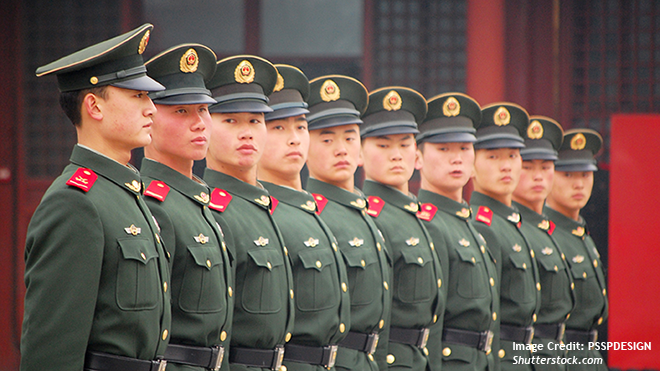
The announcement on January 24, 2026, that General Zhang Youxia—China’s most senior uniformed officer and allegedly Xi Jinping’s closest military ally— was placed under investigation for “serious violations of discipline and law” represents a watershed moment in Chinese civil-military relations. This purge is the second removal of a sitting Vice-Chairman, and the sixth removal of a sitting general, five of which happened last year, on the Central Military Commission (CMC) since the 1966-76 Cultural Revolution, five of which occurred in 2025 alone. The removal leaves the Central Military Commission with only one member besides Xi himself[1]—Zhang Shengmin, the military’s newly appointed anti-corruption chief—creating an unprecedented power vacuum at the apex of China’s military command structure.
The Charges: A Triad of Accusations
The official charges against Zhang Youxia and fellow CMC member General Liu Zhenli fall into three distinct categories. First, standard corruption allegations involving “serious violations of discipline and law“. Second, and more politically significant, the PLA Daily editorial accused them of having “seriously trampled on and undermined the system of ultimate responsibility resting with the CMC chairman“— a strikingly direct formulation that implies disloyalty to Xi’s personal command authority. The editorial further claimed they “severely fueled political and corruption problems that threaten the Party’s absolute leadership over the armed forces and undermine the Party’s governance foundation“.
The third category emerged through Wall Street Journal reporting based on a confidential briefing with senior PLA officers. According to these sources, Zhang allegedly leaked sensitive technical information related to China’s nuclear weapons program to the United States. The briefing revealed that the investigation into former China National Nuclear Corp CEO Gu Jun linked Zhang to a security breach within China’s nuclear sector, though no operational details were disclosed.
In addition to these allegations, the corruption dimension centers on procurement abuse. Zhang allegedly received enormous sums of money in exchange for promotions within the heavily funded procurement apparatus and promoted former Defense Minister Li Shangfu in return for substantial bribes. Given Zhang’s previous role as head of the CMC Equipment Development Department, he would have overseen vast defense contracts and personnel decisions- areas historically vulnerable to corruption.
Political Reality: A Princeling Civil War
Understanding Zhang’s fall requires examining the factional dynamics within the PLA that have been building for years. Zhang Youxia belongs to the princeling faction—children of revolutionary leaders who formed the Communist state. He and Xi share this background; their fathers both served in Mao Zedong’s army during the civil war, a shared lineage that should, in theory, have rendered Zhang politically untouchable.
However, overlapping patronage networks associated with current CMC Vice Chairman Zhang Youxia and former Vice Chairman He Weidong have long structured elite military politics. The repeated and systematic purging of individuals related to one network or the other suggests a power struggle. Zhang led what analysts call the “Shaanxi Gang”—officials who either grew up or spent portions of their career in Shaanxi Province. This network included Zhang Shengmin (no kinship relations), who became the CMC’s anti-corruption enforcer.
Opposing Zhang was He Weidong’s “Fujian Clique”—officers who worked with Xi during his time as a provincial official in Fujian, including Admiral Miao Hua. In late 2024, a second wave of corruption purges turned on the Fujian Clique officers, sidelining key CMC figures such as Vice Chair He Weidong and Director of the Political Work Department Admiral Miao Hua. Their removal in October 2025 initially suggested that Zhang’s faction had gained the upper hand.
Evidence of this internal struggle appeared subtly in elite discourse. Several PLA Daily articles, written by academics tied to Zhang, have subtly promoted “collective leadership” and “democratic centralism“— language that implicitly challenged Xi’s insistence on centralized, personalized command. These themes contrasted sharply with an article published by Xi Jinping in Qiushi in December 2024, which reaffirmed the necessity of unified and centralized authority. That said, Zhang Youxia never openly contradicted Xi. In fact, there are two Xinhua versions of Zhang speeches where references to “习主席” (Chairman Xi) and “两个确立”(Two Establishes) were removed in the second version after 41 seconds, interpreted by commentators as a sign of internal tension in the propaganda system. However, these edits were editorial decisions by Xinhua, not Zhang’s own omissions. It is difficult – if not impossible – to identify any direct contradiction in Zhang’s official speeches regarding Xi. On the contrary, Zhang consistently appeared loyal in official appearances.
Zhang’s purge in January 2026 suggests Xi ultimately prevailed in this power struggle. Whether through genuine espionage evidence or politically constructed charges, Xi found the justification needed to remove his most dangerous rival. What remains unclear is whether Xi acted from a position of strength or was compelled to move after a period of vulnerability- particularly given persistent reports of Xi’s health issues in mid-2025, which may have provided an opening for Zhang’s attempted consolidation of influence.
Impact on PLA Development and Modernization
The purges’ impact on PLA effectiveness operates across multiple dimensions: command cohesion, procurement systems, institutional memory, and the quality of strategic decision-making.
Command Structure Disruption
The most immediate impact is organizational chaos. The removals fracture established chains of command, and the PLA’s joint operational command capabilities will likely fall into confusion and require reorganization. The CMC, which typically maintains seven members to provide collective military leadership, now consists of only Xi Jinping and Zhang Shengmin. This raises acute operational questions: Who provides day-to-day oversight? Who coordinates between the five theater commands? Who manages the complex bureaucracy of the world’s largest military?
The widespread purges likely indicate a lack of trust between CCP and PLA leadership, which may impact the PLA’s ability to reach its modernization goals. The 2027 deadline—Xi’s target date for the PLA to be capable of successfully taking Taiwan—now appears increasingly unrealistic given the command disruption.
Loss of Institutional Knowledge and the Combat Experience
Perhaps most damaging is the loss of operational expertise. The purged generals from the 31st Army Corps are seen as the ones with the most knowledge and experience in preparing for a Taiwan operation, and their removal may have damaged that historical know-how. Zhang Youxia himself was one of the few PLA generals with actual combat experience, having fought in the 1979 Sino-Vietnamese War and the 1984 Battle of Laoshan. His removal severs one of the last living links to the PLA’s combat past.
The Eastern Theater Command—responsible for Taiwan contingencies—has been particularly gutted. He Weidong, its former commander before promotion to CMC vice chairman, is now purged. He Weidong’s network was comprised of officers who made their careers in the Eastern Theater Command (formerly Nanjing Military Region), including a high concentration of PLA Navy officers—individuals who spent decades preparing for a joint amphibious landing or a blockade campaign against Taiwan. Their systematic removal means that those most prepared for China’s primary military contingency are no longer in place.
Procurement Paralysis and Defense Industrial Impact?
The corruption crackdown has severely impacted China’s defense procurement system. The crackdown is slowing procurement of advanced weaponry and hitting the revenues of some of China’s biggest defense firms. This affects not just current acquisitions but the entire defense industrial base’s relationship with the PLA.
Zhang’s role as former head of CMC Equipment Development Department means the purge strikes at the heart of PLA modernization. The department oversees research, development, and acquisition of all military equipment—from fifth-generation fighters to hypersonic missiles to naval vessels. If corruption was indeed endemic- distorting promotions, contracts, and technical specifications- the integrity of the entire modernization effort is in question.
Beijing, however, presents a sharply different narrative. Official statements argue that the crackdown will rejuvenate the military, asserting that “the more the military combats corruption, the stronger and purer it becomes, with greater combat capacity“. If corruption truly pervaded procurement and personnel systems, its elimination could, in theory, enhance long-term effectiveness- though only after significant short-term disruption.
The Information Quality Problem
Perhaps most insidious is the impact on information flows to Xi Jinping. By purging even his closest military allies, Xi sends a clear signal: political loyalty outweighs professional judgement. Xi’s purges of top military officials mean that those best positioned to “speak truth to power” may already be gone. When a leader eliminates even childhood friends and the closest military allies, remaining officers learn a clear lesson: political loyalty matters more than competence or honest assessment.
This dynamic creates what scholars term an “information pathology.” Xi may receive overly optimistic or distorted reports while real deficiencies persists or worsen. Historical precedents are sobering. Soviet leaders in 1991 and Saddam Hussein in 2003 both vastly overestimated their military capabilities because subordinates feared honesty. Xi now risks similar strategic miscalculation.
Personnel Quality and Morale
The purges send clear signals throughout the officer corps about what behaviors lead to advancement. The message is unambiguous: “no one, no matter how high their post, will be shown leniency if they indulge in corruption“. But the subtext is equally clear: political loyalty trumps professional competence, and even the closest allies can fall.
This creates perverse incentives. Ambitious officers learn to prioritize political positioning over professional development. Risk-averse officers avoid any actions that might be misinterpreted. The best and brightest may conclude that military service under such conditions isn’t worth the risk.
Moreover, Xi’s decision to replace PLA Rocket Force leaders with individuals from the PLA Air Force and Navy likely indicates that Xi values party and personal loyalties over military experience. This pattern—prioritizing political reliability over domain expertise—will likely continue as Xi refills the depleted CMC.
Strategic Implications and Possible Trajectories
The PLA faces several possible trajectories depending on how the post-purge period unfolds:
Scenario 1: Short-term Pain, Long-term Gain: If corruption were genuinely endemic, and Xi’s replacements are both loyal and competent, the PLA could emerge stronger after a 2-3 year reorganization period. This requires that Xi find officers who combine political reliability with professional excellence—a difficult combination.
Scenario 2: Permanent Degradation: If political loyalty becomes the primary criterion for advancement and honest reporting disappears, the PLA could suffer permanent capability decline even as it acquires advanced hardware. This resembles the late-Soviet military: impressive on paper, dysfunctional in practice.
Scenario 3: Factional Resurgence: Zhang Shengmin now controls the anti-corruption apparatus and is the only other CMC member. If he builds his own patronage network, the factional struggles could simply restart with new players.
Scenario 4: Military coup: A 1991 Soviet-style coup remains theoretically possible but profoundly improbable. China lacks Russia’s power splits, public space, and coordination capability. Xi’s overlapping control systems, preemptive purges, and surveillance state make traditional coups nearly impossible. The more likely development is passive resistance through bureaucratic inertia rather than dramatic putsch.
Concluding thoughts
Zhang Youxia’s fall represents far more than another corruption case. It marks the culmination of a multi-year power struggle between competing princeling factions for control of China’s military. Xi Jinping has achieved unprecedented personal command authority, but at enormous cost to PLA effectiveness.
The immediate consequences—command disruption, procurement paralysis, and the loss of institutional memory—will take years to repair. The more serious damage to information quality and officer incentives may be irreversible. The PLA emerges weaker: less capable of complex joint operations, less able to provide honest assessments to civilian leadership, and more preoccupied with political survival than military performance. For international observers, this points to a PLA that is potentially less predictable and more prone to miscalculation- a paradoxically dangerous outcome in an already volatile regional security environment.